
Qingdao 5-Day Slow Travel Map | Tips for Traveling with Parents: Avoiding Pitfalls and Medications (for Senior Citizens)
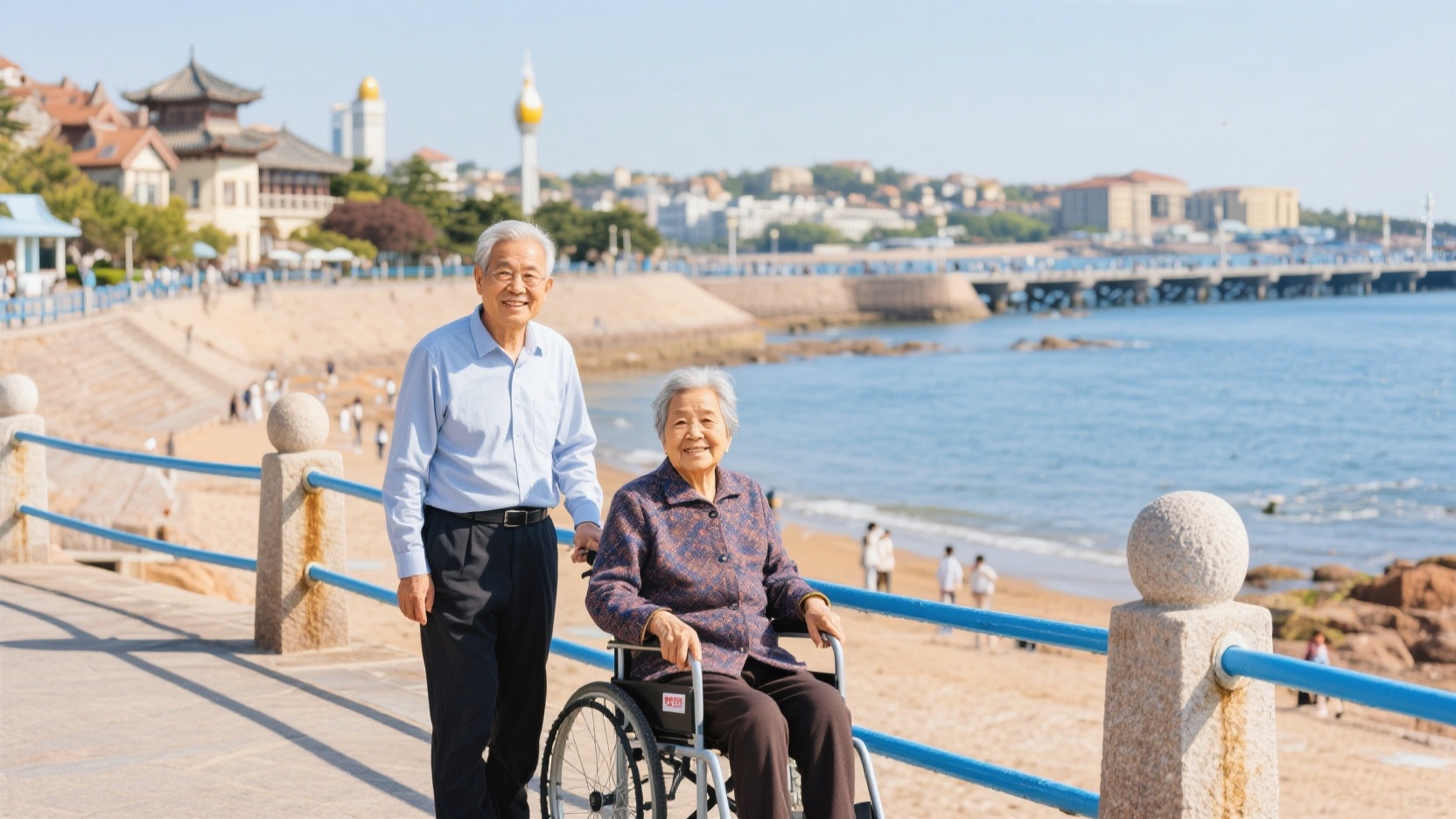
The biggest fear when taking parents to Qingdao isn't not having enough sights, but turning a "slow travel" into a "rushed" experience. The first time I took my parents to Qingdao, I planned to visit Badaguan Scenic Area, the bathing beach, and Xiaoyushan Hill all in one day. By the third stop, my mother simply sat down by the roadside and refused to move, rendering the entire afternoon's itinerary useless. Back at the hotel, her old knee injury flared up again. Later, I revisited the area three times before finally devising a 5-day, 4-night slow travel itinerary suitable for seniors: visiting only one or two key points each day, returning to the hotel for a two-hour lunch break, and confirming the elevator, ramp, restroom, and hospital access distances for all locations in advance.
My lessons learned from past mistakes: For a leisurely trip to Qingdao, consider these four key indicators.
I later simplified my criteria for taking my parents to Qingdao into four hard criteria: the walking distance from the drop-off point to the viewpoint should not exceed 800 meters; there should be benches along the way or places to sit down at any time; there should be a high density of toilets, including accessible ones; and the nearest level-two or above hospital should be within a 20-minute drive. Any attraction that did not meet these criteria, no matter how famous, was resolutely crossed off the list.
Based on this standard, Signal Hill and Xiaoyushan Hill have many steps, so it's not recommended to force elderly people to climb them. Instead, consider the accessible pathways at Zhanqiao Pier and Huilan Pavilion, the flat coastal road in Badaguan Scenic Area, the outdoor ramp at the Naval Museum, and the elevator in the old building of the Beer Museum. Qingdao's old city has many slopes, so when pushing a wheelchair, prioritize the flat roads along the coast and avoid taking shortcuts through stairwells and alleys.
Daily schedule for 5 days and 4 nights: a maximum of two visits per day, with a fixed two-hour lunch break.
On the first day, we'll stay in the middle of the coastal area in the Shinan District, without venturing too far. In the afternoon, we'll only visit the Zhanqiao Pier area. The walkway from Zhanqiao Pier to Huilan Pavilion is flat and wheelchair accessible, with plenty of public restrooms. It's about a ten-minute drive from the Municipal Hospital. When we get tired, we'll sit on a bench and enjoy the sea view. In the evening, we'll return to a restaurant near the hotel for light Shandong cuisine; we won't be planning any nighttime sightseeing.
The next morning, we went to Badaguan Scenic Area. We took a taxi to the vicinity of Huashilou and only drove along the coastal Zijingguan Road to the Second Bathing Beach, keeping the journey within an hour. Public restrooms in Badaguan are scattered, so we used the restrooms at the hotel before leaving and then again at the visitor center at the beach. We returned to the hotel for lunch and a two-hour rest. After 4 PM, we went to May Fourth Square to watch the sunset over the sea. We only took photos from the outside of the Olympic Sailing Center and didn't explore it further.
On the morning of the fourth day, we visited the Qingdao Beer Museum. The old building has an elevator, the route is short, and the toilets are clean with accessible stalls. In the afternoon, we returned to the hotel for a nap and then strolled around the nearby old streets, finding a time-honored restaurant to eat mackerel dumplings. On the morning of the fifth day, we went to Zhongshan Park or Luxun Park to sit in a place with plenty of flat ground. We checked out before 11:00 AM and headed to the station, finishing our trip without rushing.
Day 3: Choose one of two options: leisurely stroll in the ancient town or soak in the hot springs. Parents should choose their preferred route based on their physical condition.
If you're still able to walk but don't want to walk too much, I recommend the leisurely bus route through Jimo Ancient City. Once you arrive, don't try to visit all the city gates as suggested by guidebooks. Just walk along the main street, find a teahouse with a courtyard to sit down, and then browse one or two intangible cultural heritage handicraft shops. There are plenty of toilets in the ancient city. The main street is smooth, but there are steps in the side alleys, so try to stay in the center if you're pushing a wheelchair. Nearby hospitals (level II or above) are within a 20-minute drive.
For those prone to cold legs, back pain, or traveling during colder seasons, prioritize hot spring tours. Choose day-trip hot spring hotels with indoor hot spring pools and rest areas, which are less tiring than exploring ancient towns. Remind parents not to spend more than 15 minutes in the water each time, and to rest sitting down after getting out. Those with high blood pressure or heart disease should consult their doctor first. Before booking, call to confirm whether the elevator goes directly to the changing room, and also confirm whether the changing area is non-slip and accessible.
I've taken my parents on both routes. My dad likes the hot springs, while my mom prefers sitting in the old town and drinking tea. Don't make decisions for your parents; explain the routes clearly and let them choose.
A detailed checklist for senior citizens: accessibility, restrooms, hospital distance, and 20 packing tips.
Most entrances and core trails of coastal scenic areas have access, but some older public restrooms lack accessible facilities. My habit is to check the locations of two restrooms each day before setting off—one at the entrance and one midway along the route. When I encounter a restroom, I remind my parents to use it so they don't have to wait until they're in a hurry. For a leisurely trip, I allow at least four restroom breaks each day.
Avoid choosing seaside guesthouses on trendy hillsides; prioritize mid-range chain hotels along Haiping Road in the Shinan District, with direct elevator access and breakfast within a three-minute walk. Before checking in, confirm the distance from the room to the elevator and the hotel's driving distance to the nearest hospital. When traveling with parents, proximity to a hospital is more important than proximity to tourist attractions.
A 20-item packing list for seniors traveling: 1. ID card and medical insurance card; 2. Folding cane; 3. Knee pads; 4. Two pairs of old shoes; 5. Thick cotton socks; 6. Loose trousers; 7. Windproof jacket; 8. Thin down vest; 9. Raincoat; 10. Folding stool; 11. Thermos cup; 12. Room temperature water cup; 13. Tissues and wet wipes; 14. Spare adult diapers; 15. Non-slip slippers; 16. Medicine box; 17. Photocopy of medical record; 18. Reading glasses; 19. Power bank; 20. Emergency contact card. Five categories of commonly used medications: daily chronic disease medications, cardiovascular emergency medications, gastrointestinal medications, cold and fever reducers plus a thermometer, and external medications such as band-aids and iodine plasters. Keep the original packaging and instructions for all medications. Chronic disease medications should be carried on board and not checked in.
Blogger's Summary + Practical Tips
The key to Qingdao's appeal for senior citizens' leisurely travel isn't the number of attractions visited, but rather the ability to return to the hotel each day for a comfortable two-hour lunch break. Instead of cramming your itinerary full, it's better to check details like accessibility, restroom locations, and hospital distances beforehand. Remember three principles: no more than two key destinations per day; don't compromise on a two-hour lunch break; and don't force yourself to take uncertain routes.
Practical Tips: Late spring and early summer, as well as September and October, are the most comfortable months. Avoid the humid heat of July and August and the winter sea breeze. The ultraviolet rays are strong at the beach, so wearing a hat is safer than using an umbrella. Seafood should be thoroughly cooked, and parents with sensitive stomachs should not try raw marinating. Have your parents send you their location once a day, and keep an emergency contact card in your outer pocket.