
Artistic Secrets in the Old Town | A Map of Qingdao's Niche Culture: 8 Spiritual Corners
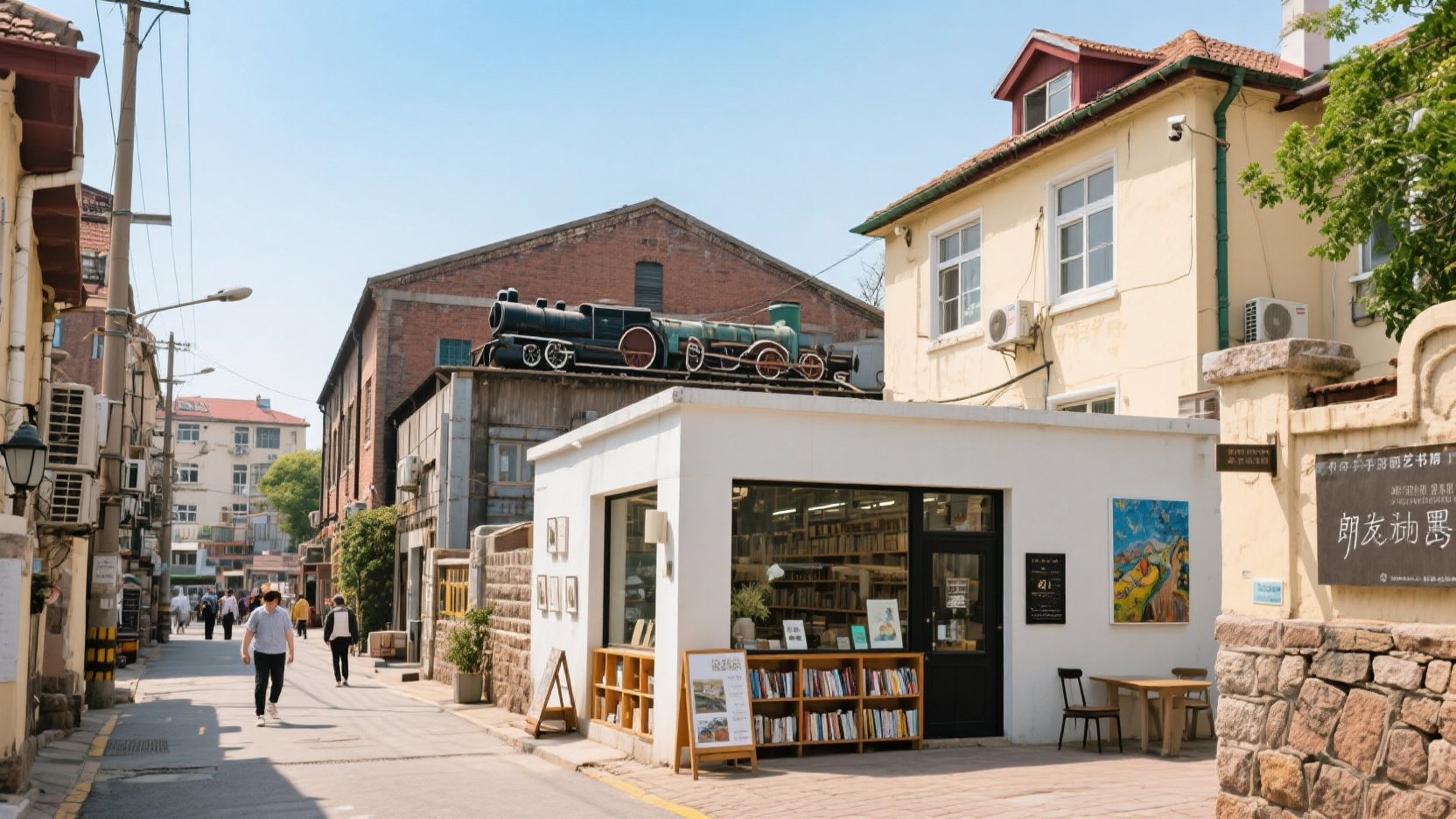
Qingdao's artistic atmosphere isn't confined to the seaside; it's also hidden in the old city streets and industrial relics. This route avoids the popular tourist spots like Zhanqiao Pier, Badaguan Scenic Area, and the University Road's trendy walls, instead exploring independent bookstores, private art galleries, vintage warehouses, and creative parks built in old factories. It's recommended to start from the central part of the old city, spending the morning browsing bookstores and art galleries, relaxing in a local café in the afternoon, and then heading to the northern industrial heritage area in the late afternoon. This is a perfect route to explore on foot throughout the day.
Liangyou Bookstore · Tower 1901
Liangyou Bookstore is tucked away in an old post office tower. Its wooden staircase, latticed windows, and old postal archives create a unique multi-faceted cultural space, a rarity in Qingdao. The bookstore has a distinctly Shanghai-style literary atmosphere, offering a comprehensive collection of local Qingdao publications and urban history materials, making it suitable for readers interested in understanding the city's history and culture. Highlights include the first-floor creative and cultural area and the tower's reading room, where old-fashioned lamps, window desks, and filing cabinets have been preserved in their original state. Photography tips: Use backlighting to capture the view from the third-floor tower windows, and use the corner of the wooden staircase for framing shots; these techniques easily convey the depth and graininess of bygone eras.
Rereading Bookstore
Reread Bookstore is located on the ground floor of a residential building. Its storefront is unassuming, and the selection leans towards humanities, social sciences, and independent publications. It often hosts small book clubs. The atmosphere inside is quiet and restrained, without the usual noisy, photo-op vibes. Highlights include handwritten recommendation cards, a corner with out-of-print poetry collections, and sample copies kept by the owner. Photography tips: Place the greenery near the entrance alongside the bookshelves; inside, take photos by the window using natural light to capture moments of people flipping through books. Please be quiet and don't disturb those reading.
Langyi Art Museum
Langyi is a small, privately-run art museum that primarily features exhibitions on paper, prints, and works by young artists, with ample white space. The exhibitions have a comfortable pace, perfect for slow viewing. The permanent exhibitions often juxtapose manuscripts with original works, and the windows offer views of the old town's red-tiled roofs and sloping streets. Photography tips: Take silhouette photos in front of the large windows at the end of the exhibition hall, or capture side profiles along the viewing route; these capture the museum's atmosphere better than posed front-facing shots.
Mo Fei Mo Gallery
Mofeimo is an independent gallery representing artists primarily working in contemporary painting and mixed media, with exhibitions updated rapidly. The gallery space is small, but professional yet approachable; the curator often provides on-site explanations to help viewers understand the judgments behind the works. Highlights include the introductory texts, details of the artworks, and artist information tucked away in the corners. Photography tips: Stand in front of the artworks with a large white wall in front, or use side lighting with spotlights to capture details of brushstrokes; avoid using flash.
Territory Coffee
Territory Coffee is a neighborhood café on an old town corner, specializing in bar-style pour-over coffee, with the bean menu changing seasonally. It's popular with regulars, has a quiet atmosphere, and is a great place to take a break. Highlights include the barista pouring water, the street view from the window, and the corner with stacks of vinyl records. Photography tips: Take photos from above the bar and latte art, utilizing natural light from the window, and avoid using flash to preserve the ambiance. If you get tired, this café serves as a convenient stop between the first and second halves of your journey.
Textile Valley
Textile Valley was transformed from an old cotton mill, preserving its sawtooth-shaped factory buildings, industrial pipes, and extensive graffiti. Studios, boutiques, and vintage furniture shops are interspersed throughout the park, blending industrial style with design sensibilities. Highlights include the interplay of light and shadow under the sawtooth skylights, the striking contrast between old machinery and colorful graffiti, and the remaining production slogans. Photography tips: Use a wide-angle lens to capture the vertical lines of the factory buildings; wearing solid-colored clothing in front of the graffiti walls will make people stand out more.
Qingdao Secondhand Warehouse
Qingdao Vintage Warehouse is a retro-style living aesthetic space, displaying old furniture, enamelware, patterned tiles, old telephones, and other objects bearing the marks of use. Its atmosphere is warm and nostalgic, not deliberately exotic, but more like an accessible memory warehouse. Highlights include the patterned tile wall, old-fashioned radios, and old Qingdao photographs. Photography tips: Use the patterned tiles as a foreground, or sit on an old wooden chair for mid-range shots; warm lighting will create more depth. Handle the items gently and respectfully when photographing them.
Sifang Motorcycle Park
Sifang Locomotive Park was transformed from the old Sifang Locomotive Factory, preserving the railway tracks, old factory buildings, and giant industrial components, while adding lawns and exhibition spaces. The park is open and rugged, perfect for an evening stroll. The highlights are the contrast between the old railway tracks and the factory facades, as well as the public exhibitions held periodically. Photography tips: Stand in the middle of the tracks to capture the depth; before sunset, use side lighting to photograph the factory outlines; color temperature variations will make the image more stable.
These eight spaces, though distinct from one another, collectively represent a side of Qingdao rarely seen by tourists. They don't rely on crowds or photo spots to attract visitors; instead, they retain people through books, paintings, vintage items, coffee, and industrial memories. Explore the spiritual corners of this city with your own footsteps.