
Sleeping in Nanjing on a Budget: A Guide to Four Price Tiers of Housing, Avoiding Noise Conservation in Old Alleys and Tourist Area Premiums
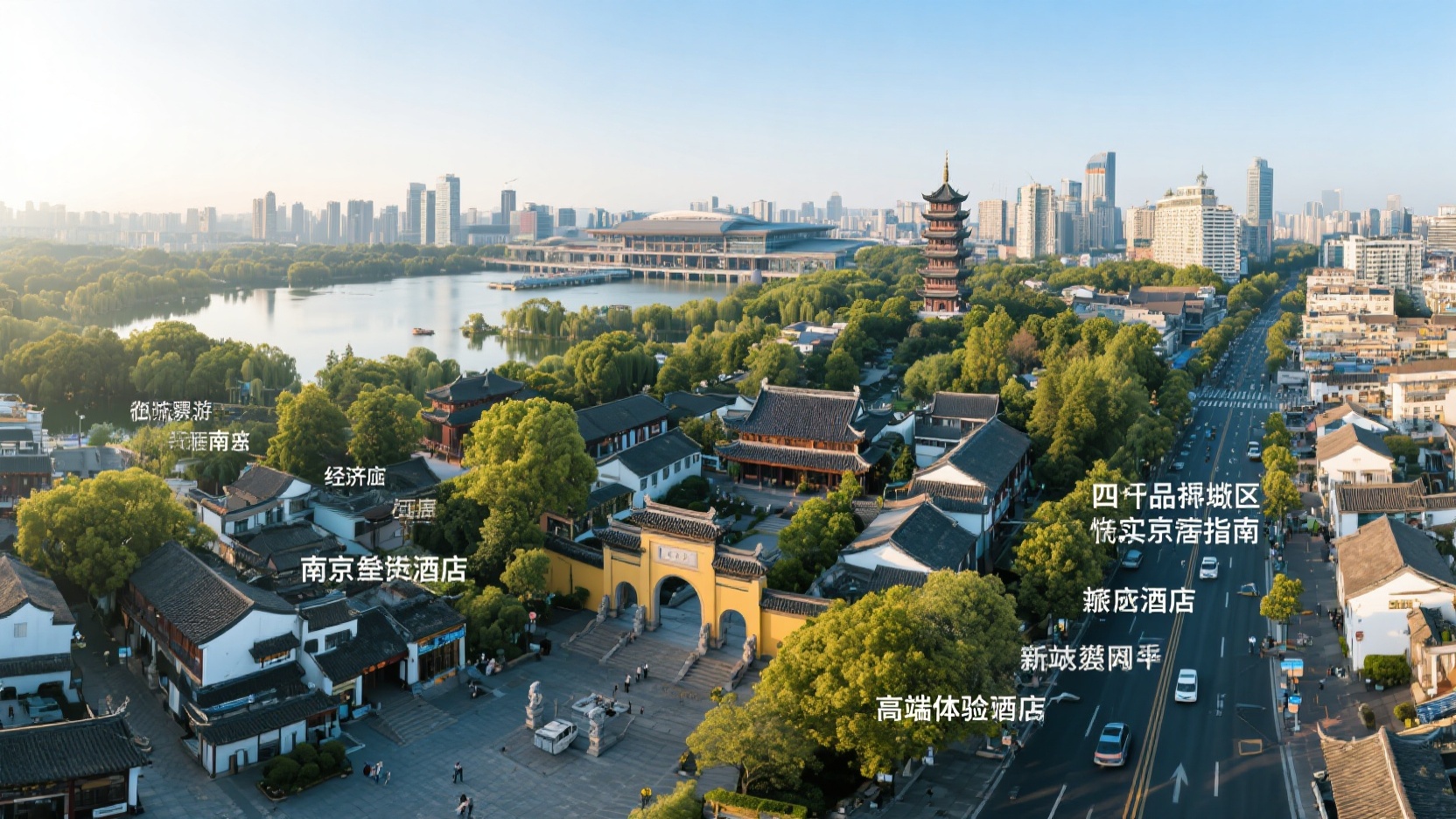
Choosing accommodation in Nanjing can easily lead to getting lost in debates about "Gulou or Xuanwu" if you only consider administrative districts. A more practical approach is to work backward from your budget to determine the best area: different price points don't simply correspond to differences in hotel class, but rather to a combination of location, transportation, and nightlife radius. Below, we break down the most worthwhile areas to stay in Nanjing across four budget tiers, and highlight common pitfalls for each tier.
Economy type: Nanjing South Railway Station hub area and old alleys surrounding Confucius Temple
Suitable for: Students, backpackers, and overnight travelers arriving by early morning high-speed train or red-eye flight. The Nanjing South Railway Station area boasts numerous chain express hotels, and is served by the interchange of Metro Lines 1, 3, S1, and S3, allowing for direct access to the airport and high-speed rail station without transfers, making it ideal for travelers with luggage. Nearby commercial complexes like Yuhua Living Room and Zhengda Himalaya make it easy to find late-night snacks and breakfasts. Caution: Some "apartment hotels" converted from older apartments around the South Railway Station lack front desks; advance contact is necessary for late-night check-ins, and soundproofing is generally poor. Avoid hotels claiming to be "South Railway Station locations" more than 800 meters from the metro station, as these may actually be in older residential areas like Yuhuatai.
Another option in the same price range is the old alleys surrounding Confucius Temple, such as the small guesthouses and hostels on the north side of Changle Road and Chaoku Street. The advantage here is that it is within walking distance of the Qinhuai River, and the experience is best in the early morning and late at night after the tourists have left. However, the rooms converted from old residential buildings in the southern part of the city are small, and the wooden floors have poor sound insulation, so light sleepers need to bring their own earplugs; during holidays, there will be temporary traffic control around the scenic area, making it difficult to get a taxi and limiting the parking of shared bicycles.
Comfortable option: Grand Palace - Presidential Palace and Zhujiang Road university district
Suitable for: Young couples, first-time visitors to Nanjing who want to efficiently visit the city's main attractions. The Daxinggong area is a transfer station for Metro Lines 2 and 3, bordered by the Presidential Palace and the Six Dynasties Museum to the east, Xinjiekou to the west, and the 1912 Street area to the north. It offers a variety of late-night dining and bar options. Comfortable hotels in this area are mostly concentrated at the intersection of Taiping North Road and Zhongshan East Road; these buildings are relatively new, and room sizes are more consistent than in the old city's guesthouses. Tips to avoid: Rooms facing the 1912 Street area may remain open until the early hours on weekend nights; it's advisable to request a room facing away from the street when checking in. Prices are significantly higher during peak season due to the combined business and tourist traffic; it's recommended to book a package including breakfast in advance.
The Zhujiang Road-Guangzhou Road university area is more suitable for travelers who enjoy bookstores, cafes, and local life. Located between Zhujiang Road Station on Metro Line 1 and Fuqiao Station on Metro Line 3, this area boasts numerous established hotels and boutique guesthouses near Nanjing University and Southeast University. Librairie Avant-Garde is within walking distance, and there's a plethora of food options. The downsides are that some properties were renovated in the 1990s, resulting in smaller bathrooms, and the side facing Guangzhou Road experiences constant traffic noise; choosing a higher floor room would offer a quieter environment.
Quality-oriented: Xinjiekou core area and Xuanwu Lake-Gulou area
Suitable for: Business travelers, family trips, and guests who value shopping and subway accessibility. Xinjiekou is the commercial heart of Nanjing, with subway lines 1 and 2 connecting here. It's surrounded by Deji Plaza, Central Mall, and Fengfu Road food street, forming a complete shopping complex. High-quality hotels are mostly concentrated around the intersection of Zhongshan South Road and Hanzhong Road, offering standard room types, consistent service, and panoramic city skyline views from higher floors. Caution: Traffic in Xinjiekou is congested; taking the subway is less convenient than taxis during rush hour. Some high-floor hotels have long elevator wait times; allow extra travel time if traveling during morning rush hour or exhibition periods.
The Xuanwu Lake-Gulou area offers another quality option that balances scenic views with convenience. Metro Line 1 connects Nanjing Railway Station, Xuanwu Gate, and Gulou, and Xuanwu Lake Park is within walking distance. Nearby amenities include Hunan Road, Shiziqiao Food Street, and the Xiaguan Riverside area. Some hotels in this area are lakeside with good views, but the rooms may feel slightly damp; it's recommended to choose higher floors and south-facing rooms. Traffic control measures are in place near the Gulou roundabout in the mornings and evenings; those driving should check hotel parking policies.
High-end experiential options: Zhongshan Scenic Area Resort Hotel and Yihe Road Republican Era Mansion Area
Suitable for: Anniversary vacations, family leisurely trips, and guests willing to pay for a pleasant environment and privacy. Most resort hotels within the Zhongshan Scenic Area are built into the mountainside, surrounded by sycamore trees and forests. They are within walking distance of Ming Xiaoling Mausoleum, Meiling Palace, and Sun Yat-sen Mausoleum, offering tranquil forest trails in the early morning away from the crowds. Transportation relies mainly on hotel shuttle buses or private cars; allow at least 30 minutes for travel to the old town attractions. There are limited high-end dining options nearby, making it more suitable to have meals at the hotel. Important reminders: During peak seasons and holidays, traffic restrictions apply to the scenic area; vehicles from outside the area must be registered in advance, otherwise, you will have to park outside the scenic area and transfer to another vehicle. There are many mosquitoes in the mountains and forests; in summer, keep window screens closed.
The Yihe Road-Jiangsu Road area, featuring former Republican-era mansions, offers a completely different, old-fashioned Nanjing experience. Boutique hotels converted from detached Western-style buildings are extremely rare, nestled quietly under the shade of plane trees, perfect for photography and a leisurely pace. The area is about a ten-minute walk from Yunnan Road Station on Metro Line 4. There are no large shopping malls nearby, and convenience stores are scarce; you'll need to take a taxi to Xinjiekou or Hunan Road to stock up on travel supplies. High-end rooms are in high demand, requiring reservations weeks in advance for weekends and holidays.
In summary, the comfort of accommodation in Nanjing depends not on the price tag, but on your itinerary for the day. If your main activities are in the Qinhuai area of southern Nanjing, prioritize Confucius Temple or Daxing Palace; if your itinerary revolves around Zhongshan Mountain and Xuanwu Lake, consider staying near Gulou or within the scenic area; and only consider Nanjing South Railway Station if you need to catch a high-speed train or flight. Planning your itinerary in advance, and then narrowing down your choices to specific areas within the same budget, can significantly reduce commuting and the loss of experience due to peak season price premiums.