
A leisurely 5-day trip to Lhasa | A checklist for parents who experienced zero altitude sickness and a relaxed pace (a guide for senior citizens to avoid pitfalls)
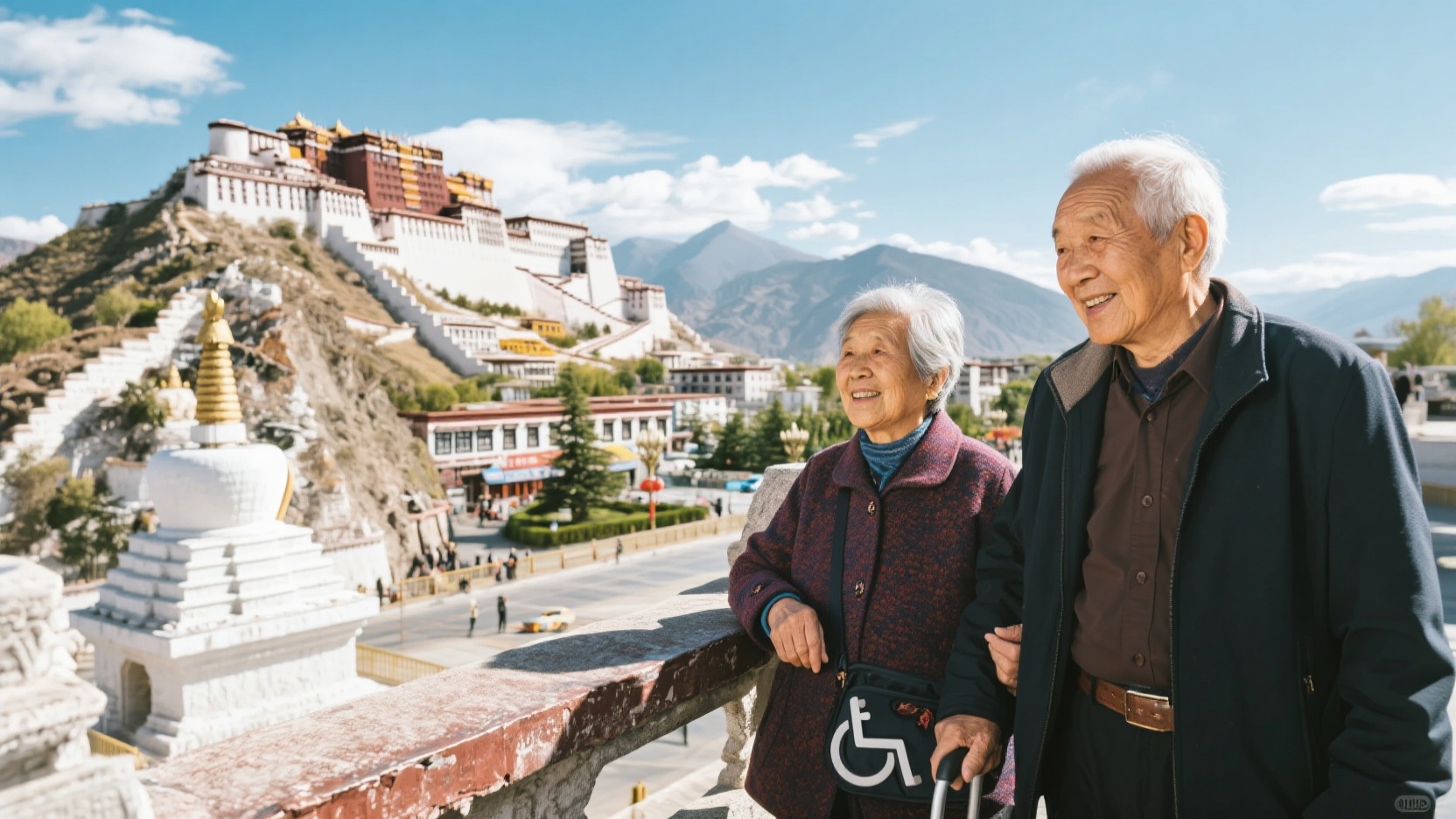
This was my third trip to Tibet with my parents. The previous two trips had been fraught with altitude sickness and the hassle of rushing around. My mother has knee problems, and my father has high blood pressure, so this third trip involved only one or two key destinations each day, with a two-hour rest at the hotel around noon. In five days, we didn't need supplemental oxygen or a trip to the hospital in the middle of the night. This five-day, four-night itinerary for senior citizens in Lhasa focuses not on the number of attractions, but on factors like elevators, accessible pathways, toilet density, walking distances, and hospital accessibility.
First, choose the right accommodation: proximity to elevators, accessible facilities, and hospitals is more important than views.
When choosing a hotel, only three things matter: elevators cover all floors, the distance from the room to the elevator is short enough, and the bathroom has handrails or a shower chair can be installed. Avoid older guesthouses around the Potala Palace that lack elevators. The hotel should be within a 15-minute drive of the Tibet Autonomous Region People's Hospital or Lhasa People's Hospital.
I recommend staying near Yutuo Road or Jiangsu Road. It's about a 15-minute walk to Barkhor Street and Potala Palace Square, quiet and easy to hail a taxi. A two-hour afternoon nap is crucial; staying too far away and having to travel back and forth will tire the elderly out.
Check the toilet density in advance. Some public toilets on the outskirts of Barkhor Street require going up and down stairs. If you are with elderly people, prioritize the toilets in shopping malls or large restaurants. Hotel lobby toilets can be used in emergencies. Every step you take is a step less.
2. Five-day, four-night itinerary: Do only 1-2 things each day, and a two-hour lunch break is a must.
Day 1: Upon arrival in Lhasa, no sightseeing is planned. Check into the hotel, have your blood oxygen and heart rate checked, and take a 10-15 minute walk on flat ground. Dinner will be light. Showering is not recommended; just wipe yourself with warm water.
On Day 2, take a walk around the perimeter of Potala Palace Square in the morning, without entering the palace itself. The main palace has many steps and a significant elevation gain, which may not be suitable for seniors. The square is flat and open, offering opportunities to photograph the palace's reflection; keep the walking distance within 1 kilometer. Return to the hotel for a two-hour lunch break. After 4 PM, stroll along the Barkhor Street pilgrimage route. If you get tired, stop at a teahouse, order a pot of sweet tea and Tibetan noodles; the cost is only a few dozen yuan per person.
Day 3 is in the next section. On Day 4, choose either the Tibet Museum or Norbulingka in the morning. Both have paved paths and accessible pathways, and the walk is about 1.5 kilometers. In the afternoon, continue to rest. In the evening, go to Zongjiao Lukang Park to watch the locals dance the Guozhuang dance. The round trip is short and there are many toilets.
On Day 5, I slept in until I naturally woke up, checked my blood pressure and blood oxygen before returning home, and then went to the supermarket to buy low-sugar yak jerky and butter tea powder. I allowed myself plenty of time to avoid catching an early flight.
Third day, choose one of two options: leisurely stroll through the ancient town or soak in the hot springs. Key details to avoid pitfalls.
Option A involves a leisurely stroll through the surrounding Tibetan villages. Choose villages with stone-paved paths but no continuous uphill climbs, and keep the one-way travel time under 40 minutes. The drop-off points should have seating and restrooms. Avoid ancient towns that require transferring to eco-friendly buses or walking more than 800 meters to reach the core area. Bring a small folding stool so elderly people can sit down easily.
Option B: Hot springs around Lhasa. Prioritize hot springs with private changing rooms, non-slip floors, adjustable water temperature, and reclining chairs in the rest area. Avoid prolonged soaking in high-altitude hot springs as this can cause blood pressure fluctuations. Limit soaking time to 15 minutes per session, followed by drinking warm rehydration water and resting for half an hour. Elderly individuals with a history of cardiovascular disease are advised to soak only their feet, not their entire body.
Regardless of which option you choose, only one destination will be planned for the day. You must depart after 9:30 AM and return to the hotel for a midday rest before 2:00 PM. There will be a rest stop every 40 minutes along the way. Please check the locations of hospitals at level two or above along the route in advance.
IV. Packing list for seniors traveling to Lhasa (20 items) + 5 categories of commonly used medicines (reminder)
The 20-item list is organized into five groups: "Documents, Walking, Warmth, Emergency, and Daily Necessities." Documents: 1. Original ID card; 2. Copies of medical insurance card and chronic disease medical records; 3. Emergency contact card. Walking: 4. Non-slip soft-soled shoes; 5. Folding trekking poles; 6. Knee pads; 7. Folding folding stool; 8. Disposable raincoat. Warmth: 9. Lightweight down or fleece lining; 10. Windproof hat; 11. Sun hat and sunglasses; 12. Lip balm; 13. Insulated water bottle. Emergency: 14. Portable pulse oximeter; 15. Oral rehydration solution; 16. Small packages of glucose or chocolate; 17. Commonly used medication refill boxes; 18. Band-Aids and iodine swabs. Daily Necessities: 19. Power bank and charging cable; 20. Spare reading glasses and a paper itinerary.
Five categories of commonly used medications: Category 1: Cardiovascular medications such as antihypertensive drugs and nitroglycerin must be carried in their original packaging, along with a doctor's prescription. Category 2: Hypoglycemic drugs and blood glucose meters; pay attention to the storage of insulin under the high temperature differences at high altitudes. Category 3: Cold and fever reducers and gastrointestinal medications; Lhasa has large temperature differences between day and night, which can easily affect elderly people with sensitive stomachs. Category 4: External medications such as pain relief patches, medicated oils, and joint creams. Category 5: Emergency medications; do not carry large quantities of oxygen cylinders; hotels and hospitals are more reliable, so carry small bottles with you. Do not mix any medications; separate medicine boxes for morning and evening use, kept by your children to avoid duplicate doses.
Before leaving home each day, check the location of the toilets. Every 20 minutes of walking, encourage the elderly to sit down and rest, and don't wait until they complain of being tired. When you return to the hotel for a midday nap, don't just lie on the sofa and use your phone. Take off your coat, draw the curtains, and lie flat for at least 90 minutes.
V. Blogger's Summary: Three Bottom Lines for Seniors' Trip to Lhasa
I've visited many high-altitude destinations in China, and Lhasa is the city that most needs to simplify its travel plans. First, don't chase the number of attractions; a maximum of four key sites in five days. Second, accommodation and transportation decisions must prioritize "elevator accessibility + proximity to hospitals," not just how nice the room is. Third, without fail, return to the hotel for a two-hour afternoon nap, as the afternoon is a time when altitude sickness is easily triggered and worsened.
As long as you follow these three points, taking your parents to Lhasa won't be a hassle. Forward this checklist to the person in your family who's responsible for planning the trip; some details can really save you a trip to the hospital.