
48-Hour Lhasa Walk | A Weekend Two-Day, One-Night Quick Trip to the Old City and Sera Monastery
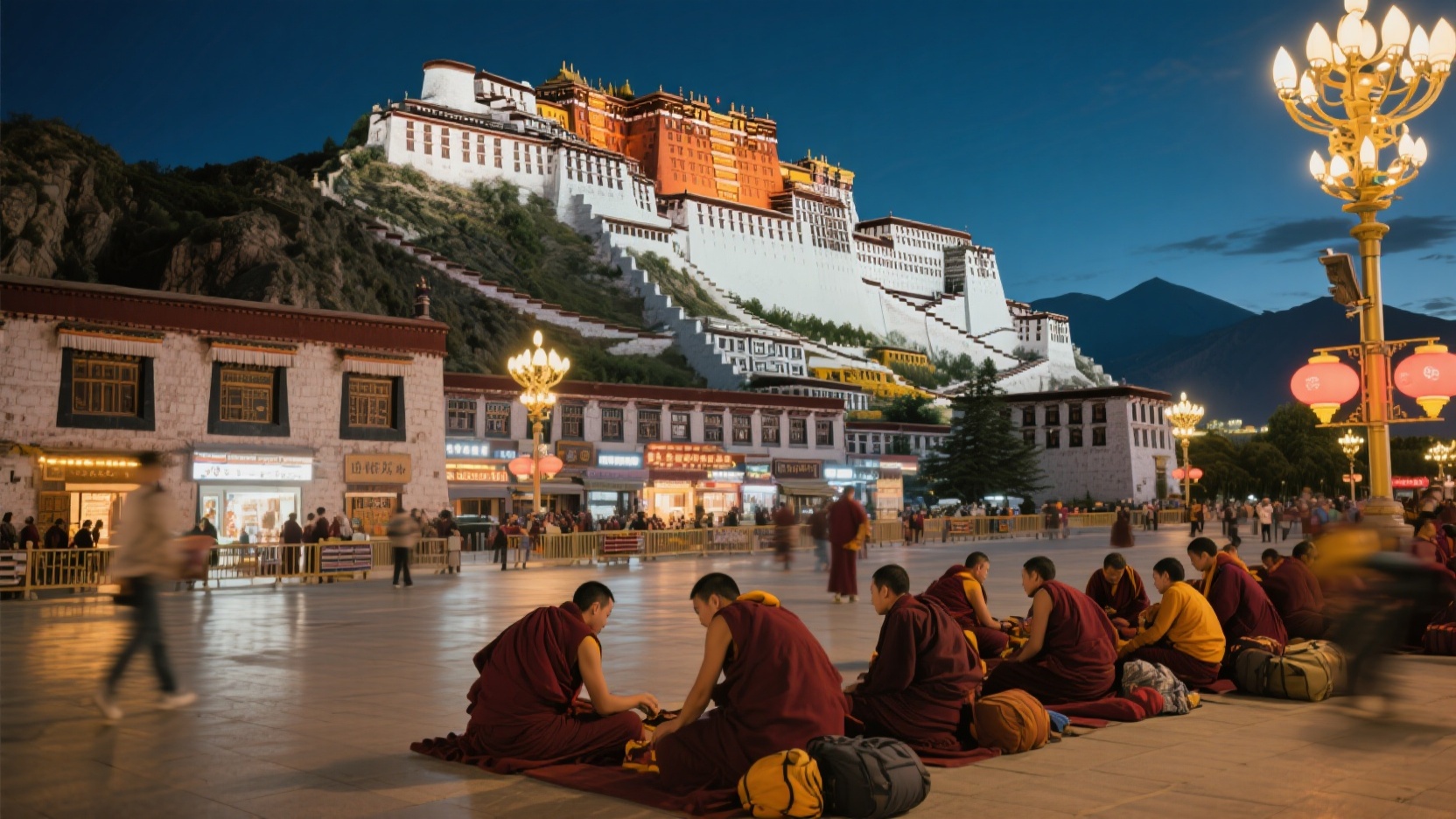
A two-day, one-night weekend in Lhasa isn't ideal for trying to do too much; a more suitable pace is a combination of "high-density sightseeing in the city center plus a short trip to the suburbs." The following itinerary is designed based on altitude acclimatization logic, with the first day focusing on staying within the city limits and the second day exploring nearby temples.
Day 1: High-density connections within the old town core area
Enter through the security checkpoint on the east side of Potala Palace Square in the early morning. There are fewer people then, and the lighting is ideal for photographing the reflection of the palace. If you have a reservation for Potala Palace tickets, it's recommended to schedule your visit in the morning, as a one-way tour inside takes about two hours. If you haven't made a reservation, there's no need to queue; the square and the Chakpori Hill viewing platform already cover the most recognizable angles. The Chakpori Hill viewing platform is located on the southwest side of the Potala Palace, and in the morning, with the sunlight shining through, it's suitable for photographing the same angle as the back of banknotes.
At noon, walk from the Potala Palace to the outskirts of Barkhor Street for lunch. Choose a local favorite, a sweet teahouse. Tibetan noodles, beef patties, fried potatoes, and a pot of sweet tea make for a quick energy boost without disrupting your itinerary. Teahouses offer refills by the cup, perfect for a short break, but seating is limited at midday, so it's recommended to go after 1 PM.
In the afternoon, enter the Jokhang Temple area and first walk clockwise around Barkhor Street, observing the daily life of pilgrims and handicraft stalls. Visiting the main hall of Jokhang Temple requires queuing separately; if time is limited, you can just walk the outer circumambulation path and focus on observing the order at the entrance of the hall containing the twelve-year-old life-size statue of Shakyamuni. After 4 PM, the number of groups decreases, and the light turns warmer, making it suitable for photographing local scenes in the old alleys on the north side of Barkhor Street.
Don't rush back to the hotel in the evening. There are good spots for taking photos of the Potala Palace at night from the square and the south side of Zongjiao Lukang Park. After dark, there are fewer tourists in the square, and the temperature drops significantly, so you'll need a windproof jacket. If you still have energy, walk back to the Barkhor Street area along Beijing East Road, where you can see the Jokhang Temple at night and the night lights along the prayer wheel path.
Day 2: Sera Monastery half-day tour and some sightseeing in the old city
The next morning, we'll visit Sera Monastery, a route that offers the most stable transportation and the highest concentration of essential information among the nearby monasteries. The debating sessions at Sera Monastery usually begin around 3 PM. It's recommended to visit the main hall and various colleges in the morning, have a simple lunch of Tibetan fried noodles or bring your own food near the monastery, and arrive early in the afternoon to secure a good spot on the periphery of the debating area. The debating session lasts about an hour. Entry into the debating area is prohibited; please maintain distance when taking photos and avoid using flash.
After returning to the city from Sera Monastery, you can spend the remaining time exploring the old town: Chongsaikang Market is a good place to observe local commerce, and Jokhang Temple, though small, is less crowded and suitable for quietly viewing murals and circumambulating prayer wheels. If you are interested in Tibetan incense and Thangka painting, there are workshops in the alleys around Barkhor Street, which are more suitable for leisurely browsing than the shops on the main street, but you should ask the artisans for permission before taking photos.
Transportation Saving Card
Lhasa's public transportation covers major tourist attractions and is much cheaper than taking a taxi. It supports the China Transport Card and is suitable for short two-day trips. For airport transfers, the airport shuttle bus is the preferred option, as carpooling is not always faster than taking the bus. To go to Sera Monastery, you can take a bus from major intersections in the city. For the return trip, simply wait for the bus opposite the drop-off point; there's no need to hire a car. The old city is mostly on foot, but the area around Barkhor Street has many alleys, so it's recommended to download an offline map beforehand to save time asking for directions.
Packing list
The most important document is your ID card, which is required for security checks when entering squares, temples, and Barkhor Street. A three-piece sun protection kit—a wide-brimmed hat, sunglasses, and high-SPF sunscreen—is essential, as Lhasa's UV rays don't diminish despite the cooler weather. For moisturizing, bring lip balm and moisturizer; use saline spray for nasal dryness. Layer clothing in an "onion" style: a quick-drying inner layer, a fleece middle layer, and a windproof outer layer, as there are significant temperature differences between day and night. Oral glucose solution and a thermos are more practical than a portable oxygen tank; for mild altitude sickness, rest, replenish sugar and warm water, and avoid relying on supplemental oxygen.
Avoiding pitfalls while queuing
During peak season, it is essential to make reservations for the Potala Palace in advance through official channels. On-site queues usually result in no tickets remaining, and do not trust any so-called "access channels" offered without a reservation. At Jokhang Temple, pilgrims congregate in the morning, with the longest queues at the main hall. Regular visitors are advised to enter after 2 PM. At Sera Monastery, do not arrive at the designated time for the debate; arrive 20 minutes early to secure a good spot. Once the debate begins, only observe from the outer circle; do not enter the area where the monks are seated. Barkhor Street has multiple security checkpoints; the north entrance is usually less crowded than the main entrance, saving considerable time.