
Don't go to Shuanglong Cave! | A local's recommended list to avoid the pitfalls: How to explore Jinhua in 4 days without spending money on entrance fees.
Having lived in Jinhua for five years, I dare to say something that might offend many: people who come solely for Shuanglong Cave and Hengdian World Studios have most likely never even scratched the surface of Jinhua. Don't rush to refute me; those paid entrances and imitation ancient streets could be replicated in any city across the country.
The truly authentic local details are found in the free, open, and even slightly old-fashioned everyday life. Farmers' markets, university backstreets, abandoned train stations, and old city alleyways—these places not only don't charge admission fees, but also offer a clearer view of Jinhua's urban fabric. This four-day itinerary avoids any major paid attractions, relying entirely on public transportation, shared bikes, and walking, making it ideal for those who want to save money but still explore deeply.
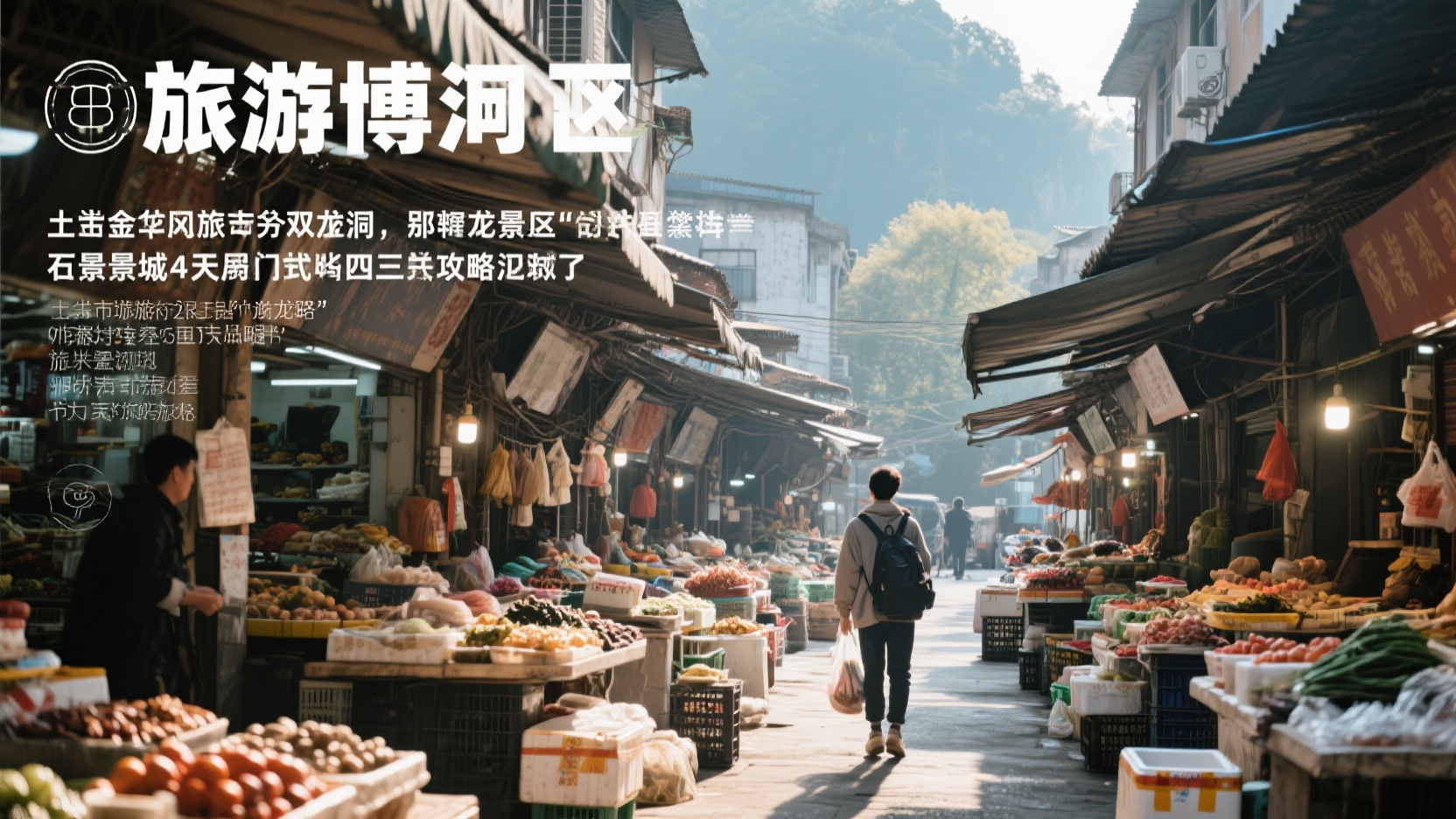
Day 1: Community Market Day: The Flavors of Jinhua Aren't in Tourist Areas, But in the Morning Market
Go to Lanxi Gate Market at 7 a.m., don't treat it as a tourist attraction, but as a "local dialect listening lesson." The vendors will tell you which vegetables are fresh and tender today, and which tofu was made in the middle of the night. Buy a freshly baked pastry, eat it standing on the roadside, and you'll understand that you don't need to queue at trendy breakfast shops in Jinhua.
Next, walk to the Gaofan vegetable market area, where the most concentrated local life of old Jinhua is preserved. Focus on the cooked food stalls and pickled food stands, rather than taking pictures with your phone. Ask the stall owners, "How do you cook this at home?", and they will most likely give you a small sample. Aside from buying groceries and two simple meals, there were almost no extra expenses for the whole day.
A word of advice: the best seasons to visit the wet market are spring and autumn. In summer, go early and leave early, and in winter, don't miss the hot pot dishes and fermented rice. And whatever you do, don't wear white shoes; the slippery surface will teach you a lesson.
Day 2: University Surroundings Day: The North Gate of Zhejiang Normal University is an Underrated Carbon Enclave
The area around Gaocun near the north gate of Zhejiang Normal University is, in my opinion, the most underrated culinary enclave in Jinhua. When students are in class, it's as quiet as an isolated island; after class, the whole alley starts steaming. Fried rice, lean meatballs, fried skewers, and grilled cold noodles take turns to appear, and you can fill your stomach for just a few yuan; spending tens of yuan per person is already considered a luxury.
During the day, you can walk into the Zhejiang Normal University campus without a ticket. Don't just go to the library and the lakeside; look for the secondhand bookstores and bulletin boards near the old dormitories. The student-posted ads for apartments, postgraduate entrance exams, and carpooling understand the real situation of young people in Jinhua better than any travel guide.
When leaving, walk along Beishan Road towards the city center; don't rush to hail a taxi. This road offers excellent shade and a sense of seamless transition between the university and local villages. Walking slowly alone is more enjoyable than taking a car.
Day 3: Old Industrial Area Renovation Day: No entrance fee for the railway and factory buildings, but they evoke memories of bygone days.
Jinhua Railway Culture Park and the Erqi area are my top recommendations for a nostalgic route without paying an entrance fee. The old platforms, signal lights, and old tracks have been preserved but are no longer chargeable attractions. If you go in the early morning or evening, there are almost no tourists, only local residents walking their dogs or jogging.
Walking west along the railway line, you'll pass some old factories and warehouses, some of which have been converted into studios or small shops. Don't just take photos at the main entrance; go around to the back and look at the chalk writing and old slogans on the walls—those are the traces of time that haven't been erased.
The focus of this day isn't on taking great photos, but on experiencing the underlying logic of Jinhua's past reliance on the railway for its livelihood. It's best enjoyed alone at a leisurely pace, not suitable for group tours or rushing through a schedule. If you get tired, just find an old bench to sit on for a while; no one will rush you.
Day 4: Old Town Alleys Day: The Ancient City isn't off-limits, just don't buy a ticket to enter the buildings.
It's not that you can't go to the ancient city, but don't rush to buy tickets and go upstairs as soon as you enter. For paid attractions like Bayong Tower and Shiwang Mansion, just stand at the entrance and look around; the places that are really worth spending time on are the outer areas like Jiufang Lane, Tianchang Lane, and Jiangjun Road.
Jiufang Alley is short, but it hides many local restaurants and handicraft shops. At three o'clock in the afternoon, old people sit on the stone steps to dry bamboo shoots, and cats nap under lanterns. This scene is free, but it is more like "real Jiangnan" than any imitation ancient street.
Walk along Tianchang Lane to the Wujiang River, then ride a shared bicycle along the riverside greenway. Watch the river's colors change in the evening, and you'll understand why Jinhua residents don't like going to scenic spots—the free river breeze is good enough.
If you only have three days, how can you cut one day to minimize losses?
For those short on time, it's recommended to prioritize skipping the old industrial area. The farmers' market and the area around universities are the core of "taste and daily life," while the old town alleys offer the most authentic free samples of Jiangnan; the industrial area is suitable for those who are obsessed with the urban fabric, but don't force it.
But under no circumstances should you skip the farmers' market day. Without the farmers' market as a foundation, your food choices in the following days are easily swayed by trendy restaurants. For solo travelers, spending the morning exploring the market and the afternoon wandering through the alleyways is the most comfortable seasonal rhythm in Jinhua.
In closing: Six hassle-free tips I didn't tell you, so don't ask the locals.
First, taking the bus offers a better view of Jinhua than taking a taxi, but try to avoid the morning rush hour and around school dismissal times. Second, shared bikes are most useful in the old town and along the riverbank; confirm the return point before entering Gaocun. Third, at the market, don't ask "What are your recommendations?"; asking "How do you cook this?" will get you more honest answers.
Fourth, when dining alone, avoid ordering elaborate dishes; sharing a small table at a food stall near a university or in a market is perfectly fine. Fifth, avoid the May Day and National Day holidays; visiting during weekdays in spring and autumn will result in much more comfortable accommodations and experiences. Sixth, while you don't need to pay for entrance fees, please bring some small change, as some older stalls still only accept cash.