
Avoid the Instagram-famous walls in Jinan | A local's recommended 5km walking route to avoid these pitfalls – don't be fooled by travel guides!
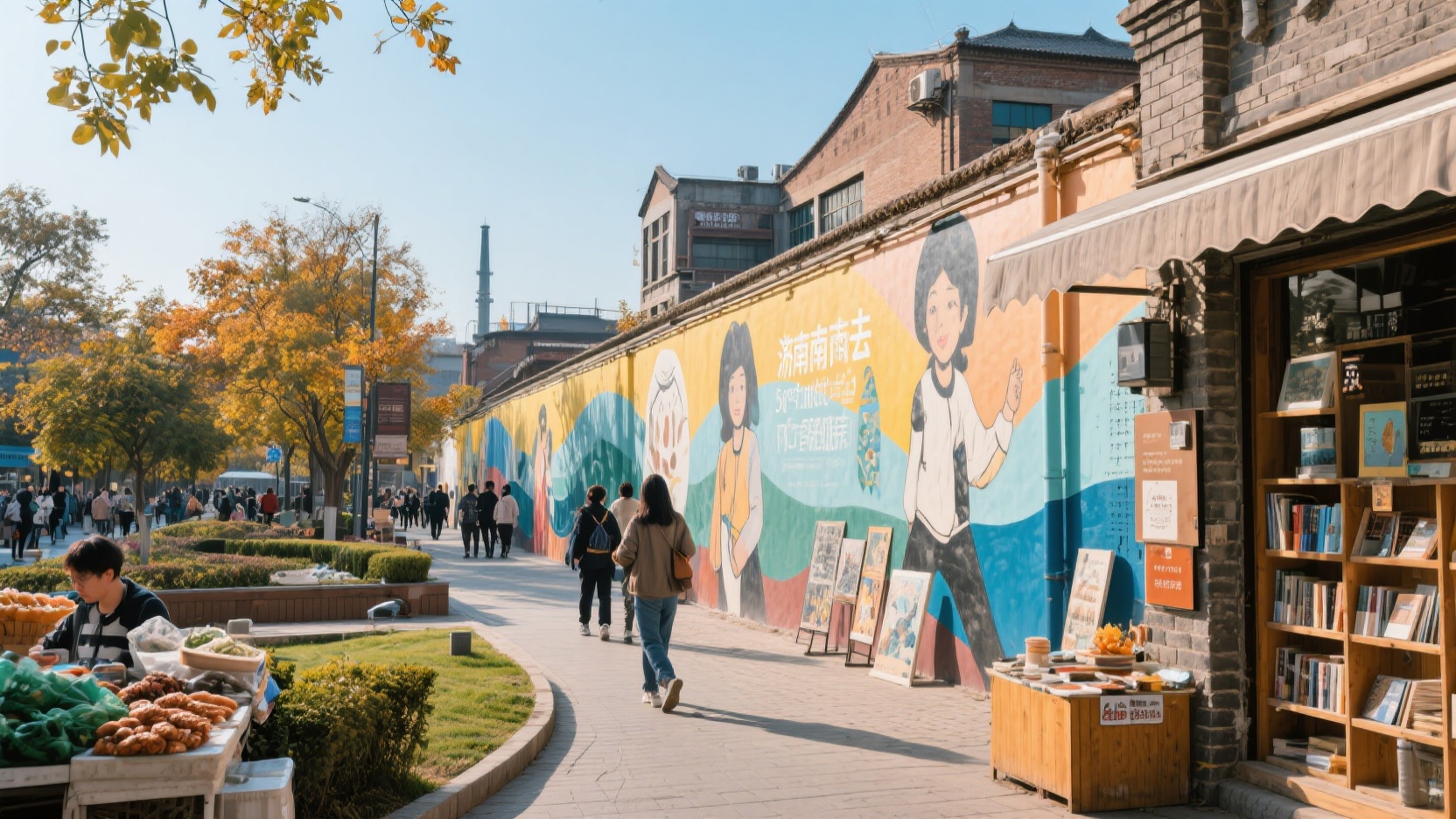
Most people who take the "Jinan" signboard on Jingsan Road as the starting point of their cultural and artistic journey end up queuing for twenty minutes in a narrow alley just to take a photo with a sea of heads behind them—locals don't even bother to take out their phones when they pass by.
Jinan's culture and art aren't found in the photo booths repeatedly mentioned in travel guides, nor on the canvas bags in chain cultural and creative stores in scenic areas. The truly unique and authentic things are hidden in the corners of old streets and alleys, in creative parks converted from old factories, in the used bookstores at 4 pm, and in the cries of vendors before the market closes. This article won't provide a list; it will simply give you a 5-kilometer route that locals routinely take, and along the way, thoroughly explain the pitfalls to avoid.
This isn't about "checking off-the-beaten-path tourist spots," but rather a slow-paced urban observation. The following three overhyped spots are places even locals wouldn't bother visiting; each stop along the route explains why it's worth stopping for 10 minutes, where the photo spots are, and what to eat nearby.
First, a word of caution: the "Jinan Wall" on Jingsan Road and the Jiaxin Hutong are so noisy that even passersby find them annoying.
The large "Jinan" signboard and the narrow alleyway at the old commercial district of Jingsan Road are typical "artsy covers" on social media. In reality, it's just a narrow alley, a few dozen meters long, with walls painted in blocks of color, crowded with people holding reflectors during peak hours. Locals mostly just wander through it, not consider it a destination. Because apart from that wall, the surrounding so-called "cultural and creative markets" are mostly mobile stalls with mediocre content, high prices, and people typically take photos and leave.
If you absolutely must take photos, position yourself three steps south of the north entrance of Jiaxin Hutong. Use a telephoto lens to compress the crowds and avoid the tangled overhead wires. Nearby, the Qianmo Bookstore on the south side of the old commercial district is truly worth a visit; it's quiet, features local Jinan architectural elements, and is more visually appealing than the walls. For food, there's an old restaurant selling braised pork belly east of Jingsan Road. Go before lunch for a good mix of lean and fatty meat; it costs around ten yuan per person, much more affordable than the snacks at tourist attractions.
Kuanhouli and Qushuiting Street, two "literary traps" that have been dubbed legendary by travel guides.
Kuanhouli is marketed as an "old Jinan artsy district," but a stroll through reveals that the ubiquitous fried squid, bamboo tube milk tea, and Yiwu-style small commodities dominate the scene. Locals wouldn't choose it for dining, much less for the "culture." The problem with Qushuiting Street is its over-tourism; the banks of the stream are swarming with photographers taking pictures in traditional Chinese styles, making it difficult to find a quiet spot to appreciate the reflections in the water.
These two places aren't entirely without merit, but they're better suited for passing through than for a special pilgrimage. If you're already at Qushuiting Street, the best spot for a photo is on the stone-paved road turning from the northern section of Qushuiting Street towards Baihuazhou. Before 7:30 in the morning, there are fewer people, and you can capture the misty water. Nearby, you can turn onto Houzaimen Street and find a small shop that makes sweet porridge and fried dough twists. Sitting on a small stool and eating there gives you a more authentic Jinan morning experience than the cafes along the street.
A 5-kilometer local walking route: from the old commercial port to Hero Mountain, this is the true essence of Jinan's culture and art.
The route I'd actually like to walk repeatedly is the one that starts from the old commercial district of Jingsan Road, passes through Daguan Garden, Zhongshan Park, Minzu Street Market, Hero Mountain Cultural Market, and finally ends at the JN150 Old Factory Creative Park. The entire route is about 5 kilometers long; a brisk walk takes an hour and a half, while a leisurely stroll can take an afternoon. It's not a detour, and there's no so-called "immersive" packaging; it's just the daily route locals take to buy groceries, browse books, listen to crosstalk, and drink coffee.
This route connects old streets and alleys, community parks, old factories, independent bookstores, small theaters, and farmers' markets, offering a glimpse into the realities of life at every step. It's recommended to start walking around 2 PM to avoid the midday sun. Reaching Hero Mountain will allow you to arrive just in time for the secondhand bookstores to close up shop, when the light is softer.
Grand View Garden Morning Light Tea House and Zhongshan Park: The Soundscape and Tree Shadows of Old Jinan
Daguanyuan is a long-established commercial district in Jinan, and the Chenguang Teahouse within it is a representative of local small-scale crosstalk theaters. It lacks the formality of large theaters; the seating is close together, with only a table separating the performers and the audience, resulting in direct and immediate reactions. Why stop for 10 minutes? Even without entering, just listening to the cheers at the entrance is enough to understand the down-to-earth nature of Jinan's traditional performing arts. The camera position is outside the north gate of Daguanyuan. When the light boxes light up in the evening, the foreground features electric bikes and pedestrians, while the background shows old building facades, creating a strong sense of history.
A few minutes' walk south leads to Zhongshan Park, a quiet, tree-lined area where you'll find more people playing chess and practicing musical instruments than tourists. It's a great place to sit for ten minutes and watch elderly people write calligraphy on the ground with large brushes dipped in water. For photography, the west corridor of the park offers a good spot; around 3 pm, the side-backlight filtering through the plane tree leaves creates photos that are not typical of Instagrammable shots but are still pleasing to the eye. For nearby food, I recommend an old-fashioned potsticker shop on Jing Si Road. The freshly cooked potstickers have a crispy bottom and are served with millet porridge; it costs around 20 yuan per person.
Minzu Street Market and Hero Mountain Cultural Market: The aesthetics of the common people are more raw and vibrant than those of art museums.
Minzu Street Market isn't a tourist attraction; it's where locals buy groceries every day. Stop for 10 minutes, and you'll witness the authentic rhythm of life in Jinan: vendors neatly arrange cucumbers and tomatoes, signs next to pickle jars say "Try before you buy," and people line up at the cooked food counters after get off work. Position your camera at the central intersection facing east; around 5 pm, the slanting sunlight makes the colors of the stalls appear more natural than any palette. No need to search for food; the halal beef pancakes and freshly ground soy milk in the market make for a good lunch.
Further south lies the Hero Mountain Cultural Market, where secondhand bookstores, antique stalls, and calligraphy and painting framing shops are all mixed together. It's more vibrant than many art museums because you can browse the books, haggle, and even listen to stall owners recount their dubious provenance. The book-hunting booths are located in the eastern secondhand book section; crouching down to look at the spines at eye level allows you to capture the texture of time's passage in your photos. Buying a bottle of spring water from the nearby mountains to make tea is a common way for locals to rest.
JN150 Old Factory Creative Park: A Relaxing Sense of No Entrance Fee
JN150 is a converted former Sinotruk factory. The park is small, with design studios, cafes, and a few independent shops. It has no entrance fee and doesn't offer extravagant "immersive exhibitions," resembling more of a growing working community. Why stop for 10 minutes? Sipping coffee under the exposed steel beams of the old workshop, watching designers in overalls come and go, offers a more immersive experience of Jinan's industrial transformation than any trendy exhibition wall. The best vantage point is on the old factory facade in the middle of the park; after 4:30 pm, the brick walls are illuminated by the setting sun, perfect for a quiet, industrial-style photo.
It's about a kilometer walk from the Hero Mountain Cultural Market, passing Jing 11th Road. If you get tired, you can take a bus a few stops from the park entrance. Nearby, there's a small restaurant on Jianshe Road that serves casserole. On a cool day, order a pork rib casserole with steamed buns; it costs only a few dozen yuan per person and is a regular haunt for local residents.
In closing: 5 tips I didn't tell you, don't ask the locals.
First rule: Don't go to the famous wall on Jingsan Road on weekend afternoons. With students leaving nearby and tourists piling up, the alley will be so crowded that you can't even turn around.
Second: This 5-kilometer route is best taken in spring and autumn. The falling sycamore leaves in autumn and the cool atmosphere before the heating is turned on in early winter are the best for taking photos. Don't try to walk it in the afternoon in summer.
Article 3: The secondhand book stalls at Hero Mountain Cultural Market have the most complete selection on weekend mornings, but there are fewer people on weekdays, so the stall owners have time to talk to you about editions and paper.
Article 4: The performance time at Chenguang Teahouse is not fixed. It is best to check the showtimes before you go to avoid going to the wrong place. Listening to the music at the entrance is free. You can decide what to do after you enter.
Article 5: The Jinan Cultural and Art Tour is not about "checking off" places. It's more important to slow down than to visit more places. Wear comfortable shoes and avoid wearing light-colored shoes to the market.