
Jinan in the Light and Drumbeats | Be a Half-Day Craftsman in the City of Springs, Following Seasonal Temple Fairs and Handicraft Workshops
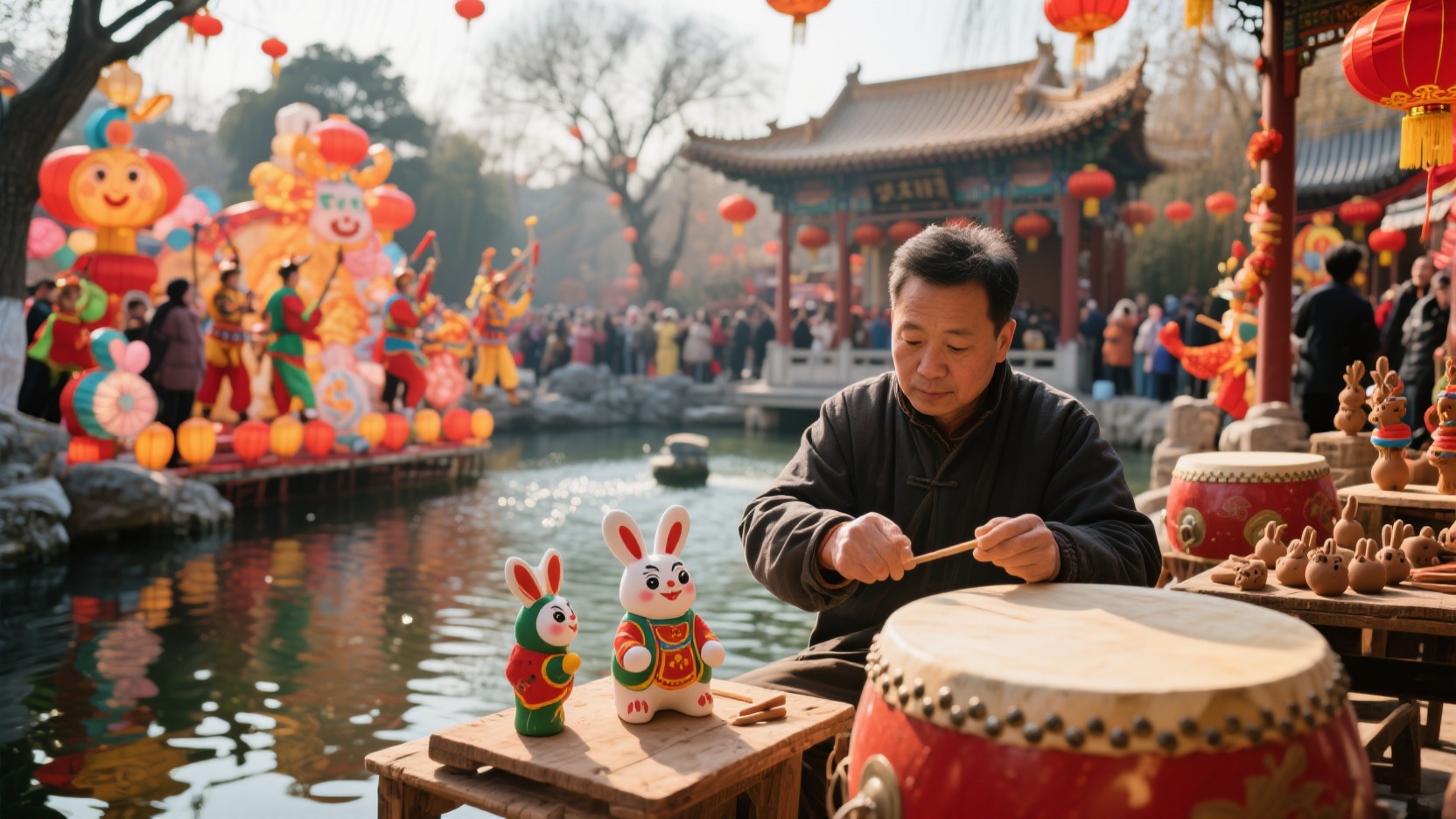
Jinan's cultural experiences are often compressed into checklists of springs and old city attractions, but the real entrances to truly "sit down" are mostly hidden in festival lantern festivals, mountain fair stages, and clay sculpture workshops. The following four types of festival customs and intangible cultural heritage experiences unfold according to different seasons and scenes, and are suitable for setting aside half a day to let your hands, eyes, and ears be handed over to the local inheritors.
Baotu Spring Lantern Festival: Step into the lantern river above the spring on the first day of the Lunar New Year
The lighting period is concentrated around the first to the twentieth day of the first lunar month, subject to official announcements each year. After the Baotu Spring Scenic Area is illuminated at night, the water surface, spring pool, and corridors are connected by palace lanterns, silk lanterns, and large lantern sets. Traditional themes mainly focus on the "Two Ans" of Jinan, spring legends, and zodiac customs. The key to the experience is not taking photos along the main road, but rather entering from the east gate and first walking along the "Luoyuan Hall - Guanlan Pavilion" line to see the lantern reflections on the spring, then turning north to see the handmade lantern shed, where you can observe the different craftsmanship of frame making, paper pasting, and paper cutting and pasting. Visitors with children can stop at the lantern riddle area. The riddles are mostly taken from Jinan place names, dialects, and spring allusions. It's okay if you answer incorrectly, as the area where the answers are posted is often a place where locals gather to chat. If it snows or the temperature is low, the reflection of the lanterns on the water and the rising water vapor will make the colors softer. It is recommended to wear non-slip shoes and prepare an anti-fog cloth for your camera. The crowds at night are concentrated in the hour after the lights are turned on. You can visit the main spring pool first and then walk in the opposite direction through the illuminated area to avoid most tour groups.
Shanghe Drum Yangko: The Rhythm of Northern Shandong Farming in the Lantern Festival Performance
Around the fifteenth day of the first lunar month each year, Shanghe County in Jinan holds a Guzi Yangge (Drum and Folk Dance) performance. Its origins are related to the spring festival, rain-praying, and harvest celebration ceremonies of the North Shandong Plain, and it was included in the first batch of national intangible cultural heritage lists in 2006. Guzi Yangge uses four types of roles—"umbrella, drum, stick, and flower"—as its framework. During the performance, the large drum, gong, and cymbals start simultaneously, and the performers move in formations such as "running the field," "drumming against each other," and "hooking the umbrella." The steps are heavy, and the hips are low; the overall performance is not a light, stage-like dance, but more like a moving agricultural ritual. When watching, one can stand on the periphery of the venue and listen to the changes in the drumbeats: the formations are expansive during the slow tempo and interweave during the fast tempo. The most noteworthy aspect is how the "umbrella leader" uses their umbrella lantern to direct the entire performance. After the performance, many villages and towns continue to have performances in other villages; following the flow of people allows one to experience the temporary reorganization of rural order by the season even more effectively than from a fixed spectator stand. Shanghe experiences strong winds in winter, so it's advisable to wear a hat and scarf when viewing outdoors. When taking photos, a medium telephoto lens is better than a telephoto lens for capturing the entire formation.
The Thousand Buddha Mountain Double Ninth Festival: A mobile handmade market along the stone steps leading up the mountain.
Around the ninth day of the ninth lunar month, the Chongyang Festival at Qianfo Mountain lasts for several days. Pilgrims and locals stroll along the mountain path, where temporary stalls offer local specialties, chrysanthemum wine, dough figurines, sugar paintings, and Lu embroidery. Unlike typical tourist markets, many stalls here are run by artisans from surrounding counties, and Chongyang cakes and dogwood sachets are not available year-round. The experience can begin at the entrance with a small piece of freshly steamed Chongyang cake to enjoy as you walk. Then, watch artisans at the dough figurine stalls use a spatula to press out the clothing patterns of the God of Longevity or zodiac animals. Finally, head to the stage area to listen to a performance of Lü opera or Shandong Qinshu (a type of storytelling with musical accompaniment). The essence of the festival lies not in reaching the summit, but in the moments spent halfway up the mountain: elderly people often bring their own stools to listen to the performances, prices are negotiated in Jinan dialect, and the aromas of baked flatbreads and chrysanthemum tea mingle with the scents of teapots. It's recommended to avoid the peak hours of 9:00 AM to 11:00 AM, as the afternoon light is better for observing the details of the festival. If you are interested in Lu embroidery, you can spend a little more time at the fabric stalls to see how flat stitch and seed stitch are used in parts of insoles and purses.
Jinan Rabbit King and Shadow Puppetry: A Half-Day Handmade Craft in an Old Town Workshop
If you visit outside the peak season, you can head to the intangible cultural heritage workshops in Jinan's old city area to experience making Jinan Rabbit King clay sculptures or Jinan shadow puppets. The Rabbit King is a clay sculpture figure from Jinan's traditional Mid-Autumn Festival customs, with a white face, red robe, and rabbit ears, sitting or riding a tiger. It shares the same origin as the Beijing "Rabbit God" but its lineage leans more towards spring water beliefs. In the past, children would set up offerings to the moon on Mid-Autumn Festival nights. The experience begins with molding or creating a blank, first listening to the inheritor explain "why the Rabbit King rides a tiger" and "why it's a symbol of Jinan's Mid-Autumn Festival," then using mineral pigments to outline the face, add gold, and paint the robe's patterns. The entire process takes about two hours. The shadow puppet experience focuses more on drawing, carving, and coloring patterns on cowhide or donkey hide, finally performing a short piece behind a white screen. Both activities are best arranged in the afternoon. After finishing, walking through the alleys of the old city allows for a more concrete understanding of the relationship between handicrafts and the daily lives of people living near spring water. Finished products from the handmade stage usually need to be air-dried or dried. Before leaving, you can confirm the subsequent processing methods with the workshop; there's no need to wet-pack them on-site.
The festivals and folk customs of Jinan are not just for viewing; they are also embedded in the four seasons through lantern festivals, mountain fairs, folk dances, and handicrafts. Setting aside half a day to participate in a seasonal event allows you to truly connect with the essence of Jinan's culture, rather than simply visiting a series of tourist attractions.