
Spend half a day as a craftsman in Luzhou: A seasonal guide to Hefei's festivals, temple fairs, and intangible cultural heritage workshops.
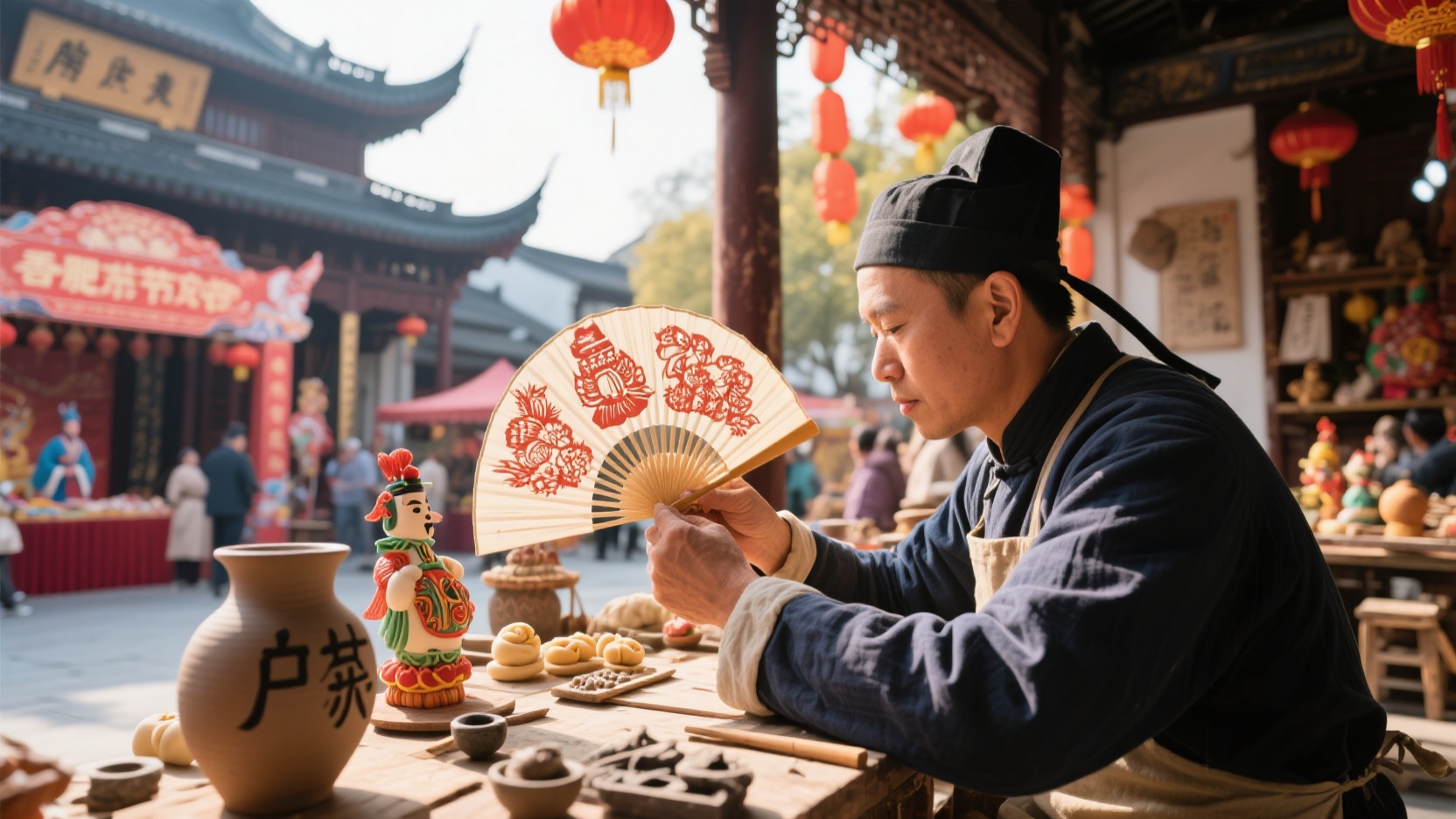
Hefei's "culture and art" is not just about the static exhibits at Bao Gong Temple and the Provincial Museum. What truly slows down your travel experience is spending half a day sitting down with festivals and artisans. Below, we select four types of immersive and participatory folk customs and intangible cultural heritage events according to the four seasons, specifying the time, setting, and how to participate.
I. City God Temple Fair in the first month of the lunar calendar: Listen to a short opera performance and cut a Luyang window decoration.
The fair takes place from the first to the fifteenth day of the first lunar month, centered around the Flower Opera Stage at the Hefei City God Temple, the square in front of the Niangniang Hall, and the surrounding New Year's market. During the fair, the Flower Opera Stage often features excerpts from Lu Opera and Ma-style shadow puppetry, while stalls selling sugar paintings, dough figurines, and pyrography are set up below. It's best to arrive before 10:00 AM to watch a performance first, and then stroll slowly through the market to the handicraft area.
The highlight of the experience is Luyang paper-cutting. In the past, people in the Chaohu Lake region would decorate their homes with red paper-cut patterns for festivals, weddings, and lantern festivals; these were called "Luzhou window flowers" in the Hefei area. Sit down at the paper-cutting stall and start with the simplest floral or "spring" character pattern. Fold the paper, draw the design, and cut; you can complete a small piece to take home in about forty minutes. The craftsman will remind you to "cut small holes first, then cut the larger shapes," to avoid damaging the paper's tension.
The cultural information behind it is hidden in the sounds: Lu Opera, formerly known as "Daoqi Opera," retains the glissando and filler words of the Anhui dialect in its singing style. Since the Northern Song Dynasty, the City God Temple has been the center of folk religion and urban entertainment in Hefei. The paper-cutting and opera in the temple fair are essentially the same seasonal expression—using high-pitched singing and red paper to ward off the cold, welcome spring, and pray for blessings.
II. Late Summer Bao Gong Cultural Festival: Paint a Bao Gong mask and sculpt a dough figurine.
The Bao Gong Cultural Festival usually takes place in late summer and early autumn around Bao Park, Qingfeng Pavilion, and the banks of the Bao River. In the evening, there are also parades and performances of excerpts from traditional operas. During the day, it is a good time to stop at the intangible cultural heritage exhibition area in the square outside Qingfeng Pavilion, where stalls selling Luzhou dough figurines, fire pen paintings, and Wushan iron calligraphy are concentrated.
I recommend trying the "Bao Gong Mask" from Luzhou dough sculpting. The dough is first kneaded with food coloring to create four colors: black, red, white, and gold. Participants follow the instructor to first shape the facial contours, then add eyebrows, eyes, and a beard. The difficulty in dough sculpting lies not in shaping, but in capturing the essence: Bao Gong's slightly furrowed brows and neatly trimmed beard convey his uprightness. Completing one piece takes about an hour, requiring adjustments while the dough is still wet.
The stories of Bao Zheng form the foundation of the experience. Hefei is Bao Zheng's birthplace and final resting place. The legends of "lotus root without threads" and "iron-faced fish" in Baohe River embody his integrity as a local symbol. The black face and crescent moon in the dough figurines are symbols passed down from opera masks, not actual faces. Understanding this difference is more interesting than simply making a doll.
III. Mid-Autumn Festival to National Day: Enjoy the lanterns in Sanhe Ancient Town and make a Sanhe feather fan.
The folk culture festivals in Sanhe Ancient Town are mostly held around the Mid-Autumn Festival and National Day. At Wanniantai, there are Lu opera performances, flower boat shows, and river lanterns for blessings, while lantern displays are arranged along both banks of the Xiaonan River. Complementing the water town lantern festival is the Sanhe feather fan, a handicraft activity perfect for quiet contemplation.
Feather fan making workshops are mostly held within the ancient town. White or grey goose feathers are selected, first sorted by length, then bamboo strips are used as the frame, and the feathers are layered and fixed with silk thread. Finally, the edges are sewn and the handle is attached. Making a simplified feather fan takes about an hour and a half. A genuine Sanhe feather fan involves more than ten processes, including selecting feathers, washing and drying, weaving, and shaping. The workshop participants can complete the two core steps of "threading the feathers" and "finishing the edges."
Located on the western shore of Chaohu Lake, Sanhe is crisscrossed by waterways, and goose farming and feather processing are traditional sideline occupations. In the past, almost every household in the area made fans, both for their own use and for export via the waterways. Nowadays, machine-made fans are cheap and durable, while handmade feather fans have become a remnant of the water town's memories. Only after making a fan and then walking to Wanniantai to watch a river lantern float on the water does the festive ritual feel complete.
IV. Weekend Intangible Cultural Heritage Market: Pull out a piece of Luzhou pottery, knock on a Wushan iron character.
If you want to avoid peak holiday seasons, the weekend markets around Hechai 1972 and Leijie are a more everyday option, generally running from afternoon to evening, with additional sessions on holidays. The intangible cultural heritage stalls at the markets are not fixed, and common experiences include Luzhou pottery, Wushan iron calligraphy, gourd pyrography, and paper crafting.
Luzhou pottery uses local yellow clay as its material, and the process of throwing it requires "steady hands, a slow mind, and the right amount of water." Participants usually start by kneading the clay, and then try making cups, bowls, or small jars on the potter's wheel. Wushan iron calligraphy, on the other hand, emphasizes the strength of the hand: using sheet metal as paper and a hammer and chisel as brushes, the chisel is used to strike out the strokes along the design, followed by polishing and varnishing. Beginners can complete one or two strokes or a small character in about an hour.
Wushan iron characters appeared in the Qing Dynasty, initially as auspicious characters forged by blacksmiths on farm tools, later evolving into independent iron plaques. Luzhou pottery kilns were once distributed in the northern suburbs and hills of Hefei, producing jars, basins, and pots—everyday containers of the past. Experiencing these at the market is essentially bringing these traditional production techniques back into your hands. Spend half a day choosing at least one craft and staying until closing time to truly understand the strength, patience, and meticulousness involved in handcrafting.