
Harbin's Daily Food Guide: From Morning Corn Porridge to Late-Night Hot Pot, Local Flavors
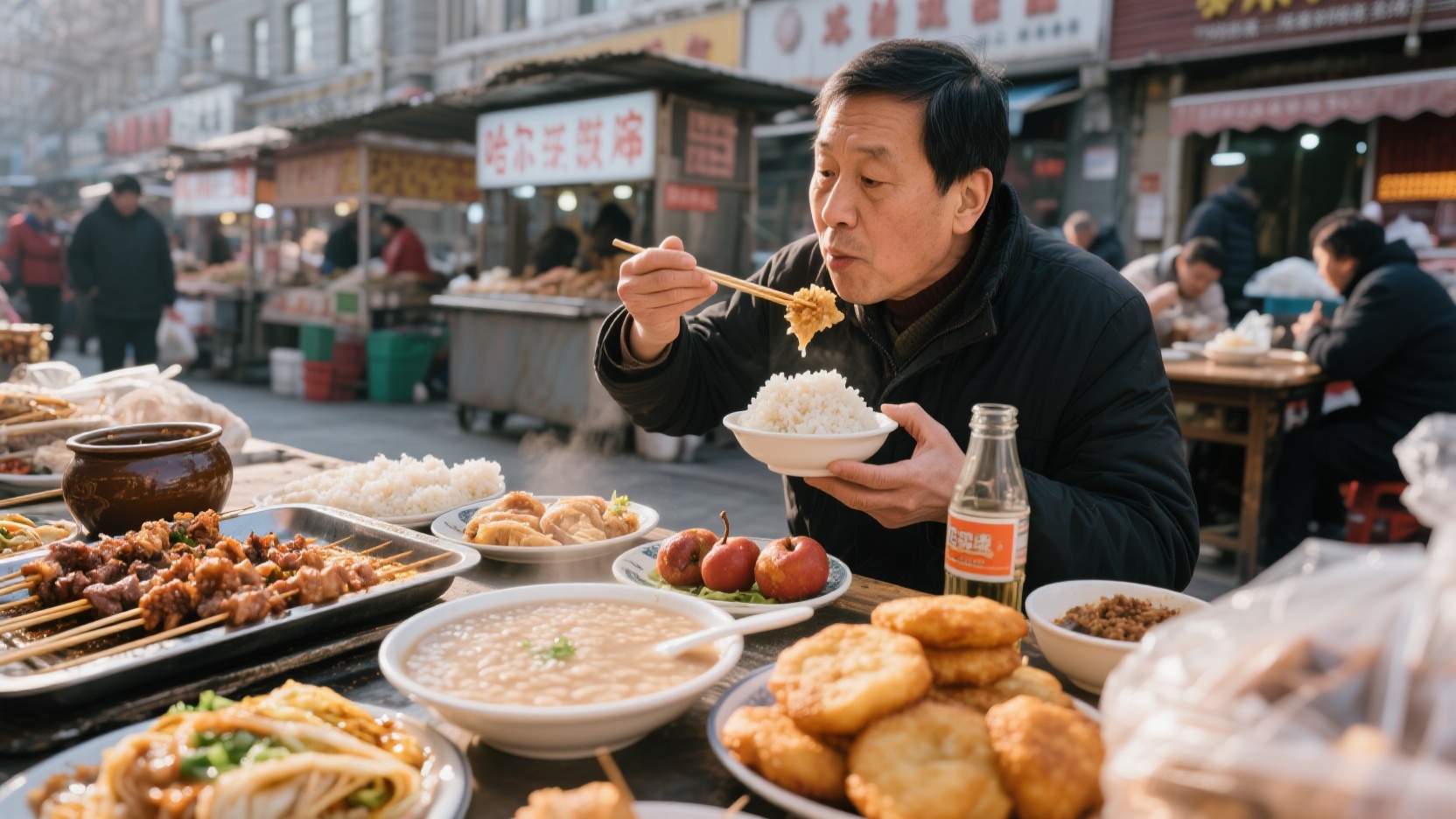
At 4:30 a.m., Harbin's morning markets awaken before the city itself, bathed in the chilly air. A continuous line of light bulbs shines under the plastic awnings, while the steam from large iron woks breaks up the intermittent cries of vendors. Locals' days begin at these stalls, not with lines of tourists. Below is a timeline of eight dishes featured on Harbin's daily table.
Morning: Corn porridge with salted duck egg
Corn porridge is a common breakfast staple in Harbin households. Peeled corn kernels and kidney beans are soaked beforehand, then simmered in a large iron pot until the corn kernels burst open and the kidney beans become soft, resulting in a slightly yellow and glossy broth. It has the sweet taste of corn and the soft, chewy texture of beans, and a thin layer of rice oil forms on the surface after cooling. Older Harbin residents often accompany it with a side of salted duck eggs or pickled cucumbers, using the saltiness to enhance the simplicity of the coarse grains. This porridge may not be elaborate, but it's filling and warming, representing the simple wisdom of Northeast China's coarse grains, and it's often the start of the day for many elderly people.
Morning: Fried cake
Another hot treat at the morning market is fried rice cake. Made from millet or glutinous rice flour, the dough is filled with red bean paste and deep-fried in hot oil until small bubbles appear on the surface and it turns golden red. A good fried rice cake has a crispy, slightly sticky outer layer, and the red bean paste filling isn't too sweet but retains its bean flavor. When you bite into it, steam rises from the inside. Customers stand by the stall, blowing on the steam as they eat; the satisfaction of the oil and carbohydrates is the most direct way to beat the winter morning chill in Northeast China. It's not often mentioned in tourist guides, but it's a symbol of the morning market that locals have eaten since childhood.
Lunch: Braised pork rice
At lunchtime, locals often sneak into a small restaurant in the old Daowai district and order a bowl of braised pork belly with rice. Braised pork belly is made with pork belly with skin, cut into evenly sized pieces, placed in a jar with soy sauce, caramel coloring, scallions, ginger, and a small amount of spices, and simmered over low heat for a long time. The finished dish has a bright red color, the fat melts in your mouth, the lean meat is tender, and the savory sauce has a hint of sweetness. Pouring the thick broth over rice is the most satisfying meal on a workday. The difference between braised pork belly and regular braised pork lies in the heat and the container; the jar heats the meat evenly, allowing the aroma to develop more deeply.
Lunch: Sauerkraut and pork belly hot pot
Often paired with braised pork belly is a steaming hot casserole of pickled cabbage and pork belly. In Harbin, people pickle cabbage in late autumn and early winter; the cabbage, after lactic acid fermentation, becomes crisp and tangy. The casserole is lined with shredded pickled cabbage, topped with thinly sliced pork belly, and then simmered in rich broth until thoroughly cooked. The pork belly is dipped in minced garlic or chive blossoms, the pickled cabbage soaks up the meat's aroma, and a sip of the broth warms you from the throat to the stomach. It's both a classic dish found in small restaurants and a winter staple in local families.
Afternoon: Old-fashioned pastries with kvass
Around 3 p.m., short queues form at the pastry counters of the old street's grocery stores. The three traditional items are: zaozi gao (a type of steamed rice cake), changbai gao (a type of steamed white cake), and luguo (a type of baked pastry). Zaozi gao is made with eggs and flour, baked into small squares, with a rich egg flavor and a fine texture; changbai gao is coated with coarse sugar, giving it a crumbly texture; and luguo has a stronger oily aroma. Buying a package of pastries and opening a bottle of kvass (a type of soda used for fermenting bread) washes away the sweetness with its slightly sour, bubbly drink. This is Harbin's typical afternoon tea, unhurried and with the light, leisurely pace left by the old industrial city.
Afternoon: Frozen pears and frozen persimmons
In winter, afternoon tea often includes a bowl of chilled pears and persimmons. The chilled pears are usually of the Huagai or Qiuzi varieties, which are frozen thoroughly outdoors until their skin turns black. Before eating, they are chilled in cold water until they are soft on the outside and still have icy bits inside. A sip of the pear juice is refreshingly sweet, and the flesh is delicate. The chilled persimmons are even sweeter, with a sandy, jelly-like texture. These were once a way to preserve fruit during times of scarcity, but now they are a rare and refreshing winter snack for Harbin residents.
Late at night: Grilled cold noodles
As night falls, the sizzling griddle of the street corner grilled cold noodles begins to crackle. The cold noodles are softened on the griddle, then an egg is cracked on top and spread evenly. They're flipped, brushed with sauce, sprinkled with onions and cilantro, and then, according to the customer's request, red sausage or chicken strips are added. Rolled up and cut into sections, the noodles have a soft yet springy texture, with the aroma of sauce, egg, and the spiciness of onions blending together—a very filling meal. Grilled cold noodles originated in Harbin's night markets and are now a familiar late-night escape for local young people.
Late at night: Hot pot with tripe
Later, the hot pot dishes from the food stalls are served. Beef tripe or tripe are skewered and repeatedly cooked in a boiling broth made with chili oil and medicinal herbs, becoming more flavorful with each simmer. The broth isn't as strong as Sichuan hot pot; it's more salty, spicy, and aromatic with spices. The tripe is chewy and springy, and after being dipped in sesame sauce or dry seasoning, it's hot and spicy. A few bottles of ice-cold beer are placed on the table, and the day's work and the cold dissipate with the steam. Harbin's late-night eateries don't care about the ambiance; they care about the wok hei (the smoky aroma from the hot pot) and the lively atmosphere.
From a bowl of corn porridge at the morning market to a late-night hot pot of tripe skewers, Harbin's flavors aren't found on elaborate menus, but rather in the regular street food stalls. Understanding the city through its food in a day involves savoring coarse grains, pickled vegetables, teppanyaki grills, and charcoal fires—a reflection of the locals' daily routines.