
Old Daowai Walking Map | Blogger's Personally Tested 3.8km Citywalk Artistic Route, Avoiding the Crowds of Central Avenue (Includes Winter Avoidance Tips)
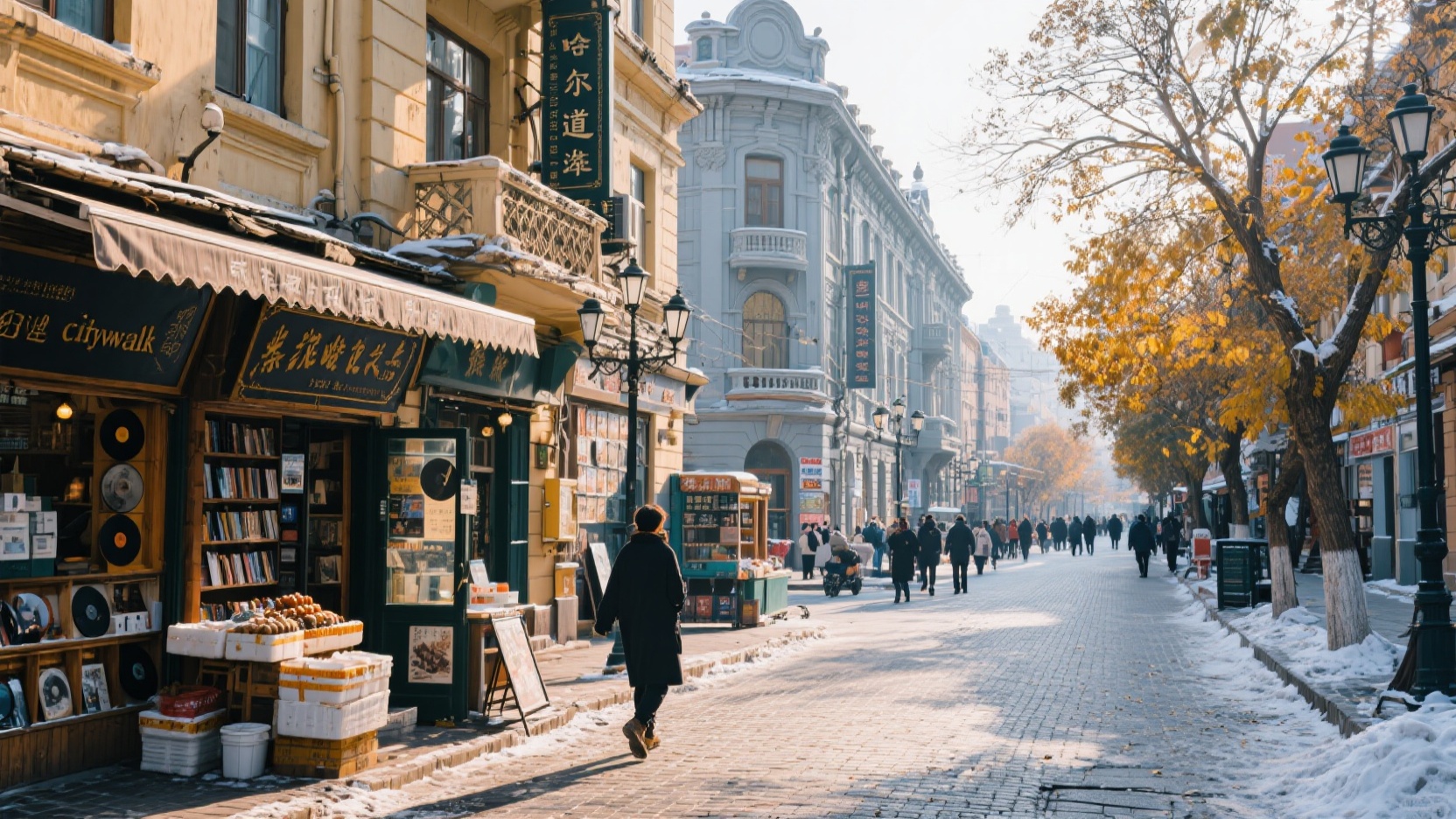
On my first trip to Harbin, I followed the popular travel guides and walked back and forth on Central Street three times. Apart from Madier ice cream and Russian-style shop windows, all I could see in my photos were the backs of tourists' heads. Later, a local friend dragged me into the old Daowai district, and we turned into South Second Street from Jingyu Street. Only then did I realize that Harbin's most enduring artistic charm wasn't under the onion-domed roofs, but in the old streets where the steam from the Chinese Baroque corridors and the vegetable markets blended together.
I walked this route once in early autumn and once in the dead of winter, and compiled a main route of about 3.8 kilometers and two optional side routes. The whole walk takes about 3 hours with stops along the way. It doesn't focus on a large number of checkpoints, and is suitable for people who want to photograph old buildings, browse independent bookstores, and look through old records in vinyl stores.
Route Overview: Starting from Jingyu Street intersection, the route spans 3.8 kilometers, connecting the "inner workings" of the old Daowai district.
The main route starts at the intersection of Jingyu Street and Nantoudao Street in Daowai District, first entering the core area of the Chinese Baroque style at the intersection of Nanerdao Street and Nansandao Street, then turning towards the corner of the community vegetable market on Jingyang Street and Beitoudao Street, and finally ending along Nanxun Street in the Songguangli area. The main route is about 3.8 kilometers long, and each section takes 10 to 20 minutes to walk.
If you have enough time, there are two branch lines: Branch line A goes towards Taikoo Street to find vintage shops and pocket parks, about 600 meters round trip, which takes about 15 minutes to stroll around; Branch line B goes north from Jingyang Street to the small square by the Songhua River and then back, about 1 kilometer round trip. Neither branch line will take you too far from the main street, and you can easily return to your original route by turning a corner.
Section 1: South Second Street to South Third Street: Architectural details under the outer corridor and old courtyard (approximately 15 minutes walk)
Turning from Jingyu Street into South Second Street, don't rush forward. The blogger positioned their camera diagonally opposite the street entrance, beneath a gray brick wall, using a medium telephoto lens to capture the Baroque pediments and arcade corridors of the entire street. Why is it worth stopping for 5 minutes to look? The corridors here aren't the original European style, but rather a "hybrid" style carved by Chinese craftsmen in the last century according to their own understanding. Local symbols such as pomegranates, bats, and copper coins often appear next to the scrollwork patterns.
Continuing along South Third Street, most of the old courtyard gates are half-closed, allowing glimpses of the wooden staircases and clotheslines drying in the courtyards. Position the camera about a meter outside the gate, using the door frame as the foreground, and shoot backlit shots of the rising smoke or clotheslines. Why stop and look for five minutes? These old courtyards are still inhabited; the gates and walls retain traces of repairs from different eras, bringing you closer to time itself than newly painted imitation antique streets.
The second section, Jingyang Street to Beitoudao Street: a vegetable market corner and vintage clothing stores hidden in the steam (about 20 minutes walk).
Walking from South Third Street to Jingyang Street, and then north, you'll find a corner of a vegetable market near North First Street. Position the camera behind a fruit stall on the southeast corner of the intersection, using a telephoto lens to compress the stall, the steam, and the Baroque windows of the old building behind it. Why stop and watch for 5 minutes? This place is most lively from early morning to noon, with stalls selling fried cakes, braised food, and frozen pears rising in succession, and locals carrying plastic bags strolling by—it's Harbin's most vibrant community theater.
Branch Line A turns east from Beitoudao Street into a narrow alley, passing a vintage clothing store without a prominent sign. Position the camera next to the old mailbox opposite the store, capturing the faded awning and the floral shirts hanging there. Why it's worth stopping for 5 minutes: The owner usually doesn't approach you, but you can leisurely rummage through old suitcases and Harbin factory work clothes, occasionally finding clothing with Russian labels from the 1980s.
The third section, Nanxun Street to Songguang Lane: a spiritual corner formed by independent bookstores and vinyl record shops (approximately 20 minutes on foot).
After returning to the main road, walk along Nanxun Street towards its end. Near Songguang Lane, there are several independent bookstores and cafes. The camera is positioned in front of the street-facing glass windows of the bookstores, creating a contrast between the warm yellow lights inside and the old brick walls of the buildings. Why is it worth stopping for 5 minutes? These bookstores are often located on the ground floor of old buildings, with bookshelves squeezed into every available space beside pillars and old fireplaces. You can hear the creaking of the wooden floorboards as you turn the pages.
In the same side alley, there's another vinyl record store that only opens in the afternoon. The camera is positioned by the window in the store, using a mobile phone to superimpose the headphones, record sleeves, and passersby outside. Why is it worth stopping for five minutes? Harbin was one of the earliest cities in China to be exposed to Western music. Old vinyl records often bear traces of the Russian émigré era and state-owned labels from the 1980s. This isn't a tourist attraction; it's a sound archive of the city.
Branch Line B: Head north from Jingyang Street to the riverside pocket park for some fresh air (about a 20-minute walk round trip).
If it's still early when you reach Jingyang Street, you can continue north along Beitoudao Street, passing through a short, quiet residential area, to reach the small square and pocket park along the Songhua River. Position your camera near the riverside railing, then turn back to photograph the Baroque rooftops against the sky at the end of the street. Why stop for five minutes: this spot is almost deserted; locals walking their dogs or practicing music will pass by, and the river breeze seems to silence the old buildings.
Be aware that the riverside temperature is much lower than inside the town during winter; it's recommended to pull your scarf up above your nose and keep your camera battery close to your body. Branch line B is about 1 kilometer round trip and won't interfere with finishing the main route.
Blogger's Summary and Practical Tips
I prefer walking this route in autumn, when the afternoon sun at three or four o'clock bathes the exterior of the Chinese Baroque buildings in a honey-colored glow, and the market is still open. Although it's colder in winter, there are fewer tourists in Laodaowai, and the contrast between the steam rising from the street corners and the snow-covered blue bricks is more photogenic. The only thing to remember is not to treat this Citywalk as an architectural photography assignment; its charm lies in turning a corner and discovering the sound of vinyl records coming from a half-open door.
Practical Tips: 1. It's recommended to start from Jingyu Street intersection before 10 AM to avoid the midday rush at the market, as bookstores and vinyl record shops only gradually open in the afternoon. 2. The paved roads can be slippery when covered in snow; please wear non-slip shoes in winter and avoid standing on the ice for photos. 3. Most of the old courtyards are private residences; nod to indicate you're not in the residential area before taking photos inside the gate. 4. Independent bookstores and vintage clothing stores are mostly small shops with prices ranging from tens to hundreds of yuan per person, suitable for light spending or no purchases, but it's safer to ask the shop owner before taking photos. 5. You can choose either branch route A or B depending on your physical condition; allowing 3 hours is the most relaxed option.