
How to choose Hangzhou souvenirs that are worthy of your suitcase?
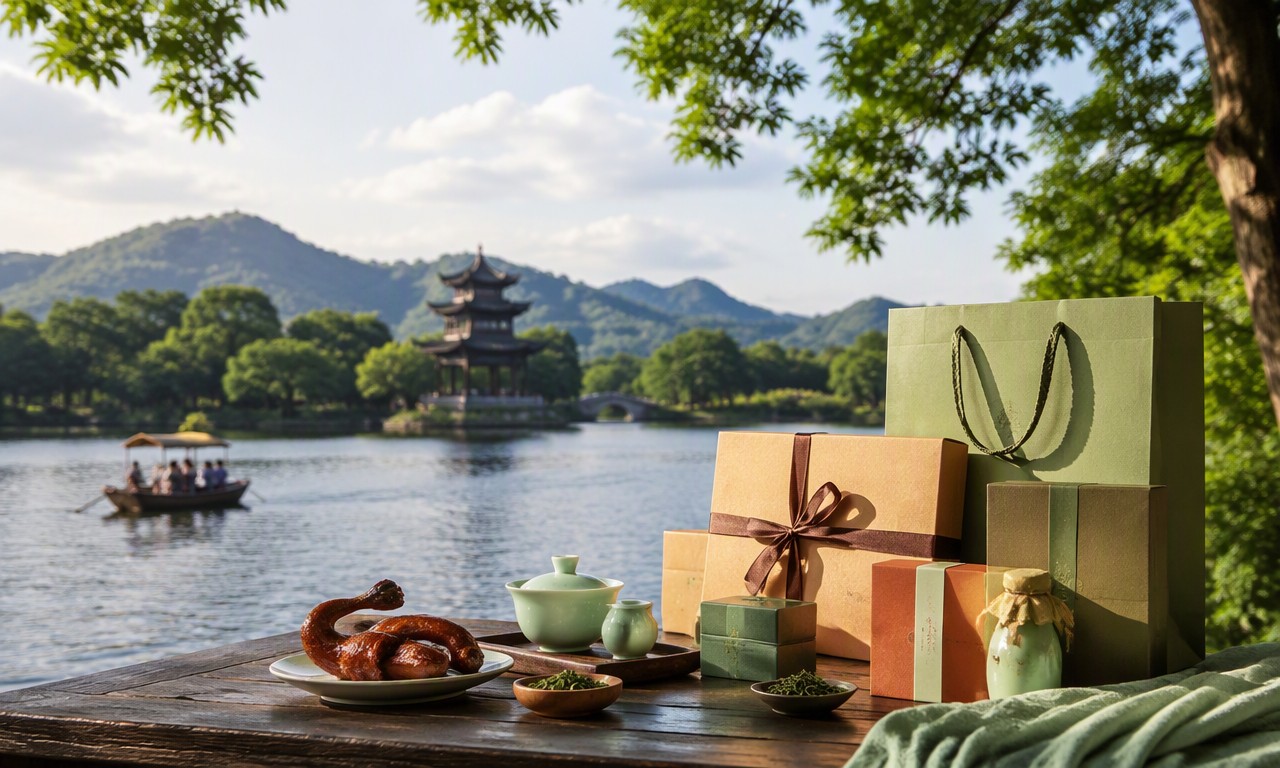
The core question this article aims to answer is: what criteria should you use to choose souvenirs in Hangzhou? Many people only realize after arriving at Hefang Street or the airport that they've either bought a bunch of things they can't take with them, or things that no one will eat back home. This question deserves a serious answer because souvenirs aren't just about "buying expensive things," but about "buying the right things, giving them appropriately, and not regretting it." Below, we'll directly address your needs based on your luggage, the recipients, and transportation restrictions.
Branch 1: Sufficient baggage allowance, willing to check in luggage.
If you have baggage allowance when taking the high-speed rail or plane, and don't mind carrying an extra bag, then the most worthwhile things to bring back from Hangzhou are items that are "heavy, bulky, but worth taking up space." The top choices are vacuum-packed braised duck from Zhiweiguan and vacuum-packed Dongpo pork gift boxes from Louwailou. These items have consistent flavor, are presentable, and are not easy to find authentic versions in other places. The basis for this judgment is that they are "substantial" souvenirs that Hangzhou locals would also buy as gifts, so they won't seem perfunctory.
The recommended approach is to buy the sauces at the Zhiweiguan Hubin flagship store or Louwailou Gushan store the day before your trip. Don't wait until the airport to buy them, as the packaging may be the same, but the freshness and selection will be significantly different. After purchasing, ask the staff to vacuum-seal the sauces and put them in two layers of bags. Pack them directly into your luggage at the hotel and check them in. Do not carry them with you, as sauces are easily inspected at security checkpoints.
Option 2: Carry only one bag, do not check in any luggage.
If your itinerary involves traveling with just a backpack, then you'll need to choose Hangzhou souvenirs that are lightweight, flat, durable, and can pass through security. The safest bet is small cans or individual packets of Longjing tea, followed by loose-packaged snacks like Dingsheng cake and mung bean cake from Caizhi Zhai that can be easily tucked into a bag. The reasoning is: tea is small, has a high perceived value, and makes a presentable gift; while pastries are fragile, choosing individual packaging mitigates the risk.
Here's a suggested approach: Don't buy Longjing tea from street vendors in tourist areas. Go to the Jiefang Road Tea Market or tea farmers' shops in Meijiawu and buy a small jar of one or two ounces at a mid-range price. For pastries, choose those from Caizhi Zhai or Nan Song Hu Ji, which come in trays and resealable bags. On the return trip, place the pastries on the top layer of your backpack, not under your camera or water bottle, and they should be fine.
Branch 3: Gifts, especially for elders or superiors.
The logic behind gifting is the complete opposite of buying for yourself: when you eat it, you focus on the taste; when you give it as a gift, you focus on whether the recipient can immediately recognize it as Hangzhou. In this case, Longjing tea and silk are the safest combination for Hangzhou. The reasoning is that Longjing tea has a "place of origin filter," and silk has a "city calling card" feel; both easily make the recipient think you "know how to choose things."
A suitable approach is to choose tea from the West Lake Longjing tea-producing area in small gift boxes, at a mid-range price; there's no need to chase after the first harvest before the Qingming Festival. For silk, avoid buying so-called "real silk special sales" at tourist attractions. Go to the China Silk City or Wansili stores and choose a simple, plain-colored square scarf or handkerchief—simple packaging but of good quality. Neither item is heavy; they can fit in a tote bag, making for a presentable gift without seeming overly extravagant.
Branch 4: Eat it yourself, don't give it away.
If you just want to satisfy your cravings on your way back or after you get home, then the best things to buy are items that "Hangzhou locals queue up to buy, but aren't very suitable for long-distance transport." Jiangnanchun's tiao tou gao (a type of steamed rice cake), Zhiweiguan's fresh meat xiaolongbao (which needs refrigeration), and Wushan roasted chicken are highly recommended. The rationale is that these three items have a strong local Hangzhou flavor, but they have a short shelf life or require cold chain logistics, making them unsuitable as gifts; they're perfect for personal consumption.
A good approach is to buy and eat the rice cakes on the same day; one box is enough, don't buy too much. If you're bringing roast chicken on the high-speed train, it's recommended to let it cool and then vacuum pack it, or simply buy it two hours before departure and eat it immediately. Fresh pork dumplings need to be placed in an insulated bag with ice packs; freeze them immediately after arriving home and consume them within a week. The taste is much better than frozen dumplings.
Branch 5: Can be checked in, but don't want it to get damaged.
Some souvenirs aren't heavy, but rather fragile. For example, the lotus-shaped pastries from Hu Ji in the Southern Song Dynasty and the Longjing pastries from Zhiweiguan are beautiful in appearance but very easily crushed. If you have baggage allowance but are worried about your clothes and pastries getting crushed together, you should handle them separately. The rationale is: once these types of pastries break, they're basically ruined as gifts, so either don't buy them or pack them separately in a sturdy box.
Here's a suggested approach: When you buy the gift, ask the shop assistant for a sturdy gift box, not a paper bag. Back at the hotel, place the gift box inside a slightly larger shoebox or shipping box, securing it with towels or newspapers, and then put it in the middle layer of your checked luggage, with clothing cushioning both the top and bottom. This way, even if your luggage is dropped, the pastries won't fall apart.
Branch Six: Must be carried at all times, and must pass through security smoothly.
If you're short on time, or airport security is strict, the only advice is: don't bring anything containing liquids, sauces, or semi-liquids. Many Hangzhou specialties like braised duck, Dongpo pork, and smoked fish come with sauce, which will likely be confiscated in your carry-on bag. Only two categories are allowed: dry snacks and dry tea. The basis for this is that security checks the appearance, not the brand. So even the most expensive braised duck might be subject to inspection or rejected if the bag contains sauce.
A recommended approach is to divide all souvenirs into a "carry-on bag" and a "checked bag" before departure. The carry-on bag should only contain small cans of tea, individually packaged Ding Sheng Gao (a type of sweet rice cake) or Longjing pastries, and completely dry items like scarves. The checked bag should contain all vacuum-packed but oily or juicy meat products. Don't hesitate at the security checkpoint; separating them the night before is the easiest way.