
Where to buy Hangzhou souvenirs? Here are 8 comparisons for you.
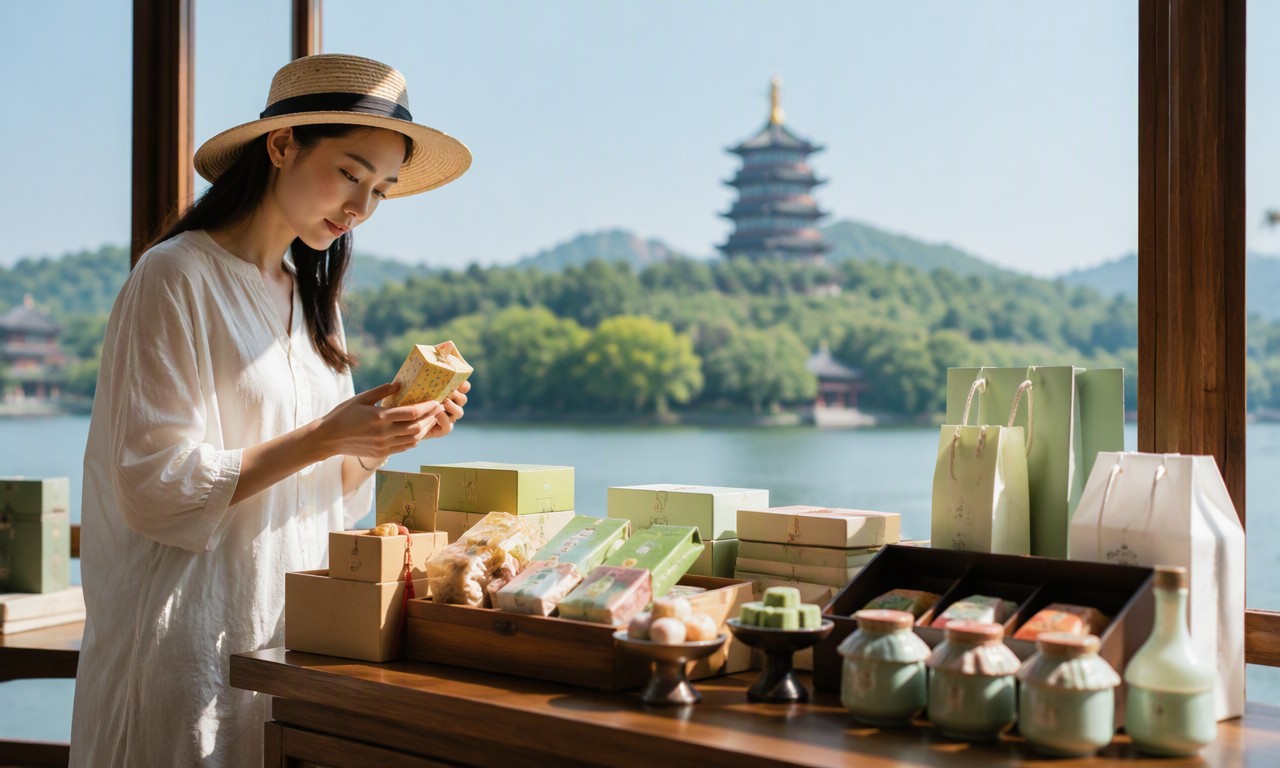
Many readers ask the same question before their trip: Is it necessary to buy Hangzhou souvenirs from specialty shops in tourist attractions? This article will break down the eight most common souvenir categories into two sections: "Tourist Area Shops vs. Local Supermarkets" and "Established Brands vs. Popular New Brands." After reading this, you'll be able to determine which is more worthwhile and also distinguish the quality differences between similar products.
Longjing tea: Freshly roasted at tourist attractions vs. canned in local supermarkets
Most travel guides will tell you that only by watching the tea being roasted on-site in Longjing Village or Meijiawu can you find authentic tea. In reality, the tea roasting industry in tourist areas is rife with problems. What tourists see is a tea-roasting performance, and the tea leaves being packaged may not be from the same batch. The prices are often much higher than similar products in local supermarkets, and there is no clear grading label.
To quickly identify a product, check the packaging for the "Geographical Indication Protected Product" label and grade markings. If it's just a transparent plastic bag with a handwritten label, it's likely not spring tea from a core production area. For personal consumption or as a gift for tea connoisseurs, it's recommended to buy canned tea with grade markings from local supermarkets or established tea shops. Freshly roasted tea at tourist attractions is more suitable as an experiential purchase; buy a small amount to try it out.
Lotus root starch: Scenic spot souvenir shops vs. time-honored supermarket brands in bags
Most travel guides will tell you to buy lotus root starch at specialty shops in tourist areas, where the packaging is attractive and samples are available. In reality, lotus root starch is a highly standardized product, and many of the products sold in tourist areas are the same as those in local supermarkets, just in different gift boxes and with added silk linings, yet the price can be double or triple.
The method for distinguishing them is simple: turn the packaging over and look at the manufacturer and ingredient list. If the first ingredient is "lotus root starch" and there are few additives, and the place of origin is around Hangzhou, then the quality of supermarket bagged and scenic spot gift boxed products is basically the same. For personal consumption or daily beverages, just go to the supermarket and get the established brand bagged products; if you need to give something presentable as a gift, then consider the gift boxed products from scenic spots or department store counters.
Dingsheng cake and lotus flower pastry: freshly made on Hefang Street vs. frozen in supermarkets or time-honored stores
Most travel guides will tell you that only freshly made Dingsheng cakes on Hefang Street are truly soft and chewy. While it's true that freshly made cakes taste better, they have an extremely short shelf life and easily harden and lose their flavor when taken back to other places. The molds and fillings used at tourist stalls are essentially the same as those in established local shops, yet the prices are significantly higher.
If you're eating them on the same day, you can buy one or two at the scenic spot to try them out. If you want to take them home as gifts, I recommend local time-honored brands like Zhiweiguan and Louwailou, or frozen ones from supermarket freezers. Steaming them for a few minutes at home will restore about 70-80% of the taste. The criteria for judging quality are whether the filling is plump and whether the outer skin has obvious cracks; it doesn't matter much where you buy them.
Braised duck and cured meats: Scenic spot specialty shops vs. local markets or Wanlong ham shops
Most travel guides will tell you to buy braised duck from local specialty shops near tourist attractions, where it's well-packaged and can even be vacuum-sealed. However, the braised duck sold in these tourist shops is often a private label product, high in salt and dry in texture, yet it costs almost twice as much as in local markets.
Locals in Hangzhou buy braised duck from established brands like "Wanlong," or pick it out fresh from the cooked food stalls at the market. To judge the quality of braised duck, look for plump legs, a glossy, non-blackened skin, and a fragrant, savory aroma rather than a rancid smell. For personal consumption or to buy for family, it's more cost-effective to go to local established brands or the cooked food section of large supermarkets; tourist shops are only suitable as a last resort when time is extremely limited.
Silk and scarves: Scenic spot silk shops vs. local time-honored brand counters or shopping malls
Most travel guides will tell you to go to the silk markets or factory outlets near tourist attractions in Hangzhou to buy silk. In reality, silk shops in tourist areas often call synthetic blends "real silk" or use thin materials with low momme counts to charge high prices, making it difficult for ordinary tourists to tell the difference on the spot.
To quickly identify genuine silk, check the care label for "100% mulberry silk" and its momme count. Real silk feels slightly cool to the touch and wrinkles slightly when rubbed, while synthetic fibers tend to be smoother and stiffer. For gifts for important people or to buy quality fabric for yourself, visit established local brands like Dujinsheng or Xidebao, or silk counters in large department stores; the quality and prices will be more reasonable. For souvenirs, tourist shops are suitable for small handkerchiefs costing a few tens of yuan; avoid larger items.
Zhang Xiaoquan Scissors vs. Wang Xingji Fans: Tourist Area Specialty Stores vs. Local Department Store Counters
Most travel guides will tell you that these time-honored brands are only authentic if you buy them from their official stores near tourist attractions. In reality, these stores near tourist attractions have high customer traffic and high rents, so their prices are usually higher than the same products in city malls. Moreover, popular items are often out of stock or only high-end gift sets are available.
Both of these are standard industrial products; the quality is exactly the same regardless of where you buy the same model. For personal use or as a gift for elders, you can often find discounted or more complete models at department store counters or officially authorized counters in the city. To judge the quality of Zhang Xiaoquan scissors, check if the blades are smooth and if the opening and closing is smooth; for Wang Xingji fans, check if the fan ribs have burrs and if the fan surface is properly pasted. Shops in tourist areas are only suitable for picking up a pair as a souvenir while traveling.
New trendy brands vs. established local brands
Most guides will tell you that trendy new brands like Nan Song Hu Ji and Mr. Yang have attractive packaging and trendy flavors, making them more suitable for young people. In reality, these trendy brands invest heavily in packaging and marketing, often resulting in higher prices per piece compared to established brands. Some of their products are even manufactured by contract manufacturers, leading to inconsistent taste.
Established brands like Zhiweiguan and Louwaiwailou have the advantage of mature recipes, stable quality from mass production, and more reasonable prices. Choose established brands for gifts to elders or those seeking traditional flavors; for gifts to peers or those needing visually appealing souvenirs, consider single-serving trial packs from popular online brands. A way to distinguish them is to look at the manufacturer: established brands usually have their own factories, while popular online brands that use the term "contractor" indicate they are private label brands, with the premium mainly in the packaging.
Lin'an walnuts: Loose packaging at tourist attractions vs. branded bagged packaging in supermarkets
Most travel guides will tell you that the loose walnuts sold in local specialty shops in tourist areas look fresh, and you can even try them before buying. In reality, it's difficult to guarantee the storage conditions of loose walnuts. They are prone to developing a rancid smell after getting damp, and tourist shops often mix old stock with new stock.
Supermarket-branded bagged or canned pecans have production dates and sealed packaging, ensuring more consistent quality. To judge freshness, check if the kernels are evenly colored, make a crisp sound when bitten, and have a pleasant aftertaste. For personal consumption or bulk purchases, go directly to local supermarkets for branded products; loose pecans sold in tourist areas are only suitable for buying a small handful for a quick snack.