
How to choose the right restaurant in Hangzhou?
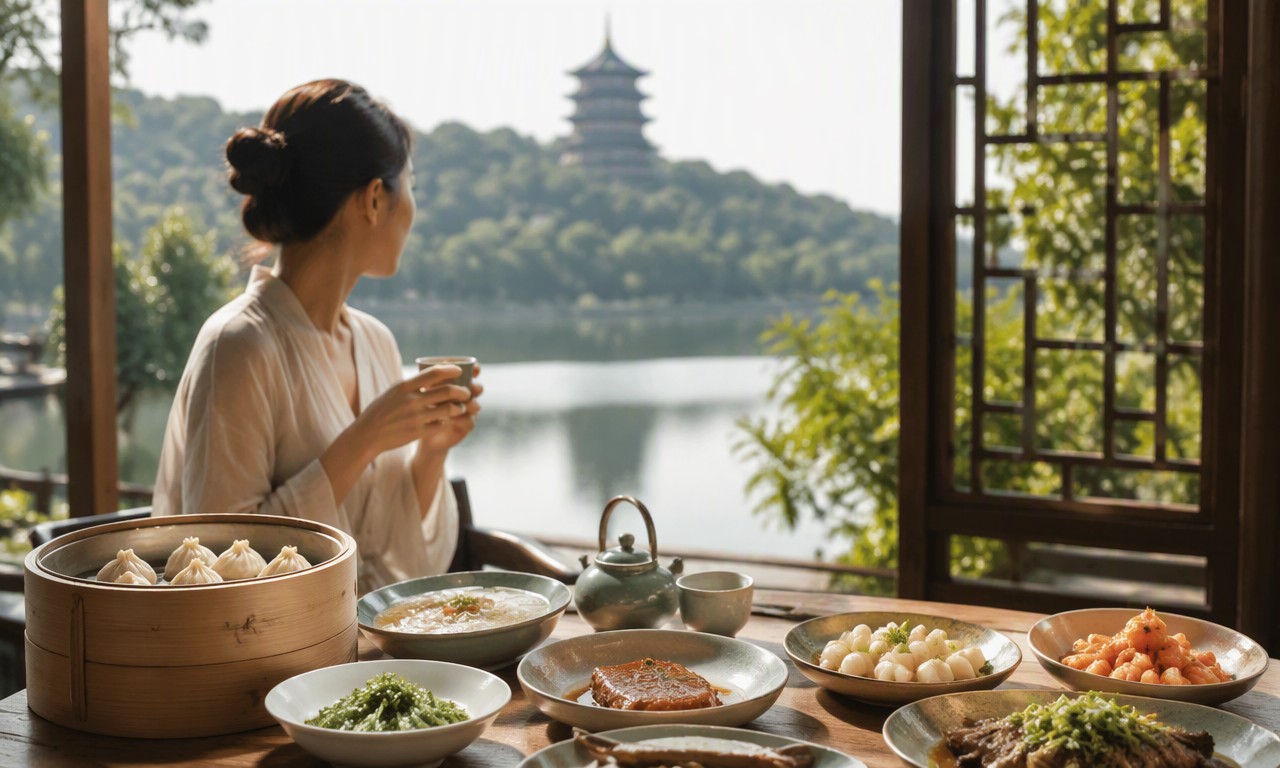
The core question this article aims to answer is: where should people of different numbers, budgets, and lengths of stay eat, what should they order, and what should they avoid in Hangzhou? This question deserves a serious answer because Hangzhou's food information is incredibly diverse. What locals eat on a daily basis is often not the same as what tourists flock to, and you only have one or two meals there, so choosing the wrong place would be a regret.
First, consider the number of days: You only have one meal opportunity.
If you're only having one meal in Hangzhou, whether you're traveling alone for business or just passing through as a couple, there's only one criterion: the meal must simultaneously represent Hangzhou's "everyday life" and "distinctive character." Most guides will recommend Lou Wai Lou or the original Zhiweiguan restaurant, but those places are better suited for people with plenty of time to order slowly. Actually, the best solution is to find a small, local eatery near Zhongshan South Road or Shiwukui Lane, order a bowl of Pian'erchuan noodles or shrimp and eel noodles, and a side of vegetarian chicken or braised duck. The reason is simple: noodles are a staple food for Hangzhou locals, they're quick to prepare, consistently delicious, don't require long waits, and you can eat comfortably for just a few dozen yuan per person.
If you're willing to spend a mid-range budget on a meal, you can switch from noodles to a neighborhood restaurant that specializes in steamed dishes or Hangzhou-style stir-fries, ordering dishes like steamed double stinky tofu, clear soup fish balls, and braised bamboo shoots. These kinds of restaurants don't rely on tourist traffic but on repeat customers from nearby residents, and the flavors are closer to what you'd find on a Hangzhou family's dinner table.
Let's look at the number of days: You have one whole day to eat.
For those who have a long day, don't waste breakfast at the hotel buffet. Get up early and head to the Dama Lane or Gongchen Bridge area, find a small shop that only operates in the morning market, and have a scallion pancake with a bowl of savory soy milk, or a serving of pan-fried buns with small wontons. This is a breakfast combination that locals in Hangzhou would queue up for, costing only a few to a dozen yuan per person, which is considered a standard affordable option.
For lunch, I recommend a proper Hangzhou-style meal; a mid-range budget should suffice. Remember the "two meat dishes, two vegetable dishes, and one soup" structure: choose Dongpo pork or beggar's chicken for meat, braised bamboo shoots or stir-fried winter melon and mushrooms for vegetables, and Song Sao fish soup for soup. Don't order too much; Hangzhou cuisine tends to be sweet and oily. Four to five dishes are just right for two people. This time of day is ideal if you're bringing your parents, as older people tend to have a good appetite at lunchtime and may feel uncomfortable if they eat too much oily food in the evening.
For dinner, there are two options: Couples can head to the lakeside or Qingzhiwu area and find a courtyard restaurant serving dishes like "tea-smoked chicken" or "Longjing shrimp." The environment is quiet, the prices are mid-range, and it's perfect for a leisurely meal. If you're dining alone, it's recommended to return to a local noodle shop or congee stall and have a bowl of rice porridge or Pian'erchuan noodles. You can then use the saved time to stroll along the canal to digest your meal.
See which category you belong to: single, couple, with parents, or with children.
For solo travelers, the biggest fear is the awkwardness of ordering food. Your ideal meal plan is to rotate between a noodle shop, a braised food shop, and a dim sum shop. Have noodles for breakfast, braised food with rice for lunch, Ding Sheng Gao (a type of steamed rice cake) or lotus flower pastry for afternoon snacks, and a bowl of wontons or rice porridge for dinner. Everything is affordable, you don't need to share a table or wait for a seat, and every meal consists of everyday Hangzhou fare.
For couples traveling together, the key is to create memorable dining experiences. It's recommended to plan a mid-range dinner with a lake or mountain view. The menu doesn't need to be extensive, but at least one dish should be photogenic, such as Longjing shrimp or crab-stuffed orange. During the day, you can visit Hefang Street for snacks, but remember this rule: the long lines at popular stalls aren't necessarily bad, but they're definitely not worth the half-hour wait. What's truly worth the wait are the freshly fried youdun (fried dough balls) or scallion pancakes stalls, which only require a three-to-five-minute wait.
When bringing parents to Hangzhou, the key principles are "less walking, less queuing, and less greasy food." Avoid taking them to popular tourist spots. Have breakfast near the hotel, and for lunch, choose a Hangzhou-style restaurant with seating, ordering lighter dishes, plus a steamed dish and a bowl of soup. In the afternoon, spend time at a teahouse, enjoying Longjing tea and snacks – much better than rushing around tourist attractions. Try to finish dinner before 5:30 PM to avoid queues and crowds.
For families with young children, the most important things are "fast service, easy-to-crush textures, and a sweet flavor." Suitable Hangzhou snacks for kids include Ding Sheng Gao (定胜糕), lotus flower pastry, xiaolongbao (小笼包), cat's ear dumplings (猫耳朵), and sweet fermented rice balls (酒酿圆子). For main meals, choose restaurants that specialize in steamed dishes; soft and easily digestible foods like steamed eggs, steamed meat patties, and steamed fish are more appealing to children. Avoid restaurants that only serve braised duck, braised meat, and stinky tofu, as children are unlikely to eat those.
Spending within a budget: Affordable, mid-range, and high-end options.
Affordable meals (average price of a few dozen yuan per person) are more than enough to eat well in Hangzhou, but you need to choose the right places. Your focus should be on noodles, snacks, braised dishes, and steamed dishes. Dishes like Pian'erchuan noodles, shrimp and eel noodles, scallion pancakes, fried dough sticks, Dingsheng cake, vegetarian goose, braised duck, and vegetable rice porridge will all cost only a few dozen yuan per person, but every bite is authentically Hangzhou. The criteria are simple: if the restaurant is mostly frequented by middle-aged and elderly people, the menu is on the wall, and there's no QR code ordering, it's generally a good choice.
A mid-range budget (around 100 RMB per person) is suitable for a formal Hangzhou meal, paired with a nice tea restaurant or lakeside restaurant. At this price, you can enjoy classic dishes like Longjing Shrimp, Dongpo Pork, Beggar's Chicken, and Song Sao Fish Soup, and experience the "dining + sightseeing" rhythm of Hangzhou. This is the perfect option for celebrating anniversaries with parents or your partner.
In Hangzhou, those with a high-end budget are paying for the "ambiance" rather than the "portion of food." You can go to private kitchens or club-style restaurants in scenic areas and enjoy individual servings made with seasonal ingredients, such as bamboo shoots, lake crabs, and river shrimp. However, be aware that many high-end restaurants in Hangzhou cater to business banquets; the food isn't necessarily better than those in neighborhood restaurants. The extra money is for the ambiance and service. If you don't prioritize the ambiance, mid-range options are sufficient.
Based on the combination of number of days, budget, and target demographic: Find the right fit.
Only one meal + solo + affordable: go to Zhongshan South Road for a bowl of shrimp and eel noodles, add a plate of vegetarian chicken, and buy a Dingsheng cake to take away.
For just one meal, plus for couples, and a mid-range option: find a restaurant near the lake that serves Longjing shrimp and tea-smoked chicken, order three dishes, and then take a walk along the lake.
If you only have one meal with your parents and prefer a mid-range option, choose a Hangzhou-style restaurant with dine-in seating. Order Dongpo pork, clear soup fish balls, braised bamboo shoots, and Song Sao fish soup. Avoid stinky tofu and braised duck.
1 day + solo + affordable: Breakfast: Da Ma Nong scallion pancakes with salty soy milk; lunch: Pian Er Chuan noodles from a local noodle shop; afternoon: buy fried dough sticks; dinner: rice porridge or wontons.
1 Day + Couple + Mid-Range: Breakfast: Pan-fried wontons; Lunch: Hangzhou cuisine; Afternoon: Tea and snacks at Longjing Teahouse; Dinner: Qingzhiwu Courtyard Restaurant.
1 day + with parents + mid-range: Breakfast is xiaolongbao (soup dumplings) near the hotel, lunch is at a steamed dish restaurant, afternoon is at a tea house, and dinner is Hangzhou cuisine before 5:30 pm.
1-day package with kids + affordable price: Breakfast: cat ear noodles; Lunch: steamed vegetables; Afternoon: Ding Sheng Gao (a type of steamed cake) and lotus flower pastry; Dinner: steamed buns with fermented rice balls.
3 days + solo + budget to mid-range: Day 1: noodles + braised dishes + snacks in rotation; Day 2: a formal Hangzhou cuisine meal; Day 3: a tea house meal to conclude the day.
3-day trip for couples, mid-range to high-end: Day 1: Local snacks; Day 2: Mid-range dinner with lake view; Day 3: Finish at a private restaurant in the scenic area, avoiding repeating dishes.
3 days + with parents + mid-range: one main meal of Hangzhou cuisine per day, interspersed with steamed dishes and teahouses to avoid long queues, and dinners are eaten in advance.
3 days + with kids + affordable to mid-range: mainly snacks, main meals include steamed dishes or light Hangzhou cuisine, and a dessert or pastry shop is arranged every day, so the kids eat well and the adults are not tired.
Finally, here's a conclusion: The question of Hangzhou cuisine isn't about "which restaurant is the best," but rather "in what context do you eat there?" Finding your own experience is far more important than simply copying a list.