
Old Hangzhou in the Market | Delve into Dama Lane and Caihe, and discover a table full of flavors only locals understand.
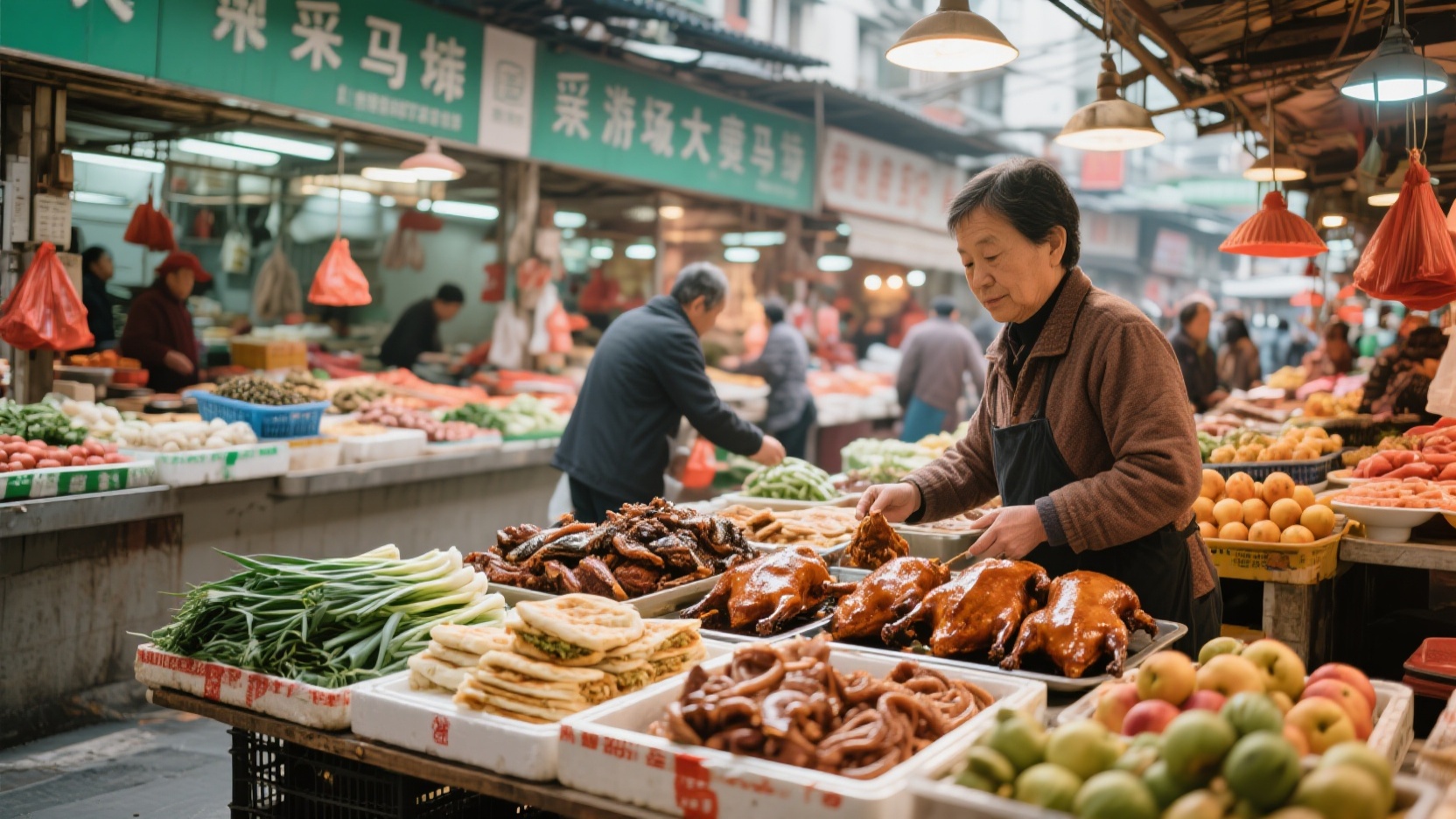
When the first batch of glossy, dark-brown braised duck hangs on the walls of Dama Lane, the winter meals of Hangzhou residents are already set. This old alley, less than 300 meters long, along with the Caihe Farmers Market, known for its cooked food, is one of the few markets in the main urban area that still retains a dense concentration of local culinary traditions. The former is perfect for browsing preserved meats, cured meats, and handmade pastries, while the latter offers cooked food stalls and braised dishes. The foundation for an authentic Hangzhou meal can almost be found here. If time is limited, buying preserved meats and pastries from Dama Lane and then heading to Caihe for cooked food is a smooth and unique route.
Braised duck and braised pork: First look at the color of the sauce, then smell the aroma of the wine.
The braised duck stalls in Dama Lane and Caihe are the best places to buy after winter sets in. Hangzhou braised duck uses local Ma ducks or Daitou ducks as the base, marinated in soy sauce, rice wine, and spices, and then air-dried. When choosing, first look at whether the duck legs and breasts are plump, the skin should be a deep jujube red color and translucent, and it should smell of soy sauce and a slight aroma of wine, without any rancid smell. After buying it, steam the whole duck for forty minutes, let it cool, and cut it into pieces. The fat under the duck skin will become translucent, which is perfect for serving with white porridge or making braised duck rice soup. Don't throw away the broth from steaming; it's also delicious for mixing with noodles or cooking taro. For the braised pork, choose ducks with a 3:7 fat-to-lean ratio and a rose-red cross-section. Slice and steam it, then stir-fry it with winter bamboo shoots for a savory and flavorful dish.
Crispy Fried Fish: The Sauce is More Important Than the Fish It Is
The crispy fish stall at Caihe Farmers Market always has long queues. Grass carp or silver carp are cut into chunks and fried to order. After being set at high temperature, they are dipped in a prepared sauce, resulting in a crispy exterior and tender interior. When choosing, you can ask for half of the fish to be from the belly and half from the back; the belly is fattier and more juicy, while the back is meatier and more satisfying. Crispy fish is best eaten hot, as the sauce will become too salty when it cools down. If you take it home, reheat it in an air fryer or oven at 180 degrees Celsius for three minutes. Do not use a microwave, otherwise the outer shell will soften.
Vegetarian roast goose and braised large intestine: the mainstays of the cooked food stall, one vegetarian and one meat-based.
Vegetarian roast goose is a representative of Hangzhou's bean products. It's made by rolling layers of tofu skin and then smoking it, resulting in a golden-brown surface. When choosing, select tightly rolled goose with a strong bean aroma that doesn't fall apart. It should feel elastic to the touch. Truly smoked goose will have a slight smoky flavor, unlike ordinary braised bean skin. It can be eaten sliced, or stir-fried with vegetables. Stir-fry in hot oil for one minute; do not overcook. For braised large intestines at the cooked food stall, check the thickness of the intestinal wall and the signs of washing. High-quality intestines have clean inner walls and intact outer skin. Cut into sections and steam or stir-fry with green garlic; the texture will be soft and tender without any unpleasant odor.
Ding Sheng Gao (a type of rice cake) and Cong Bao Hui (a type of scallion pancake): two handmade snacks that must be bought and eaten fresh.
Ding Sheng Gao (a type of steamed rice cake) is still available at stalls in Da Ma Nong, steamed fresh using wooden molds. It's filled with rice flour and fine red bean paste, offering a fragrant aroma of rice and a subtle rose scent. When choosing, check if the cake is fluffy and intact; small cracks on the surface are normal. The color is usually a light red from red yeast rice powder, so don't aim for an overly red hue. It's best to eat it on the same day you buy it; if left overnight, steam it for five minutes to soften. Cong Bao Hui (a type of fried dough stick wrapped in scallion pancake) is made by wrapping fried dough sticks and scallions in spring roll wrappers, pressing and grilling it on a griddle until golden brown on both sides, and then brushing it with sweet bean sauce. Freshly made Cong Bao Hui has a crispy skin and fragrant scallion flavor, but it softens easily after being packaged, so bulk purchases are not recommended.
Winter pickled vegetables and pickled cucumbers: the base flavor of rice porridge and Pian'erchuan noodles
Winter pickled vegetables are a seasonal item at the pickled vegetable stalls in Da Ma Long. Locals often use long-stemmed Chinese cabbage to pickle them. When choosing vegetables, look for stems that are white with a hint of yellow and leaves that are supple. They should have a natural sour aroma rather than a pungent sour smell. After buying them, chop them up and stir-fry them with winter bamboo shoots and shredded meat to make "Stir-fried Winter Vegetables," a staple ingredient in Pian'erchuan noodles. For pickled cucumbers, choose those with naturally wrinkled skin, a bright brown color, and a crisp, tender texture that isn't too salty. These are best paired with rice porridge. Slice them thinly and drizzle with a few drops of sesame oil.
Dried plum vegetables and dried bamboo shoots: They keep well and can fill a whole meal.
Dried mustard greens and dried bamboo shoots are often overlooked at local produce stalls on the sidelines of the market, yet they are important staples in Hangzhou households. Choose dried mustard greens that are jet black and glossy, dry and free of sand, and have a mellow, aged aroma rather than a musty smell. When making braised pork belly with dried mustard greens, soak them in cold water for twenty minutes to remove sand before steaming with the pork belly. Dried bamboo shoots come in two types: stone bamboo shoots and hairy bamboo shoots. The former are tender and suitable for soups, while the latter are thick and suitable for braised pork. When selecting bamboo shoots, look for a natural, pale yellow color; overly white ones may have undergone unnecessary processing.
Seasonal fruits: Buy them by the color displayed at the stall.
The fruit stalls at the farmers' market know the seasons better than supermarkets. Around May, Tangqi loquats come into season; choose those with orange-yellow peels and fine fuzz on the surface—they're ripe enough that the skin peels off easily. In early summer, select deep purplish-red bayberries that are plump and dry; soak them in lightly salted water for ten minutes before eating. Autumn brings nuts like Lin'an walnuts, but the fresh fruit section is even more worthwhile, with persimmons, oranges, and strawberries appearing in turn. Hangzhou residents typically buy only two or three days' worth of fruit at a time, and the farmers' market stalls perfectly cater to this habit.
Visiting the local market is the best way to experience a city.
Scenic spots reveal the outline of Hangzhou, while the local markets offer a taste of its daily life. The drying time of the braised duck in Da Ma Lane, the dipping sauce for the crispy fish from Caihe, the tangy aroma emanating from the pickled vegetable jars—these are all concrete footnotes to local life. You don't need to buy everything at once; just pick two or three kinds of cooked food, a few packets of pickled vegetables, and a bag of seasonal fruit. A simple reheating or preparation at home will create a meal that feels closer to authentic Hangzhou than any restaurant in the scenic areas. Getting to know a city often starts with a simple conversation with a vendor: "How do you eat this?"—more effective than writing a ten-page travel guide.