
Don't be fooled by travel guides when planning a 3-day, 2-night trip to Beijing | A local's test-and-avoidance checklist: Skip these trendy spots and try local experiences.
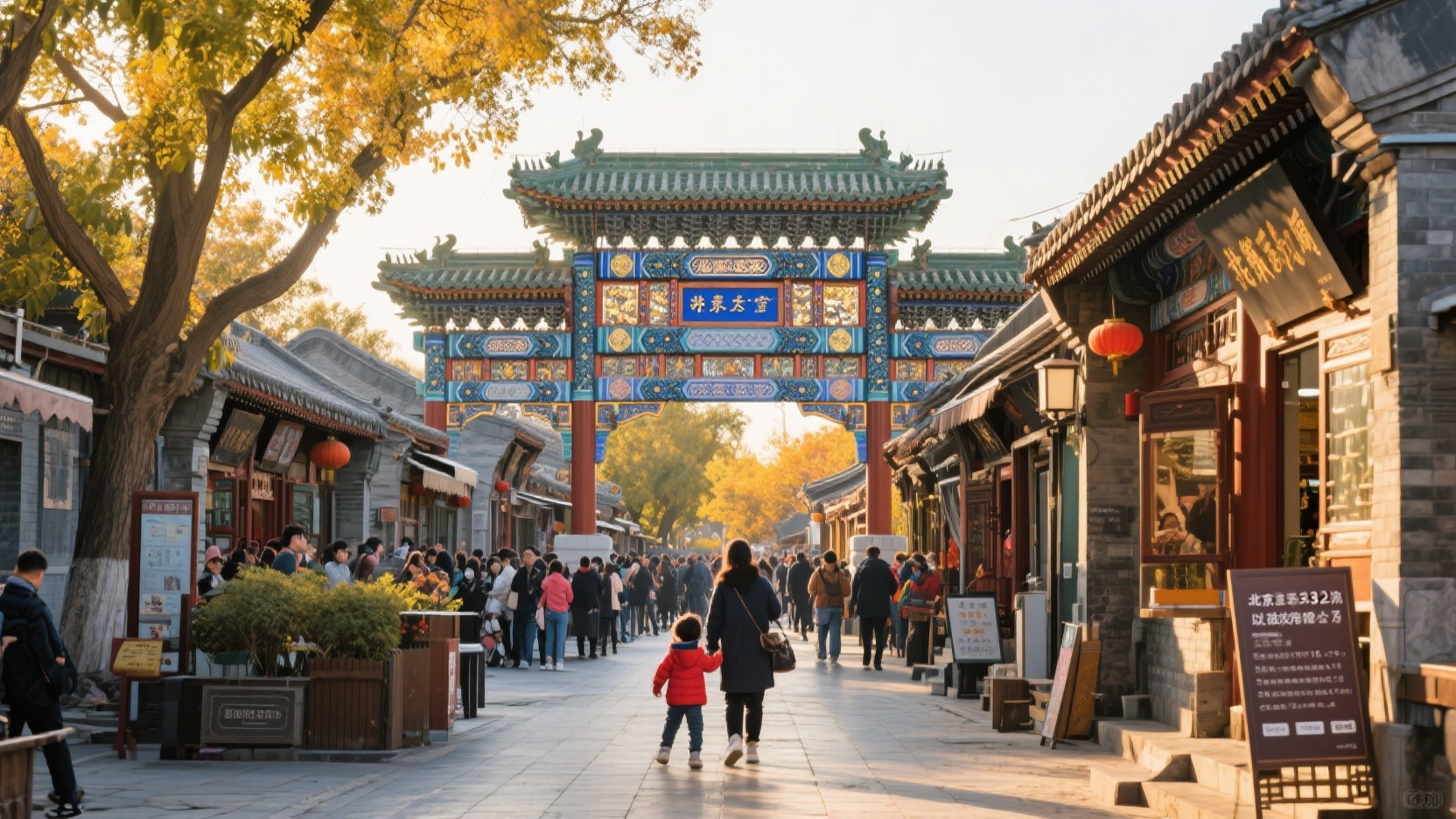
Breaking down the "first day of classic events": Don't just line up for the flag-raising ceremony, and don't just walk the central axis of the Forbidden City.
The flag-raising ceremony itself isn't the problem; the problem lies in the obsession with "having to see it." In the summer, people queue up at 3 AM, go through three security checks, and after the ceremony, the crowds surge directly onto Nanchizi Street, making it impossible to hail a taxi, and the subway is packed like sardines. If you really want to see it, stay near Dongjiaomin Lane and walk there, or simply skip it and go to the corner tower to photograph the sunrise—there are fewer people, and you can get a panoramic view of the Forbidden City.
The worst way to experience the Forbidden City is to only walk along the central axis from the Meridian Gate to the Gate of Divine Might. The three main halls are always packed with people, making every photo look like a group portrait. Locals prefer the Treasure Gallery, the Clock Gallery, or the Eastern and Western Six Palaces and the Cining Palace Garden; these are less crowded, and the light and shadow on the red walls create more photogenic scenes. Climbing to the Wanchun Pavilion in Jingshan Park for a panoramic view takes about half an hour. Don't take a taxi from Jingshan Qianjie; walking to the East Gate of Beihai Park and then taking a bus is much more convenient.
Nanluoguxiang has become a "national chain snack street," with few shops, from grilled squid to traditional Beijing-style tripe, run by locals. At the same time, if you go to Beiluoguxiang or Wudaoying Hutong, you can see old men playing chess, cats sunbathing in the alley, and a few small restaurants that have been open for many years.
Day 2 Great Wall Route: The widely circulated "Badaling Day Trip" is the biggest scam.
The Badaling Great Wall itself isn't the problem; the problem lies in the traffic and the queues. A two-hour traffic jam on the highway, followed by another hour's wait for the cable car at the scenic area, and the Hero's Slope is packed with people. There's no sense of the heroic spirit of "He who has not climbed the Great Wall is no true hero," only "He arrives at the Great Wall covered in sweat." Locals prefer Mutianyu, where the watchtowers are denser, the cable car queues are shorter, and they can even enjoy rainbow trout in Huairou on the way down.
Combining the Ming Tombs and the Great Wall into a one-day tour is not recommended. All the time is spent traveling from Changping to Yanqing, and by the time you arrive at Dingling or Changling, it's already afternoon, and most people are so tired they fall asleep on the bus. As for the Bird's Nest and Water Cube, just pass by and take some exterior photos after they're lit up at night; buying a ticket to go inside to see the steel structure and swimming pool is extremely poor value for money.
If you're traveling with elderly people or children, Huanghuacheng Great Wall is much easier to navigate than Badaling. It has a reservoir and chestnut orchards, and the scenery is just as beautiful as any popular tourist spot when the chestnuts ripen in autumn.
Day 3 Royal Gardens Route: Avoid the East Gate at the Summer Palace; only visit the Western-style Buildings at the Old Summer Palace.
Entering through the East Gate of the Summer Palace leads directly to the Long Corridor and the Tower of Buddhist Incense, where crowds are completely jammed on the north bank of Kunming Lake. The truly comfortable way is to enter from the West Gate or the North Ruyi Gate, walk along the West Causeway, see the reeds and wild ducks, and then circle around to the Jiqing Pavilion area – much more comfortable than squeezing through the Long Corridor. The Summer Palace is vast; trying to see it all in one visit is unrealistic. It's better to choose the West Causeway and explore a corner at your leisure.
The Old Summer Palace (Yuanmingyuan) is vast, and guidebooks often suggest walking from the South Gate to the Western-style Buildings area, which involves half an hour in the scorching sun, and mostly through wasteland and newly built lotus ponds. However, it's recommended to enter directly from the East Gate and see the ruins of the Great Fountain; unless you have a strong historical fascination, there's no need to force yourself to explore the other areas.
Booking tickets to Tsinghua and Peking Universities is as difficult as getting concert tickets, and the campuses aren't open to the general public. Instead of queuing for photos at the school gates, it's better to spend your time at Xishiku Church or Zhihua Temple. Xishiku Church is a Gothic building with a Chinese-style stele pavilion, while Zhihua Temple is quiet and contains a Ming Dynasty revolving sutra repository—both places frequented by locals.
An optimized version of the "3 days, 2 nights" itinerary for locals: giving back time to the hutongs and parks.
Day 1: Sunrise at the Corner Tower - East and West Six Palaces of the Forbidden City - Jingshan Park - Beiluoguxiang - Shichahai and Xihai. Xihai is much quieter than Houhai, with the Guo Shoujing Memorial Hall and old men fishing. A walk around there isn't tiring. Don't go to Houhai at noon; it's sunny and noisy.
Day 2: Mutianyu Great Wall - Huairou farmhouse lunch - return to town in the evening to see the corner tower night view. Don't include the Ming Tombs in your itinerary unless you're a Ming Dynasty emperor enthusiast. For the Great Wall, be sure to leave early; a weekday is better.
Day 3: Enter the Summer Palace from the West Gate and follow the West Causeway - Yuanmingyuan from the East Gate and visit the Western-style buildings - Yangmeizhu Xiejie - Qianmen Sanlihe Park. Yangmeizhu Xiejie has used bookstores and independent cafes, and is three streets quieter than Qianmen Dashilan. Sanlihe Park has reeds and koi carp, and is very pleasant in the evening.
Add 1 day for flexibility: Places locals would typically visit.
If you have an extra day, don't rush to visit landmarks. Instead, go to the National Art Museum of China or the National Museum of China (remember to make a reservation in advance), then walk along Dongjiaomin Lane to Taijichang to see the old embassy buildings and church. It's less crowded and more photogenic.
Alternatively, you could visit the Camel Bell Ancient Road in Moshikou or the Fahai Temple to see the murals; these are much more authentic and original than Nanluoguxiang. Families with children can choose the Natural History Museum or the China Science and Technology Museum, which are much more interesting than simply checking off university gates.
10 things you shouldn't do: These are heartfelt words from the locals.
1. Don't take those unlicensed taxis offering "Great Wall special lines" on the street; they'll most likely take you to a shopping store near the Shuiguan Great Wall. 2. Avoid the so-called "old Beijing snacks" on Wangfujing Snack Street; Niujie or Huguosi are more authentic. 3. Don't buy vacuum-packed "Quanjude roast duck" from tourist attractions; it's completely different from freshly roasted duck. Also, avoid cheap roast duck from supermarkets. 4. Don't take taxis to attractions during rush hour; taking the subway and using shared bikes is faster.
5. Don't buy "Old Beijing Cloth Shoes" or "Cloisonné Bracelets" in Nanluoguxiang; they're mostly counterfeit from Yiwu. 6. Don't believe claims that "no reservations are needed at the Forbidden City." Even scalpers can't get in during peak season; make reservations through official channels in advance. 7. Don't walk along the Long Corridor at midday in the Summer Palace in summer; the heatstroke risk is extremely high. Go in the early morning or evening. 8. Don't queue at the West Gate of Tsinghua University just to "check in"; when the campus is closed, you can only take a picture of the gate.
9. Avoid taking "day trips" recommended by licensed taxi companies; there are more shops offering kickbacks than actual attractions. 10. Don't buy "Great Wall commemorative coins" or "zodiac tokens" at the foot of the Great Wall; they're the same as those in scenic areas nationwide, and you'll regret it after buying them.
In closing: 5 tips you shouldn't ask locals about.
1. The Beijing subway is more reliable than taxis. Within the Second Ring Road, walking and using shared bikes are the most reliable options for attractions. During traffic jams, taking a taxi is slower than walking. 2. Autumn, from mid-October to early November, is the most comfortable season in Beijing. Spring is windy with lots of willow catkins, summer is hot and humid, and winter is dry and cold, but the Forbidden City is worth visiting after a snowfall. 3. It's best to visit the Great Wall on a weekday early morning; weekend highway parking lots are notoriously difficult to navigate.
Fourth, locals don't necessarily go to Quanjude to eat roast duck. Roast duck restaurants that have been open for more than ten years in the community are also reliable, and the average cost per person is around 100 yuan. Fifth, no "Old Beijing Fried Sauce Noodles" chain store is as good as the small restaurants in the hutongs. Just go into whichever restaurant you see locals eating at the door with bowls in their hands.