
Beijing's Niche Arts and Culture Map: 8 Spiritual Corners to Explore in Old Warehouses, Bookstores, and Factories
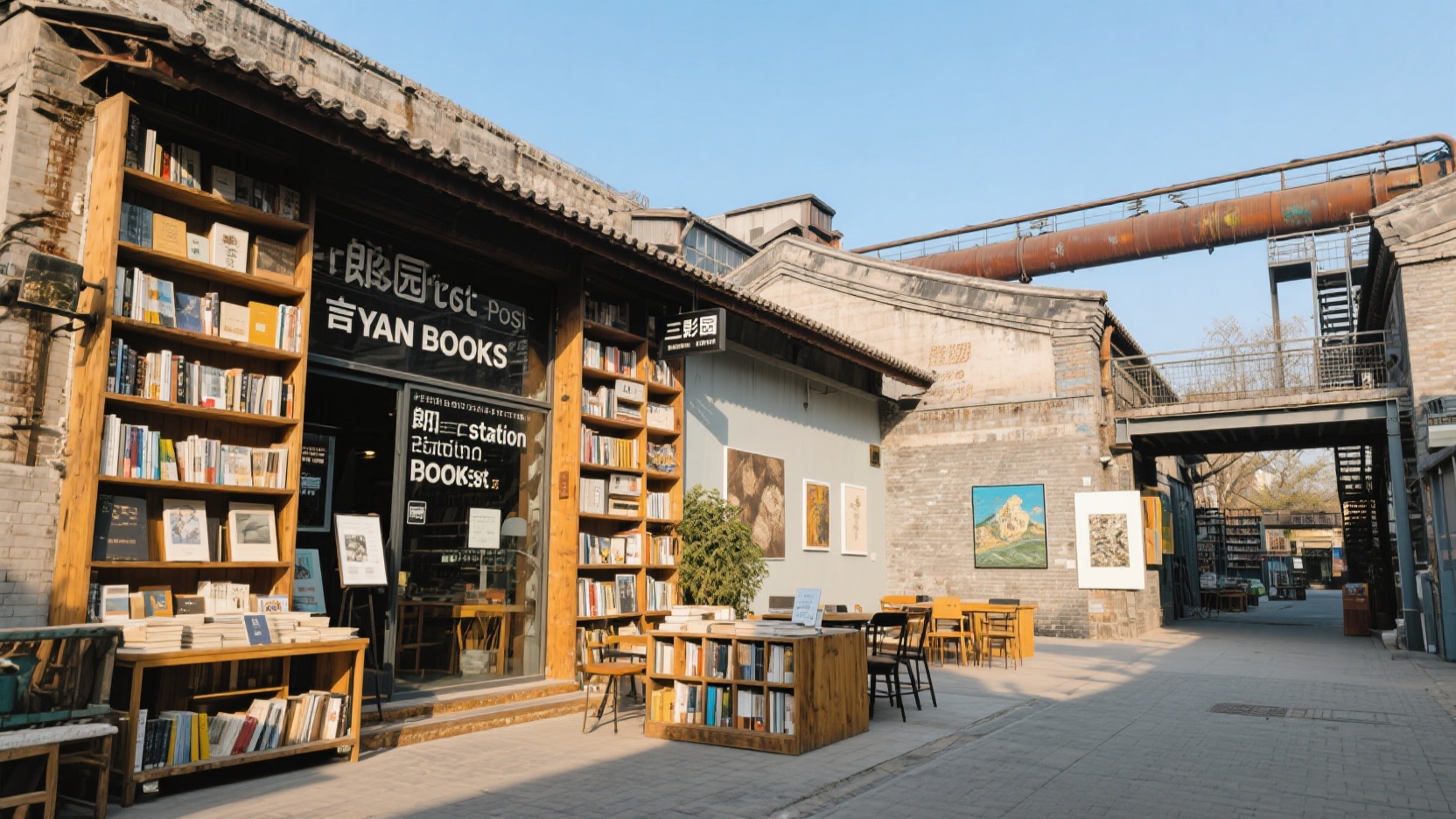
Beijing's cultural and artistic richness isn't confined to the central axis and palace walls; more often, it's hidden behind the red bricks of old factories, the lightboxes of independent bookstores, and the folding windows of neighborhood cafes. This route avoids traditional major tourist attractions, using independent bookstores, private art galleries, antique warehouses, creative parks in old factories, neighborhood cafes, and independent galleries as coordinates to create a map of the city's less-traveled cultural gems, perfect for walking and cycling. The eight locations are distributed around Dongcheng, Chaoyang, and Caochangdi districts, easily connected by bicycle or short taxi rides, making it ideal for a leisurely day and a half itinerary.
postpost: A visual culture hub in a residential building
This small bookstore, located on the second floor of a residential building in Sanlitun, has an inconspicuous entrance but houses a large collection of photography books, independent magazines, and visual culture publications. The space retains the layout of the old residential building, with narrow staircases, white walls, and a terrace that contrasts beautifully. From the terrace, you can see the city's skyline where old and new meet. The highlights are small art book exhibitions and occasional screenings. For photography, it's recommended to go up to the terrace, using the surrounding old buildings and distant skyscrapers as a backdrop; the light is best in the evening. The indoor lighting is dimmer, so it's best to use a wide-aperture lens or your phone's night mode.
YAN BOOKS: A curated reading space for design books
Located near Chaoyang Joy City, YAN BOOKS focuses on design, architecture, lifestyle, and independent magazines, with its book selection resembling a small-scale exhibition. Large floor-to-ceiling windows allow ample natural light, and the reading and display areas have no clear boundary. Small-scale sharing sessions are occasionally held on weekends. The highlights are the international design books and the Asian independent magazine section. For photography, it's recommended to sit at the long table in front of the windows and use natural light to photograph the book pages and coffee cups—the result is clean and restrained images.
Shanzhongtian Art Center: A staggered gray space in an old factory building
Located on the edge of 798 Art Zone, the Shanzhongtian Art Center is a renovated old factory building. Its interior, constructed of concrete, steel, and a staggered circulation system, is a highlight, showcasing contemporary art while also being a visually appealing architectural marvel. The varying scales of the space create a rhythmic flow, encouraging visitors to pause on the staggered platforms before and after viewing exhibitions to appreciate the interplay of light and materials. For photography, it's recommended to take pictures where the gray staircase meets the natural light; wearing solid-colored clothing will help you blend into the environment and avoid complex patterns that might clutter your shots.
Nancheng Antique Warehouse: A dense collection of everyday objects from the last century
This is a warehouse converted from an old factory, filled with enamel basins, old doors, old sofas, black-and-white televisions, and various industrial relics. Different themed areas recreate scenes of families and street corners from the last century. The density of objects is extremely high, and many items show signs of use, making it closer to real life than a typical museum. The highlights are the details of the old objects and the scene restoration. For photography, use a medium telephoto lens to capture details; warm lighting will highlight the textures of metal and wood. For portraits, try shooting from a low angle in the old furniture area.
Langyuan Station: A riverside cultural and creative belt extending from a textile warehouse
Langyuan Station, transformed from a former textile warehouse, stretches along the Bahe River, where red-brick factory buildings, remnants of railway tracks, and newly constructed glass boxes appear alternately. The park features design shops, independent bookstores, cafes, and galleries, a diverse mix that feels spacious. A stroll along the river leads to several independent spaces. The highlight is the combination of industrial heritage and the riverside promenade. For photography, it's recommended to capture the red-brick walls and railway tracks against the afternoon light, and to photograph the soft sky from the riverbank in the evening. On weekends, it's advisable to visit in the morning to avoid crowds.
My Relationship with Ditan Café: A Quiet Footnote on a Community Street Corner
This community café outside the east gate of Ditan Park features cement-gray walls, metal components, and restrained lighting, catering primarily to local residents and people working alone. It's not an appendage to a tourist attraction, but rather an integral part of the community's daily life; if you're not in a rush, you can bring a book and spend an afternoon there. The highlight is the interaction between the window seats and the street view, as well as the relatively quiet reading atmosphere. For photography, it's recommended to use side-backlighting to capture details of hands and coffee cups; the windows act as natural frames, making the subjects appear more natural than posed shots.
Three Shadows Photography Art Centre: The Courtyard of Light and Shadow in the Grass Field
Three Shadows Photography Art Centre focuses on photographic art and comprises exhibition halls, a library, and a gray-walled courtyard. Exhibitions are frequently updated, creating a strong academic atmosphere. The courtyard features a simple visual relationship between the gray walls and trees, making it worthwhile to linger even without seeing any exhibitions. A half-day trip can be combined with visits to the library and exhibition halls. The highlight is the interplay of light and shadow on the photography exhibitions and the building's exterior. For photography, it's recommended to capture the shadows of the trees on the gray walls in the courtyard during the afternoon when the sunlight is at its angle, using a medium to long telephoto lens to compress the space and create a more tranquil image.
77 Creative Park: A small-scale theatrical cluster within a printing factory
The 77 Cultural and Creative Park, located on the back street of the art museum, was originally the Beijing Offset Printing Factory. Although small in size, it retains its red-brick factory buildings, iron staircases, and small square. The park primarily houses theater and design studios; the theater facade and old structural components are clearly visible. If you happen to be there during a rehearsal or market, you can experience a more vibrant studio atmosphere. The highlight is the structural relationship of the old factory buildings and the theatrical ambiance. For photography, it's recommended to descend the iron staircase and shoot down into the square; the contrast between the red bricks and the warm light is stronger when the lights come on in the evening.
This route doesn't prioritize speed or check-in efficiency; instead, it uses walking to connect bookstores, old warehouses, factories, and courtyards into a spiritual map of the city. It's about measuring the city's spiritual corners with your footsteps.