
These 7 hidden gems in Yantai | A list I only dared to write after three trips (not the internet sensations)
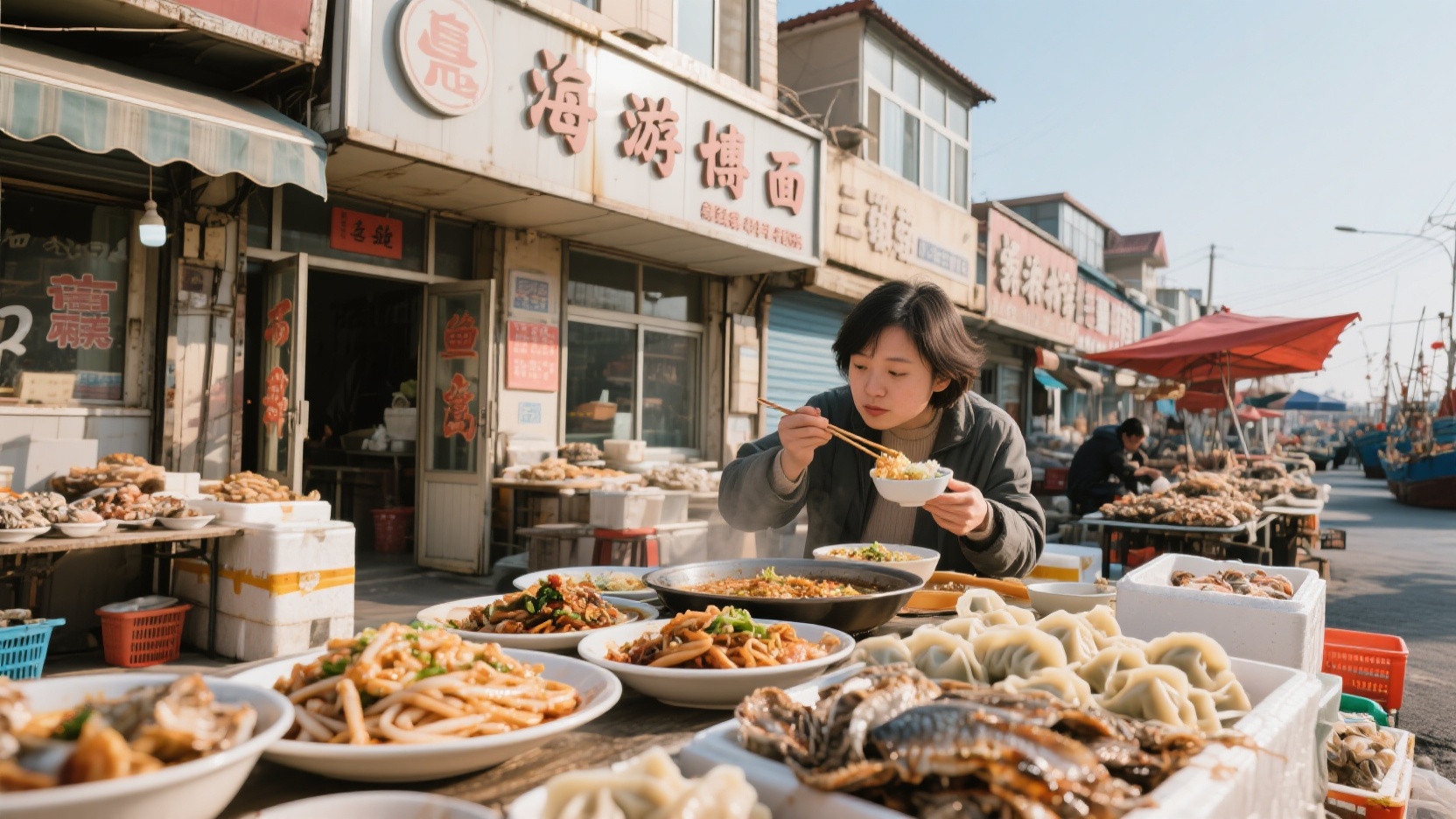
On my first trip to Yantai, I ate at three popular restaurants listed on the must-try list, including a 40-minute wait for sea cucumber rice, which tasted purely like a tourist's meal. On my second trip, a local friend who works on ships showed me the way, leading me into the old neighborhoods of Zhifu District and the Fushan morning market, finally allowing me to experience the true essence of Yantai. On my third trip, I specifically chose to visit outside of peak hours and weekends to confirm that these restaurants weren't just lucky. The following seven restaurants, though never on the must-eat list and some even with faded signs, are frequented daily by local gourmets.
The braised food stall in the old community
Old Zhou's Braised Dish stall at the east end of the Wenhua Road Market in Zhifu District only stays open until noon. His braised dishes are made with sweet potato starch, pan-fried until crispy on both sides, and then topped with garlic sauce, sesame paste, and shrimp oil, giving them a wonderful wok hei (wok aroma). Why is it worth a visit? While Yantai braised dishes have been turned into "sesame paste jelly" by trendy online shops, Old Zhou sticks to the traditional frying method, and locals eat them standing on the roadside with their bowls in hand. How to order: Don't order the deluxe version with seafood; just order the "original flavor braised dish" and ask the owner for an extra spoonful of scallion oil.
What to buy along the way: On the west side of the market, Old Sun's shrimp paste stall sells bulk shrimp paste and crab paste. The fermented aroma is pungent; buy a small bottle to take home and use as a scrambled egg omelet or a dipping sauce for scallions—a staple in Yantai households. Further north, there's a fig stall where you can buy nectar-laden, green-skinned figs in the fall—don't miss it!
Penglai noodles at Fushan morning market
The second Penglai Noodle stall at the Fushan Riverside Road morning market has no signboard, just a large pot and a row of plastic stools. Penglai Noodles emphasize "three parts noodles, seven parts broth," and the owner simmers fish broth every morning at dawn, resulting in a milky white soup. The noodles are freshly made alkaline noodles. Why is it worth a visit? This stall only operates in the morning, closing around 9:30 PM, and its customers are mostly elderly people finishing their morning exercise. What to order: Order the "Fish-Braised Noodles" and add "Fried Oysters." The oysters are freshly shucked and fried, crispy on the outside and bursting with juice on the inside. Don't order the so-called upgraded versions with abalone or sea cucumber; they overpower the flavor.
What to buy along the way: At the north end of the morning market, there are Haiyang white cucumbers, which are crisp, sweet, and not astringent, and can be eaten as fruit; there are also freshly caught purple sea urchins, which you can ask the vendor to open and eat right there on the roadside, as they are sweeter than those in Japanese restaurants.
Small processing workshops by the dock
"Ah Hai Seafood Processing," located east of Yangma Island Wharf, is tucked behind a fishing tackle shop. It doesn't accept tour groups; it only processes seafood brought back by customers. Why is it worth going? While seafood restaurants in Yantai city prefer farmed seafood, Ah Hai only accepts seafood fresh from small boats unloaded at the wharf—a fact well-known to local boatmen. How to order: Pick your own sea cucumbers, ark shells, and octopuses at the wharf and have them make "Sea Cucumber Rice" and "Aark Shells with Scallion Oil." Make sure they use live sea cucumbers, freshly killed; avoid pre-cooked ones as the taste is significantly worse.
What to buy along the way: Next to the processing point, there are fishermen sun-drying wakame and kelp, which are dry, fragrant, and clean. They make a thicker soup than those from the supermarket. If you happen to visit in autumn, there are freshly cooked oysters in their shells at the pier, sold by the basin. Dipped in ginger and vinegar sauce, they have a creamy flavor.
Fish hot pot and mackerel dumplings on Zhifu Island
Lao Yu's Fish Hot Pot in Dongkou Village, Zhifu Island, is only open for lunch. It features a large wood-fired pot of stewed mixed fish. Why is it worth a visit? Many fish hot pot restaurants in Yantai use frozen small mackerel as a substitute, but Lao Yu goes to the Dongkou Wharf every morning to pick up the fish. He stews whatever fish is available. Locals only appreciate the crispy-edged flatbread cooked in a wood-fired iron pot. How to order: Simply order the "Mixed Fish Hot Pot," not a single large fish. The mixed fish hot pot includes yellow croaker, blackhead fish, and pomfret, making the broth more flavorful. Make sure the owner cooks the flatbread against the edge of the pot for an extra five minutes to achieve a crispy crust.
Less than 50 meters from Lao Yu's Fish Hot Pot, "Aunt Li's Mackerel Dumplings" is only open for lunch and closes when sold out. Why is it worth going? They use only freshly killed mackerel for the filling, seasoned with Sichuan peppercorn water, without adding any water, resulting in dumpling wrappers so thin the filling is almost translucent. What to order: Just order the "Mackerel Dumplings" and "Cold Jellyfish Salad," avoid other fancy dumplings; you can take the raw dumplings home and freeze them for up to a week. What to buy nearby: The nearby convenience store sells Yantai beer and Laiyang pears; beer goes well with the fish hot pot, and pears are refreshing with the dumplings.
Old Shandong cuisine restaurant and community barbecue stalls
Located in an old residential building in Zhifu District, "Fuyuan Shandong Cuisine Restaurant" has a tiny storefront, barely a door, yet its kitchen boasts two stoves. Why is it worth a visit? Their braised sea cucumber with scallions isn't the banquet version; they use only local small sea cucumbers, resulting in a strong scallion oil flavor and a thin sauce. The fried oysters have a batter made with eggs and sweet potato starch, crispy but not greasy. What to order: Order the "Fried Oysters" and "Braised Sea Cucumber with Scallions," and pair them with a bowl of "Fushan Noodles." Don't order the seafood platter; it's not worth it. What to buy nearby: Head south out of the alley; after 10 PM, there's an old man's barbecue stall where you can stay for a while.
Old Ma's BBQ stall only grills sea cucumbers, conch, and sea hares, quickly grilling them over charcoal and brushing them with sweet bean sauce. Why is it worth a visit? Locals in Yantai appreciate the crispness of just-cooked sea cucumbers and the chewiness of conch. Old Ma doesn't marinate the meat; he relies solely on the heat. How to order: Sea cucumbers should be removed from the heat after ten seconds, order at least ten skewers at a time; sea hares should be grilled until slightly charred, not undercooked. What to buy nearby: The fruit cart next to the BBQ stall often sells Laiyang pears, which are juicy and refreshing; on cold days, ask the owner to put the skewers in insulated foil.
My biggest takeaway from these three trips is that the best flavors of Yantai aren't found in the neon lights of popular commercial districts, but rather in the old signs at morning markets, along the docks, and beneath residential buildings. These shops share a common thread: the owners don't chase after customers; they cater only to regulars. Some close after mealtimes, and some only serve one type of dish. It's best to plan your trip according to local customs and routines.
Three tips to avoid pitfalls: First, don't go during peak meal times, especially for fish hot pot and Penglai noodles. Either arrive early or avoid the peak hours, otherwise even locals will have to wait. Second, don't just order the signature dishes. Many hidden ways to eat are found in "buying along the way," such as braised pork with shrimp paste or fish hot pot with Yantai beer. Ordering the signature dishes alone will only give you half the experience. Third, remember to bring cash. Early market stalls, dockside processing shops, and some old community shops only accept cash or don't accept QR codes. It's safest to carry a few dozen yuan in change.