
Wuxi's Three Meals a Day | From Steamed Buns to Crispy Eel at Night: Local Street Food
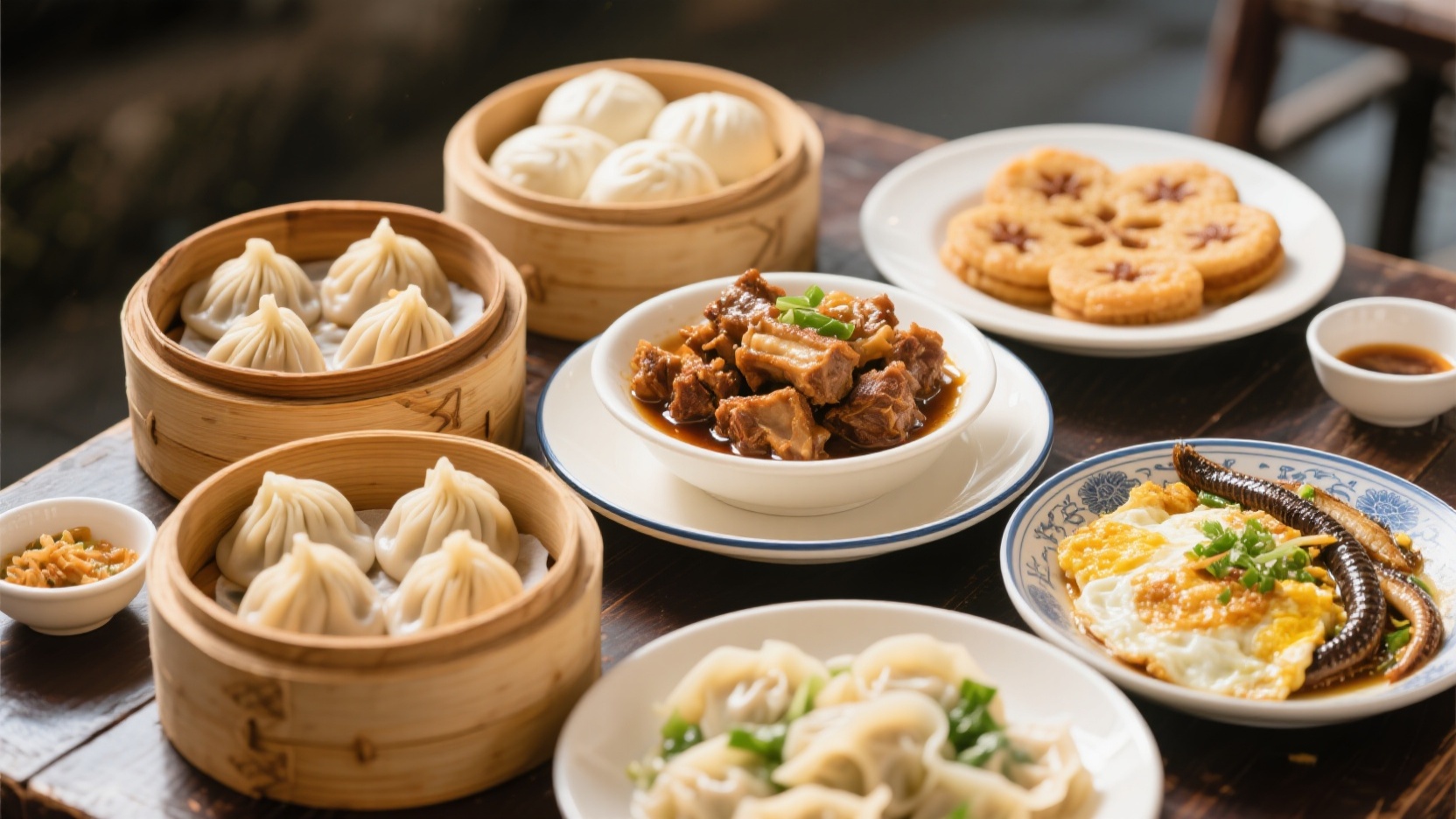
At 6:30 in the morning, the breakfast stalls in Wuxi are first awakened by the steam from the steamers. For locals, a day almost always begins with a basket of "xiaolongbao" (small steamed buns). In Wuxi, all buns are generally called "mantou" (steamed buns). Xiaolongbao dough is unleavened, made with all-purpose flour and cold water, rolled out thicker in the middle and thinner at the edges so the bottom can hold the broth. The filling is made from pork foreleg meat, seasoned with soy sauce, sugar, minced ginger, and aspic in a specific ratio, then steamed until it's full of gravy. To eat, first bite a small opening to sip the broth; the broth is distinctly sweet but not cloying, and the meat filling is firm and has a grainy texture. A typical basket contains eight, served with vinegar and ginger shreds to cut the richness. It's always paired with "kaiyang wontons": pork, dried shrimp, and pickled mustard greens are mixed into a three-ingredient filling, wrapped in a yuanbao shape, and served in a clear broth with a spoonful of lard, egg crepe strips, and garlic leaves. The wonton wrappers are thin and smooth, and the dried shrimp provides a savory and slightly seafood flavor, perfectly balancing the sweetness of the xiaolongbao. A breakfast consisting of one dry and one wet dish, one sweet and one savory dish, is a daily routine for Wuxi locals, not just a tourist activity.
Lunch at a local eatery: The sweet and savory logic of braised pork ribs and stuffed gluten.
At lunchtime in local eateries, "Wuxi-style braised pork ribs" are a must-order at almost every table. The ribs are selected, cut into chunks, blanched to remove any unpleasant odor, and then stir-fried in a small amount of oil until slightly golden brown. They are then simmered in Shaoxing wine, soy sauce, rock sugar, red yeast rice, ginger, and scallions until the sauce thickens. The finished product has a deep reddish-brown color, tender yet firm meat, and a savory initial taste followed by a long, lingering sweetness – a classic "sweet at the beginning, savory at the end" flavor. It's not just simple sweet and sour; the sauce is thick and rich, formed by the long-term blending of rock sugar and soy sauce. When eaten cold, the sauce solidifies, concentrating the sweetness; when eaten hot, it retains both its richness and fibrous texture. It's paired with "stuffed gluten," Wuxi-style thin, crispy gluten balls filled with seasoned minced pork, poked into the top, and then braised. The gluten absorbs the broth, becoming soft and chewy, bursting with juice when bitten. The meat filling, infused with scallion and ginger water, is tender and juicy. These two dishes appear very frequently on the everyday dining tables of Wuxi families: braised pork ribs are a symbol of entertaining guests and celebrating festivals, while stuffed gluten is closer to everyday life; the sweet and savory flavors represent the locals' default taste preferences. Pouring a spoonful of sauce over rice is a hidden way to eat it; the sweet and savory broth seeps into the rice grains, making it more direct than eating the meat alone.
Afternoon Tea Snacks: The Street Food Charm of Huishan Pastries and Plum Blossom Cakes
Around 3 PM, the tea stalls in the old town begin to bustle. "Huishan Crispy Pastry" is a type of pastry made from flour and lard, repeatedly folded to create layers, filled with fruit, sugar, and a small amount of salt and pepper, then sprinkled with white sesame seeds before baking. It's crisp at first, then light and crumbly, sweet with a hint of salt, and especially suitable to pair with tea. This pastry is closely related to Huishan tea culture; in the past, locals often carried a bag of crispy pastry as a snack while hiking and drinking tea. Street vendors sell "Plum Blossom Cake," made using a special hexagonal mold. A layer of batter is poured in, then filled with red bean paste or fresh meat filling, covered with another layer of batter, sprinkled with red and green candied fruit and sugar, and baked over charcoal until the bottom is crispy. The mold for Plum Blossom Cake needs to be preheated so the batter sets and the edges become crispy. The Wuxi version has a larger amount of red bean paste filling, a crispy outer shell, and a soft, sweet interior; it doesn't collapse after cooling. During school dismissal time, a circle of students often gathers in front of the Plum Blossom Cake stalls waiting for their cakes to come out of the oven—a route many locals remember from their school days.
Midnight Diner: Fried Eggs with Taihu Silver Fish and Crispy Eel Noodles from Liangxi
As night falls, food stalls and noodle shops take center stage. Taihu silverfish, slender and translucent with no noticeable fishy smell, are most commonly prepared as "silverfish scrambled eggs." The silverfish are first lightly blanched in boiling water, then beaten with salt and Shaoxing wine, and stir-fried in hot oil until just set. The key to this dish is the heat; the eggs should be removed from the pan when they are about 90% cooked, allowing the residual heat to set them. The rich aroma of the eggs and the sweetness of the silverfish complement each other perfectly, resulting in a tender and smooth texture that requires almost no additional seasoning. Another common late-night topping is "Liangxi Crispy Eel." Eel is sliced into thin strips, first deep-fried at a low temperature to set its shape, then deep-fried again at a high temperature until crispy. A separate sauce is made with soy sauce, sugar, and Shaoxing wine, and this sauce is poured over the eel strips while still hot. The finished product resembles a withered branch, crackles in the mouth, and is sweet and crunchy, typically served as a topping on top of a red soup. The broth for the red soup noodles is made by simmering pork bones, eel bones, and spices, resulting in a deep, savory, and slightly sweet flavor. A bowl of red soup noodles with a side of crispy eel is the most reliable source of energy for Wuxi locals before heading home late at night. The freshness of Taihu Lake and the sweetness of Liangxi meet again on the dinner table before dawn, ending the day's cycle.
From a steaming basket of xiaolongbao in the early morning to a bowl of crispy eel noodles late at night, Wuxi's daily meals don't rely on fancy techniques or exotic flavors, but rather capture the essence of sweetness, saltiness, and umami in the most authentic foods. From the streets to the alleys, experience the city through its diverse cuisine in a single day.