
A 5km stroll through Wuxi's old city | Blogger's personal experience: Avoiding the main road of Nanchang Street, it only takes an afternoon to walk from the market to the vinyl record store (including
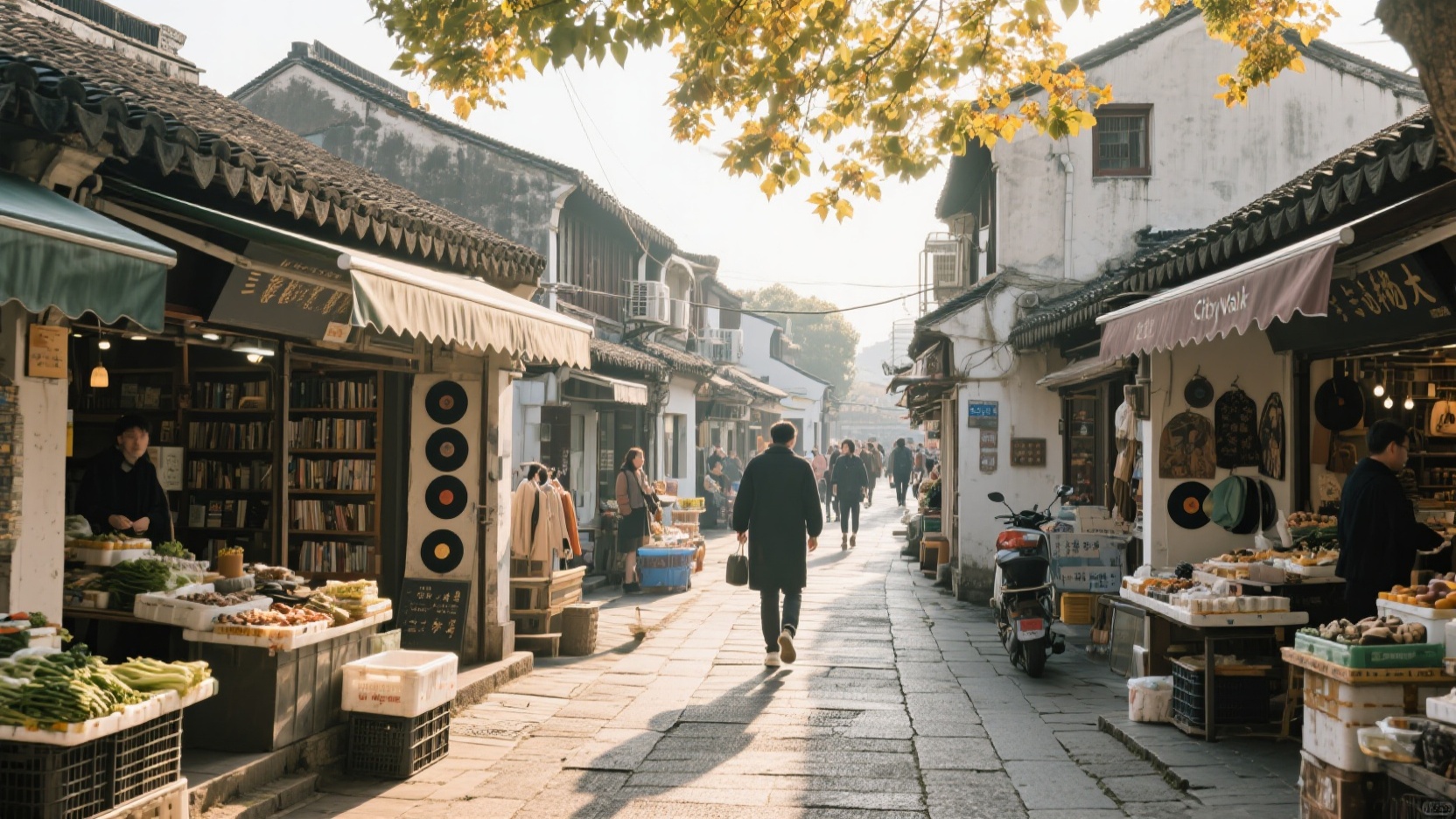
On my third trip to Wuxi, I booked a hotel outside Jiefang Ring Road, tossed my car keys into my backpack, and decided to start my walk from Sanyang Square. This approximately 4.5-kilometer old city stroll bypasses the main entrance on Nanchang Street, instead winding through backstreet markets, old neighborhoods, and the alleyways along the old canal. It's perfect for a solo walk with a camera, or for taking photos and sipping coffee with friends. I set off at 1:30 pm on a sunny afternoon, when the sunlight was just right for the old walls and plane tree leaves.
Sanyang Square - Xiaolou Lane: First see the Republic of China-era clock tower, then explore the Ming and Qing dynasty alleyways.
Exit from the exit near the Bell Tower at Sanyang Square Station, and walk for about 3 minutes to reach the Chong'an Temple Bell Tower. The best spot is next to the Abing statue on the east side of the Bell Tower, offering a low-angle shot that captures the Republican-era bell tower and its glass curtain wall in the same frame. It's worth stopping for 5 minutes to admire it, as this bell tower acts as a time marker for Wuxi's old city; tourists take photos in front, while local elderly people practice Tai Chi behind, creating a strong sense of urban juxtaposition.
Walk east along Renmin Middle Road for about 7 minutes and turn into Xiaolou Alley. The first section of the main route isn't long, but you should definitely take your time. Xiaolou Alley is home to many old Ming and Qing dynasty houses. From the "Xiuyifang" stone plaque, take a photo looking up at the gable walls on both sides, or crouch down to photograph the moss on the stone slabs and the iron rings on the wooden doors. In the middle of the alley, there's also an independent bookstore nestled in the courtyard of an old house. It doesn't have many bookshelves, but it specializes in local chronicles and architectural photography collections. It's worth stopping for 5 minutes because the brick-carved doorways don't have the harshness of renovated tourist attractions. The bookstore itself seems to have grown out of the old walls; the afternoon sun shines obliquely in, and every crack in the door seems to hold the weight of old Wuxi's history.
Side Route A: Turn into the old alley from Xinsheng Road, then go to Jiankang Road for coffee and vintage shopping.
After exiting Xiaolou Lane from the south entrance, don't rush east. Take Branch Line A west onto Xinsheng Road, which is about 0.5 kilometers and 8 minutes longer. There are no tourist signs here, but there are continuous lanes from the Republican era and old walls that have been partially demolished. My blog's best spot is at the intersection of Xinsheng Road and Nanshiqiao Lane, where I can take pictures of old-fashioned water meter boxes and quilts drying on the walls, creating a very vintage feel. It's worth stopping for 5 minutes, as this is a "breathing space" left in the urban renewal of Wuxi's old city; in a few years, these spots may no longer be visible.
Returning to Jiankang Road, a 5-minute walk leads to the section with the highest concentration of community cafes. Several small cafes, perched on the ground floor of old residential buildings, have folding chairs outside. Half the customers are young people taking photos, and the other half are aunties passing by with groceries. Next to them are two vintage clothing stores with small storefronts, their glass cases displaying 1990s sportswear and corduroy jackets. My blog is positioned under the Jiankang Road sign, using a 50mm lens to photograph the old rotating light of the barbershop across the street. It's worth stopping for 5 minutes because this area hasn't been completely taken over by online influencers; you can still see the original, orderly life of the neighborhood.
Chaoyang Farmers Market – Qingming Bridge Outskirts: The colors of the market are the city's freshest palette.
Walking south from Jiankang Road across Xueqian Street for about 10 minutes, you'll reach the vicinity of Chaoyang Farmers Market. This section passes the high wall of Xue Fucheng's former residence; you don't need to buy a ticket to go inside, as the sidewalk outside the wall offers excellent photo spots. My best spot is in the southwest corner of the residence, using a telephoto lens to compress the layers of the gable wall and sycamore trees. It's worth stopping for 5 minutes because the wall of this late Qing Dynasty mansion is beautiful in itself, and the ferns growing in the crevices are especially green in autumn.
The market corner is located at the intersection of Huaigu Road and Jiefang South Road. You don't necessarily need to go inside; the best photos are taken from a high vantage point outside the entrance. The colors here are incredibly vibrant: perilla leaves, water chestnuts, Taihu silverfish, and glistening braised pork ribs are all crammed onto dozens of stalls. The best spots are next to the scales or looking down from the second-floor steps. It's worth stopping for five minutes because you can simultaneously hear the vendors' calls, the rustling of plastic bags, and the community broadcasts—a Wuxi experience you won't hear in any travel guidebook.
Side Route B: Black vinyl and vintage clothing in Nanxiatang, cross Qingming Bridge and enter Dayao Road.
From the market, walk along Huaigu Road to the outskirts of Nanchang Street, about a 13-minute walk. Approaching Qingming Bridge, don't cross the main road; instead, turn into Nanxiatang Old Alley, adding about 0.4 kilometers and 6 minutes to your walk. Here, you'll find a vinyl record shop with a dark green storefront. Outside, people often wear headphones and try out records on the benches. Next to it are several unmarked vintage clothing workshops. My camera is positioned opposite the shop, capturing the people trying out records and the bedsheets drying in the depths of the alley. It's worth stopping for 5 minutes because vinyl record shops are rare, and even more remarkable is that it's nestled between a pancake shop and a shoe repair stall, without any sense of disjointedness.
Leaving Nanxiatang, cross Qingming Bridge to Dayao Road on the opposite bank. This is my most recommended end point: around 5:30 PM, the steps south of Qingming Bridge offer the best vantage point for photographing the ancient canal and the reflections of the boats. Continue east along Bodougang for 5 minutes to enter the old kiln site area on Dayao Road. Next to several Ming and Qing dynasty brick kiln ruins is a pocket park where locals stroll. The blogger's vantage point is a low-angle shot of the yellow stone walls and reeds near the kiln site. It's worth stopping for 5 minutes, as this is truly "Wuxi by the water," without teahouses or creative shops, only the river lapping against the banks and locals walking their dogs.
This route is about 4.5 kilometers long. The main route plus two branch routes take about an hour and a half to walk, but if you take photos along the way, it can extend to three hours. Avoid walking on the main street of Nanchang Street on weekend evenings; try to go on a weekday afternoon. Wear soft-soled shoes, as the ground near the market can be slippery at times. Regarding camera settings, the alleys in the old city are narrow, so a 35mm or 50mm prime lens is sufficient. Don't use flash in vinyl record shops and cafes. In summary, Wuxi's old city isn't found on tourist guide signs, but rather in the sounds of vendors hawking their wares in the markets, the clotheslines in the old alleyways, and the headphones in the vinyl record shops.