
A Day in Tianjin: From Breakfast Stalls to Clay Pot Stands, Seven Flavors on a Local's Table
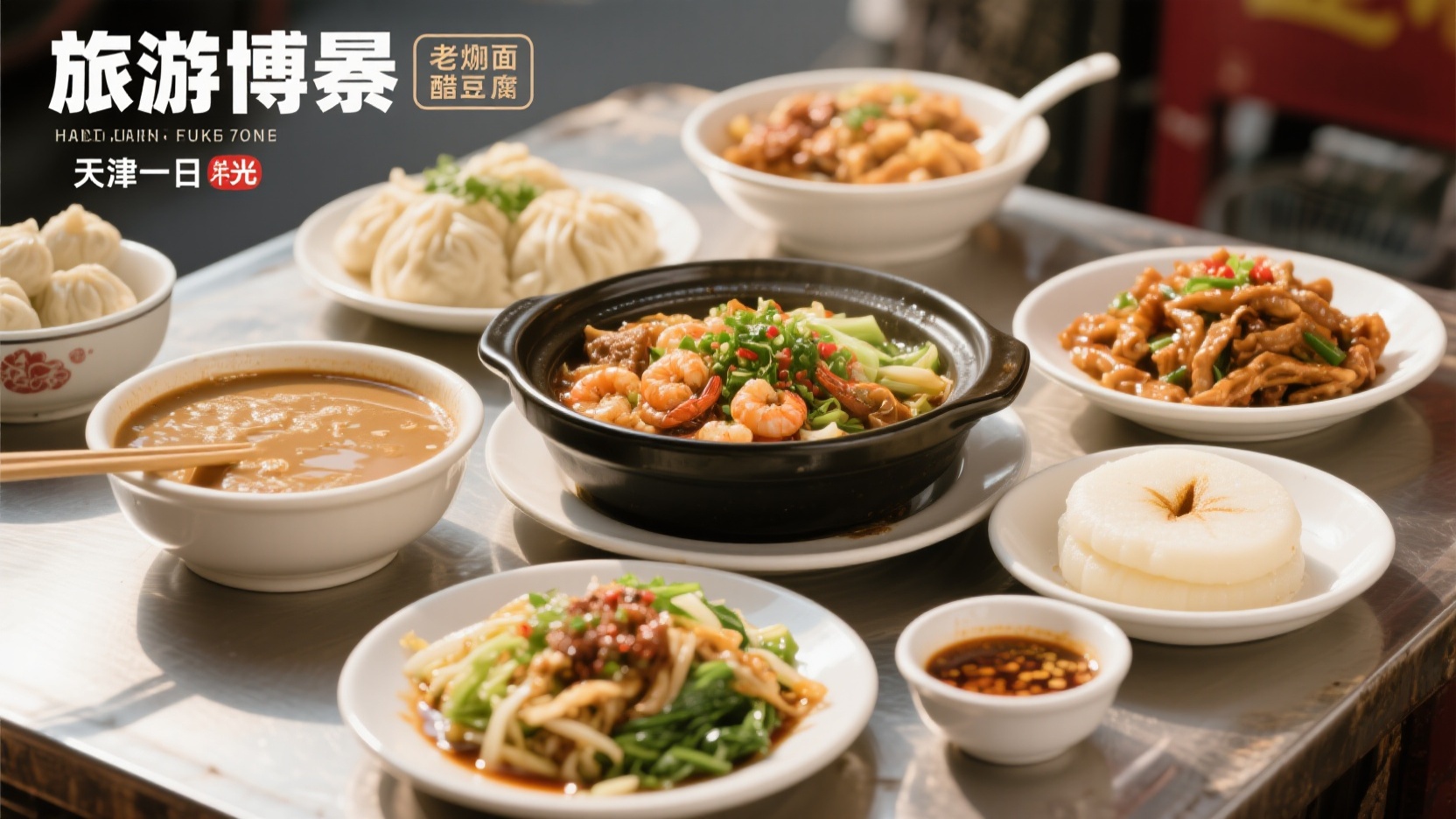
A day in Tianjin begins with a bowl of "Gaba Cai" (a type of Tianjin street food) topped with vegetarian gravy and ends with the tangy and spicy steam from a hot pot stall. The city's food is hidden in the daily fare that appears at specific times, not in menu recommendations, but in the footsteps of its residents.
Early morning: The aroma of starch and beans in the breakfast stalls
"Gaba Cai" is made primarily from thin pancakes made with mung bean flour and a little millet flour. After cooling, the pancakes are cut into willow-leaf strips and topped with a dark red vegetarian gravy. The gravy is made with soy sauce, star anise, minced ginger, and sweet potato starch. Just before serving, it's drizzled with fermented bean curd sauce, sesame paste, and cilantro. The gaba strips, soaked in the gravy, are soft on the outside and chewy on the inside. The gravy is savory and slightly sweet, and when paired with a piece of sesame flatbread, it's the perfect start to a Tianjin morning. Regular diners often finish the dish by holding the last drop of gravy at the bottom of the bowl and drinking it all down, considering it a ritual.
On the same breakfast table, "miancha" often appears alongside gabacai (a type of fried dough). Millet flour is cooked into a thick porridge, poured into a bowl, first topped with sesame paste, then covered with another layer of porridge, and finally sprinkled with sesame salt. Miancha is eaten without stirring; instead, it's slurped around the edge of the bowl, allowing the oily aroma of the sesame paste and the grain fragrance of the millet flour to layer into the mouth. It's a hearty breakfast, traditionally a staple for manual laborers, and now a popular choice for many Tianjin residents during winter.
Midday: The wok hei (wok aroma) and soy sauce fragrance of a local eatery
During lunchtime, the most popular dish in the old town's small restaurants is often "Lao Bao San" (Old Stir-fried Three Pork Kidneys). Pork kidneys, liver, and tenderloin are scored or sliced, then stir-fried with garlic slices and chopped scallions until fragrant. After adding the main ingredients, cooking wine, soy sauce, and vinegar are added, and the dish is tossed in the wok over high heat for a few seconds before being served. The kidneys curl up, the liver slices are tender, and the tenderloin is crisp, with a savory flavor infused with the aroma of garlic and the slightly charred fragrance of vinegar from the side of the wok. This dish requires precise timing; a second too long and it's overcooked, a second too short and it's raw. It's a classic home-style dish that tests a chef's basic skills, and paired with a bowl of rice, it's a perfect "rice-eating guarantee" on weekdays.
Complementing the "Lao Bao San" (a Tianjin-style stir-fried dish) with both meat and vegetables is "Shrimp and Gluten Stew." The gluten is torn into pieces by hand, soaked in warm water to remove excess oil, then cooked with shrimp in a pot over low heat with soy sauce, sugar, and a little broth until the sauce thickens. The Tianjin dialect word "du" (独) is similar to simmering over low heat to allow the ingredients to fully absorb the flavors. The gluten, soaked in the broth, becomes soft and bursting with juice, while the shrimp provides a sweet aftertaste. This dish is accessible to both home cooks and restaurant diners; almost every Tianjin family has its own recipe for the perfect sugar and sauce ratio.
Afternoon: The transition between steam and the sweet and savory flavors in the pastry
Around 3 PM, a buzzing sound like a steam whistle can often be heard in the streets and alleys—that's the sound of "Shuli Gao" (a type of steamed rice cake) vendors setting up their stalls. Shuli Gao has nothing to do with pears; it's made by filling wooden steamers with rice flour, steaming it until cooked, and then spreading a sauce on top. The sauces come in various varieties, including jujube, red bean, white sugar, and apricot jam. The cake is soft and fragrant with rice, and the sauce is sweet with a hint of sourness. A plate of it served on thin paper is a street sweet memory for generations of Tianjin residents. Now, fewer vendors set up stalls, but older residents still peek out when they hear the sound to buy a couple of plates.
A more durable and long-lasting pastry is the "white-skinned pastry." Layers of flaky pastry wrap around fillings of jujube paste, red bean paste, hawthorn, or mixed nuts, and are stamped with a red seal. It's crumbly and lightly sweet. Old Tianjin residents often bought white-skinned pastries by the piece, enjoying them with jasmine tea—a tradition known as "pastry with tea, keeps you full for a while." It frequently appears on tea trays at family gatherings and is also a presentable souvenir to bring when visiting neighbors in the afternoon.
Late at night: The sour and spicy flavors of hot pot at a charcoal fire
As night falls, steam rises from the clay pot stalls near residential areas. A hidden gem in Tianjin's late-night eateries is "vinegar-pepper tofu." Soft tofu is cut into cubes and cooked with eggs, wood ear mushrooms, and shredded ham, seasoned with plenty of pepper and fragrant vinegar for a tangy and spicy flavor, then thickened with a light cornstarch slurry. The initial taste is sour, followed by the burning sensation of pepper spreading through the throat; a bowlful leaves one with a slight sweat on the forehead. Local diners often pair it with a few skewers of grilled lamb or chicken skin, both for sobering up and warding off the cold. The clay pot stall owner will often ask, "Would you like more broth?" This question speaks volumes about the essence of late-night dining: not about sophistication, but about warmth and the comforting warmth of everyday life.
From the early morning snack of "Gaba Cai" to the late-night dish of vinegar and pepper tofu, a day in Tianjin isn't spent visiting tourist attractions, but rather enjoying these seasonal delicacies. From the main streets to the back alleys, experience the city through its food in a single day.