
Don't eat donkey meat in autumn! | Local specialties for eating from Minor Snow to Winter Solstice in Shijiazhuang – locals test it out, don't be fooled by travel guides!
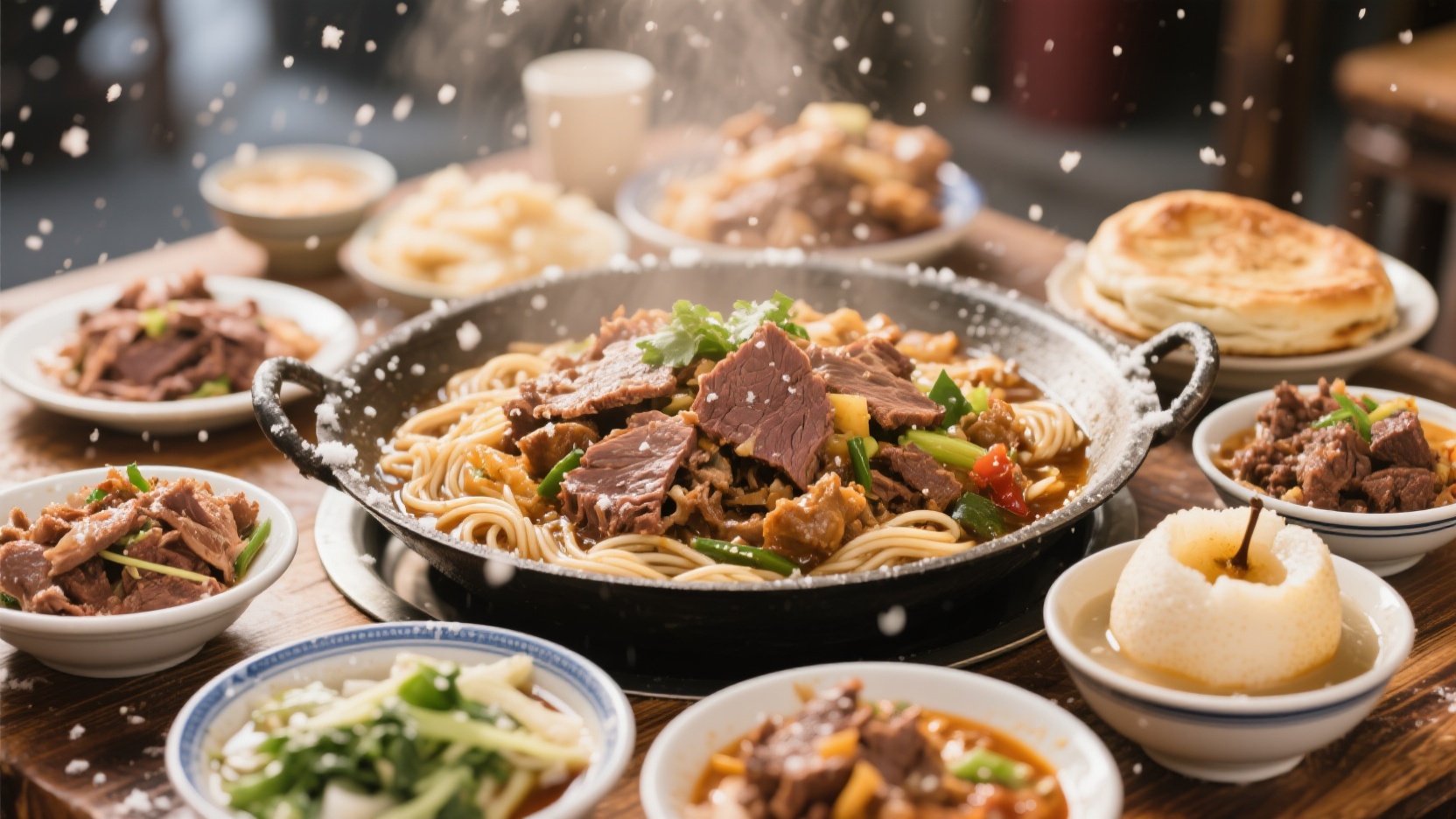
Having lived in Shijiazhuang for eight years, every year at the end of October I get a private message asking, "Which donkey meat sandwich place is the best?" I basically just read them and don't reply. It's not that I'm aloof, it's just that as soon as I hear that question, I know someone has been misled by a travel guide.
The most underrated food in this city is never in autumn or spring. The truly unique, limited-time delicacies, unspoken by the locals, are all concentrated in the month between the Minor Snow solar term and the Winter Solstice. Frost-kissed cabbage, fattened lamb, snow pears stored in cellars, and frosty persimmons all reveal their true flavor during this period. So don't rush to try the donkey meat sandwich in autumn; Shijiazhuang's winter specials are the hidden gem.
Breakfast: Wuji he luo noodles, with mutton sauce that is only poured on when the mutton is at its fattest.
Wuji he luo noodles aren't the machine-pressed kind you find in stores; they're pressed fresh on a wooden press placed over a pot of boiling water. The buckwheat noodles, when added to the pot, result in a clear broth and dark noodles. They look thick, but are surprisingly smooth and chewy. Why are they only truly authentic after the first snowfall? Because after winter sets in, the sheep start to fatten up, making the mutton sauce even richer and more flavorful, without any gamey or dry taste, allowing it to adhere well to the noodles.
Locals eat it like this: Top the buckwheat noodles with two spoonfuls of mutton sauce, then toss in a spoonful of chili oil, and eat it with raw garlic cloves. Don't rush to add vinegar, as it will mask the slightly bitter aftertaste of the buckwheat and the rich aroma of the mutton. Only when there's a mouthful of soup left at the bottom of the bowl, break off half a clay oven-baked flatbread and soak it in, is it a truly complete meal.
Eating he luo noodles in summer feels like completing a task, your body floating on the hot soup; but after the first snow, a bowl of this warms you to the bone. Those old shops are packed at this time of year, not for the sake of checking off photos, but because their bodies crave it.
Lunch: Stewed vegetables cooked in a large pot with oven-baked flatbread; only cabbage that has been touched by frost has that sweetness.
The stew from the villages around Shijiazhuang is not the modified version sold in shopping malls. It's cooked in a large iron pot over a wood fire, with pork belly sautéed until slightly charred, then topped with frost-touched cabbage, tofu, glass noodles, and kelp, simmered in a generous broth. The key is the cabbage—it must be harvested after the first frost. Frost-touched cabbage is sweet, resulting in a stew that's neither watery nor bitter, and has a slightly glutinous texture.
Locals pair their meals with freshly baked clay oven-baked sesame flatbread, the sesame seeds puffing up high. Break it open, add a spoonful of vegetable soup and slices of meat—it's even more fragrant than a roujiamo (Chinese hamburger). Alternatively, you can simply dip the flatbread in the vegetable soup; it's more authentic than eating it with rice. This meal is best enjoyed at roadside eateries in Zhengding, Luquan, and Jingxing; avoid the crowds at tourist area entrances.
Why this solar term? After the Minor Snow solar term, you've stocked up on plenty of cabbage, radishes, and vermicelli, giving you the confidence to cook everything in one pot. The colder the weather, the more fragrant the pot becomes. Inside, the steam fills the windows, while outside, the north wind howls—this is the way Shijiazhuang warmly welcomes guests in winter.
Afternoon tea: Zhaoxian snow pear soup with persimmon cakes – a lifesaver for heated rooms, not milk tea!
The heating comes on early in Shijiazhuang, making the air so dry it makes your throat feel parched. The local aunties' afternoon tea isn't milk tea or cake; it's Zhaoxian snow pears with the core removed, stuffed with rock sugar, white fungus, and goji berries, then steamed. These snow pears are harvested in late autumn, and the sugar content is highest after the first snowfall, resulting in a sweet but not cloying flavor. The pear flesh melts into juice, and a sip soothes your lungs.
It comes with dried persimmons, the kind dried in the mountains of Pingshan or Luquan. The frost forms at low temperatures, and that white frost on the surface isn't dirt, it's sugar crystallization. Don't wash it before eating; just wipe it and bite into it. A bite of dried persimmon followed by a sip of pear soup is much more satisfying than those trendy tea-drinking gatherings.
Tourists often take snow pears home as local specialties, but they're best enjoyed stewed here. At this time of year, the sweetness of the pears, the frost of the persimmons, and the warmth of the house combine to create a truly unique winter treat.
Late-night snack: Beef stewed with baked flatbread, a bowl of soup late at night is better than barbecue in Shijiazhuang.
In Shijiazhuang, late-night snacks aren't barbecue or crayfish, but beef stewed with baked flatbread. A large bowl of beef soup is topped with pieces of baked flatbread, with slices of beef and cilantro floating on the surface. The broth is fragrant with herbs mixed with the aroma of beef fat, and one sip warms you from your throat to your stomach. This soup truly shines after the first snowfall; when it's not cold, it can feel greasy.
Locals serve it with a side of fried chili peppers—not chili oil, but dried chili pepper segments fried until crispy, sprinkled with salt. They pick one up and drop it into the soup, without stirring, then take a sip of soup and bite into half a chili pepper. The flatbread is half-soaked in the soup, its outer layer still slightly crispy, while the inside is soaked in the broth, creating a delightful contrast of textures.
Beef stewed with baked flatbread is a hidden gem in Shijiazhuang's old city. Several well-regarded shops still have long queues late at night, even in winter. Don't ask which one is the best; as long as the soup is bubbling in the pot and the flatbread is freshly torn, you can't go wrong.
Why not in autumn? The period from Minor Snow to the Winter Solstice is considered the "golden age" by the locals.
Online travel guides always associate Shijiazhuang with "donkey meat sandwiches," as if missing autumn means missing everything. Actually, donkey meat sandwiches are an everyday dish, not a seasonal specialty. Those who truly appreciate it wait for the frost, for the sheep to fatten, for the snow pears to be stored in cellars, and for the persimmons to be covered in frost.
During this solar term, the food in Shijiazhuang has a natural, bone-warming quality that needs no filters. A big pot of stew with sesame flatbread, or a bowl of beef stew with baked flatbread, keeps the cold wind at bay. This isn't refined carbohydrates; it's the survival wisdom of the North China Plain during winter.
So stop asking "What to eat in Shijiazhuang in spring?" and stop making a special trip in autumn just for donkey meat sandwiches. The period from Minor Snow to Winter Solstice is the golden season for local delicacies, a fact known to all.
In closing: Don't ask the locals if I didn't tell you.
First, don't ask "Which local recommends the best donkey meat sandwich?" True gourmets don't ask that in winter; they only ask "Which place has the thickest beef sandwich soup?"
Second, don't go to dessert shops in shopping districts for Snowflake Pear Soup; they're all just made with sugar syrup. Go to small shops near the market or old state-run canteens for the authentic taste.
Third, don't order the "premium" version of the big pot dishes. Only the iron pot stew at roadside restaurants has the sweetness of frost-bitten cabbage, and you can eat your fill for just a few dozen yuan per person.
4. When eating beef stew with baked flatbread for a late-night snack, add a dish of fried chili peppers, but don't wear light-colored clothes, as it's hard to wash off if soup splashes on you.
5. It's worth queuing for he luo noodles in sub-zero weather, but don't drive into the old town. Walking or using a shared bike is the most convenient way, and it's a good way to digest your food after eating.