
Seven must-visit restaurants in Shijiazhuang | A local secret list I only dared to write after three trips (not the trendy version)
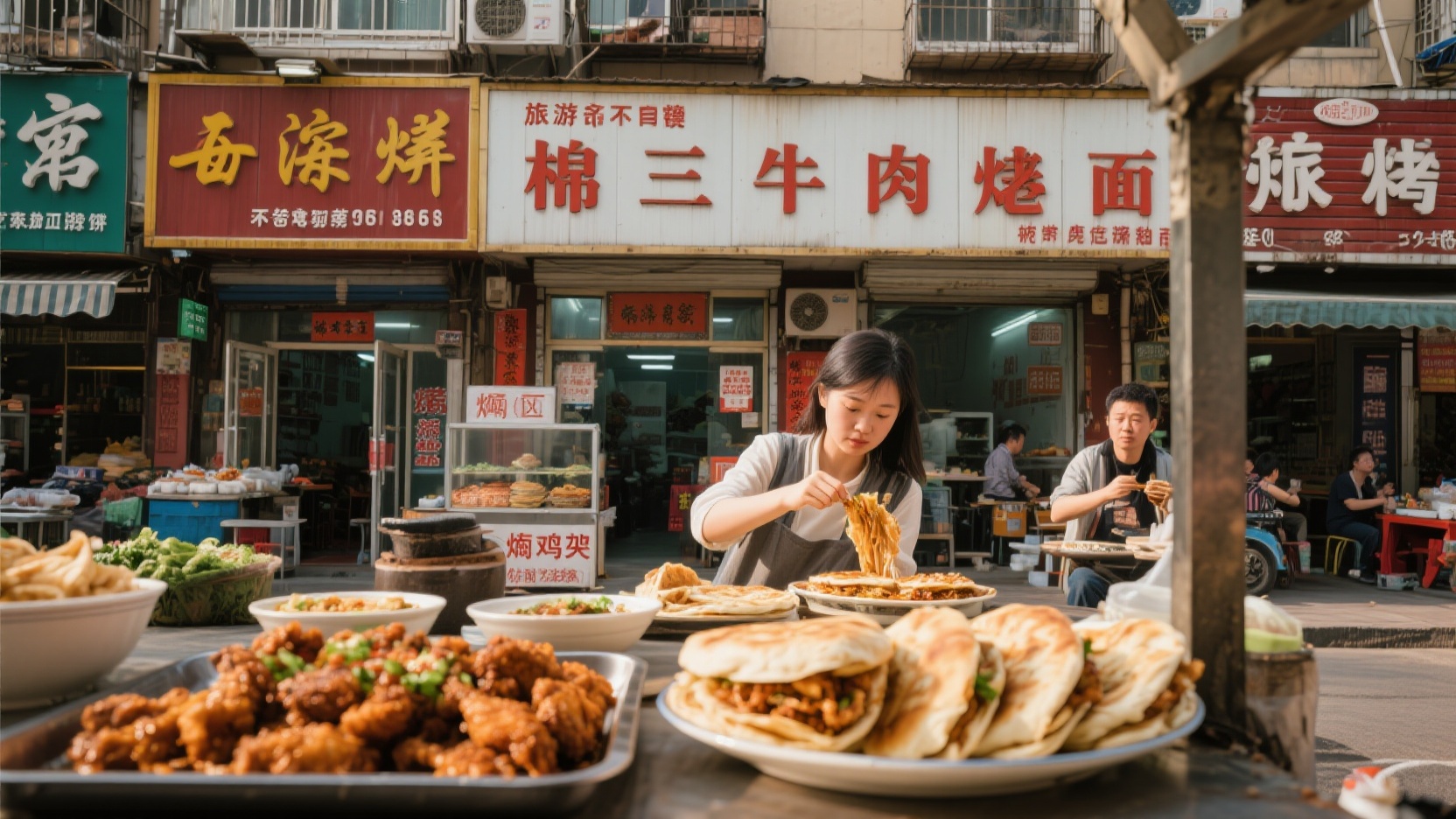
To compile this list of non-celebrity restaurants in Shijiazhuang, I made three trips between the three old city districts of Qiaoxi, Chang'an, and Xinhua, specifically avoiding the familiar faces on the review homepage and must-eat lists. None of the following seven restaurants do any marketing; their storefronts are so ordinary that they're easy to miss, but you can always see nearby residents carrying takeout containers around mealtimes.
The beef stew and steamed dumplings behind the old train station are a secret code.
The first shop is tucked away in a narrow alley on the east side of the old Shijiazhuang railway station. The entrance is marked only by a faded blue cloth curtain; there's no lightbox. Their beef stew with flatbread has a clear broth and tender meat, and the flatbread, after soaking up the broth at the bottom of the bowl, still retains a chewy texture. Their signature order is "two ounces of beef stew with flatbread plus a serving of white radish." The white radish is stewed until almost translucent, showing a better understanding of local tastes than ordering the meat alone.
A few steps south along the alley, there's an old-fashioned mung bean cake stall near the bridge. The bean paste filling is made by peeling the skins themselves, and the outer shell has a slightly caramelized aroma when it's fresh out of the pan. I recommend eating the covered pancake first before buying the mung bean cake, otherwise the cake will become oily when it cools down.
Why it's worth making a special trip: This old shop doesn't adjust the broth or chase after spiciness; it preserves the clear broth logic of the old Shijiazhuang Railway Station before its renovation, which is completely different from the thick broth versions found in the current business district.
Fried food and sugar and oil stalls in the cotton mill residential area
The second stall is near the north gate of the Mian San residential area in Chang'an District. It only opens after 3 PM, and consists of an old tricycle and a black iron pot. Their specialty is sweet and sour fried chicken frames and chicken skin skewers. The chicken frames are marinated before frying, and before taking them out of the oil, a spoonful of their homemade sweet and sour sauce is poured over them, along with dry seasoning. When ordering, you should say, "Tear the chicken frames into small pieces, and serve the chicken skin separately," so it won't get soggy from the sauce.
There's a small shop next door that always has a white insulated box selling yogurt in glass bottles, which goes perfectly with fried chicken frames to cut through the richness. Don't order their fried chicken legs; the meat is thick and not very flavorful. Regular customers usually just buy the chicken frames and skin.
This stall has no name and can't be found on navigation apps, but after 4:30 PM, the people queuing up are mostly retired cotton mill workers. Its existence proves that Shijiazhuang's fried food offers more than just American and Korean fried chicken.
Morning noodles and community flat noodles in the old neighborhood of Xinhua Road
The third shop is located inside an old residential area on Xinhua Road, only open from 6:00 AM to 9:30 AM. The buckwheat noodles are made to order, and the broth has the aroma of Sichuan peppercorns and fennel seeds, without relying on soy sauce to overpower the flavor. The signature order is "a small bowl of beef noodles with a braised egg," where the egg has been soaked in the beef broth overnight, giving the yolk a savory and salty flavor.
There's a small stall selling fried dough sticks nearby. The dough is soft and fluffy, resulting in a thin center and thicker edges. Regulars usually buy a dough stick, tear it into pieces, and soak it in the he luo noodle soup—it's much tastier than eating it alone. This place isn't suitable for people who like to sleep in; if you go late, you won't even see the bottom of the soup.
If you miss the morning rush, you can head to an old-fashioned noodle shop in a community store on Tanbei Road. This shop only sells a Shijiazhuang-style version of Anhui-style noodles, with fragrant chili oil that isn't overpowering. Their signature dish is "medium spicy noodles with bean curd and braised egg," and the bean curd absorbs the broth twice as well as the bean curd sheets. The smoked meat and pancake cart next door only opens in the evening, so you can pick up half a pound of smoked meat to take home on your way.
Buying clay oven baked flatbread and braised food at the entrance of the market on the way
The fourth shop is located at the east entrance of the Gongnong Road vegetable market, a tin shed that only makes sesame-filled oven-baked flatbreads. The flatbreads are made and baked fresh, with the sesame seeds still popping when they come out of the oven. The crust is crispy and the inside is soft, with a slightly salty and fragrant taste even when eaten alone. The signature dish is "hot flatbread with mung bean curd sandwich," where thick slices of mung bean curd are sandwiched inside, and they melt slightly from the heat of the flatbread.
There's a small stall in the nearby market that only sells Zhaoxian snow pears. The pears are covered with cotton blankets; they're very sweet and juicy. After eating the braised pork flatbread, buy two snow pears, and your trip will be complete. I don't recommend adding donkey meat; the donkey meat at the market stall is too salty. Braised pork flatbread is the proper way to enjoy this stall.
The owner of this restaurant makes pancakes very quickly, but the oven only produces twenty at a time. If you arrive around 11:00 AM, you'll have to wait for the next batch. To avoid queuing during peak hours, around 10:30 AM is the most comfortable time.
Smoked meat pancakes at dusk and he luo noodles under the bridge late at night
The fifth stall is located at the entrance of an old community on Qingyuan Street. It sets up around 5:30 pm with a glass-covered cart, selling only smoked meat pancakes and a few kinds of braised dishes. The smoked meat is smoked by the vendor himself with cypress wood chips, and is thinly sliced with a good balance of fat and lean meat. The signature order is "plenty of scallions on the pancake and less sauce," as too much sauce would mask the original flavor of the smoked meat.
The steamed bun shop next door sells alkaline-flavored steamed buns, and residents often buy two around dinner time to sandwich smoked meat; they're chewier than flatbread. If there are only a few people, you can just order a plate of braised pork intestines and ask the owner to add a spoonful of the original broth—perfect for mixing with noodles or sandwiching in steamed buns at home. This stall's opening hours are greatly affected by the weather; it basically doesn't open when it rains. Its value lies in preserving the old Shijiazhuang people's understanding of smoked meat.
If it gets even later, there's a late-night he luo noodle stall under the Huaizhong Road Bridge, which only turns on its lights after 10 PM. It sells buckwheat he luo noodles and several kinds of braised dishes. The broth is richer than in the morning, with an added gelatinous texture from simmering beef bones. The sign says "A large bowl of he luo noodles with a spoonful of chili oil," and the chili oil is poured by the stall owner himself—fragrant but not spicy.
There's a tricycle selling roasted sweet potatoes nearby. The sweet potatoes are a type called "Yanshu," roasted until they're oozing honey. A bowl of he luo noodles with half a roasted sweet potato is a common after-work meal for many taxi drivers. This stall doesn't have a fixed storefront or a sign; you can find it by following the warm yellow light under the bridge.
Blogger's summary and three tips to avoid pitfalls
These seven stores share common characteristics: old storefronts, consistent quality, and no pursuit of high customer traffic. However, their peak hours and ordering logic are more "delicate" than those of chain stores. The first pitfall to avoid: Don't go during peak meal times. Many older stores have limited seating and slow service; going during peak hours often means long queues and the owner being too busy to attend to you. It's recommended to arrive half an hour or forty minutes later than usual.
The second pitfall to avoid: Don't just order the signature dishes. Of course, you should try the signature dishes, but regular customers often find hidden options in the pairings, such as noodles with bean curd, sesame flatbread with braised meat, or he luo noodles with fried dough. Ordering only individual items will cause you to miss out on the balance of flavors.
The third tip to avoid: Remember to bring cash. Some vendors are older, and their QR codes for payment may be hidden or have poor signal. Carrying some change can prevent awkwardness when standing in front of the stall. Especially at morning markets and late-night stalls under bridges, cash is safer than a mobile phone.