
A leisurely trip to Shaoxing with my parents | Visiting only two places a day, a 5-day, 4-night itinerary that won't tire your feet.
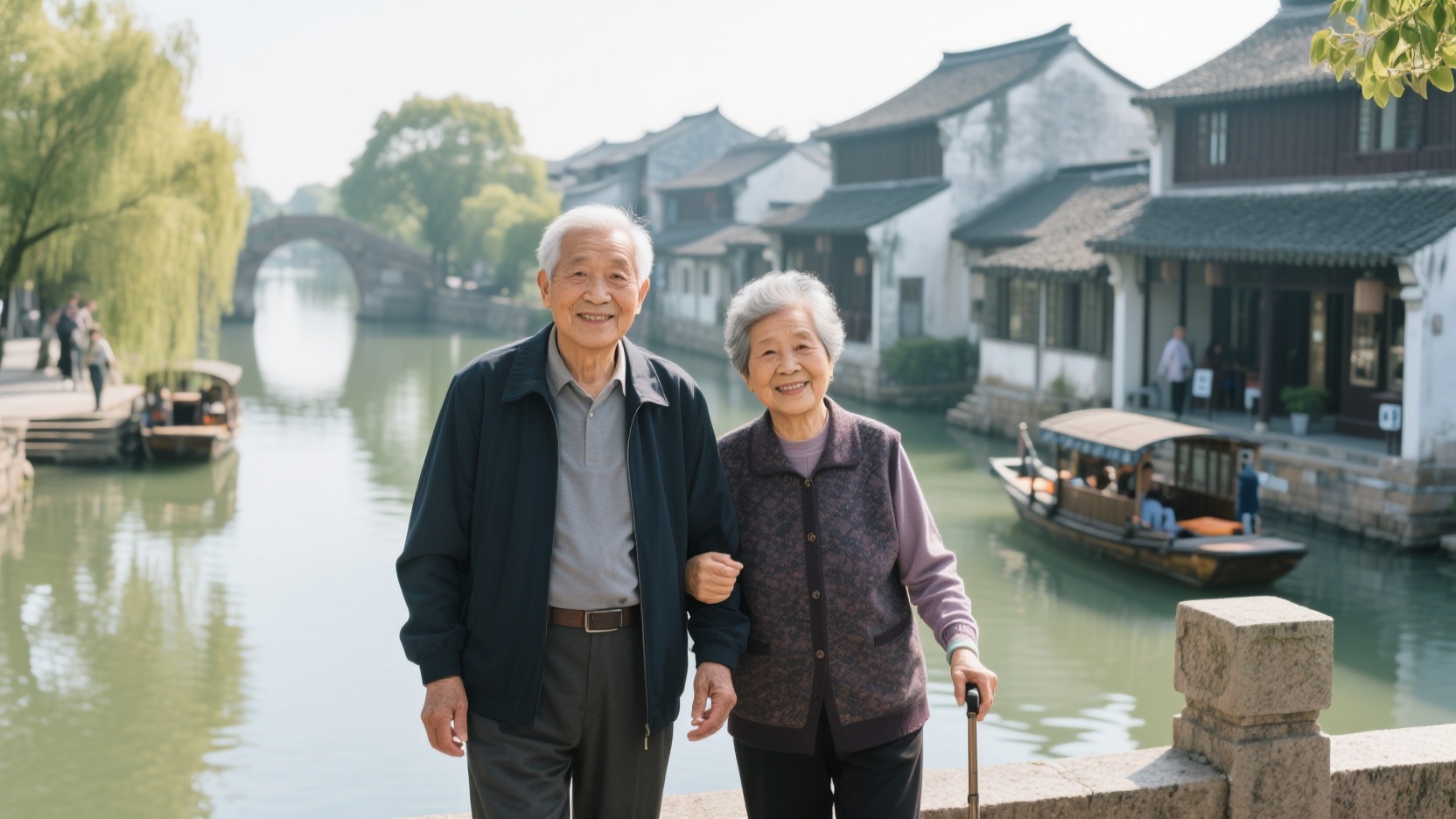
After spending four nights in Shaoxing with my parents, the most important thing I want to remind you of is: don't think of "slow travel" as "walking less," but rather consider the distance to restrooms and hospitals as key indicators. The first time I took my parents to Shaoxing, I followed the popular routes and planned three stops in one day. As a result, my mother's knees were sore on the second day, and we had to run around halfway to find a hospital. Later, I retraced the route specifically for senior citizens and figured out a route that only includes one or two key stops each day, and that we must return to the hotel for two hours to rest at noon.
Prioritize accommodations with good hospital access and elevator availability, rather than river views.
When bringing elderly people to Shaoxing, I strongly recommend choosing a hotel near Jiefang Road in Yuecheng District or around Lu Xun's Former Residence. The roads in this area are relatively flat, and it's about a ten-minute drive to both Shaoxing Second Hospital and Shaoxing People's Hospital. This way, in case of blood pressure fluctuations or joint pain, there's no need to travel across the city. Most mid-range chain hotels in the area have elevators, accessible ramps, and non-slip bathrooms; some even offer wheelchair rentals at the front desk. When choosing a room, make sure the elevator covers all floors and that the shower has handrails or a bench – these two things are a hundred times more important than the river view.
Don't be fooled by the old-style guesthouses nestled by the water; many have stone thresholds and steep, narrow wooden stairs that are extremely uncomfortable for your knees. I learned this the hard way: they looked charming, but you couldn't even lift your suitcase up the stairs. Remember, your "lunch break radius" should be no more than three or four kilometers. Being able to quickly return to your hotel is more important than any scenic view.
Five days and four nights, with only one "must-do" activity scheduled for each day.
Arrive in the afternoon on Day 1. No sightseeing is planned; just a leisurely 30-minute walk along the riverside path near the hotel on Cangqiao Straight Street or Baziqiao Bridge. Note the restrooms: there are accessible restrooms at the City Square and Lu Xun's Former Residence Visitor Center, but fewer in the middle alleys, so use them beforehand.
Day 2: Visit Lu Xun's Former Residence in the morning, return to the hotel for a 2-hour lunch break, and then visit Shen Garden in the afternoon. The two places are adjacent, less than 800 meters apart on foot. Wheelchairs can be rented at the Lu Xun's Former Residence Visitor Center, but the main route has many stone-paved paths, so it's recommended to walk along the smooth sidewalks. Shen Garden has a few steps, but you can detour around them on the main route; it's not too strenuous.
Day 3 is a choice between two options: If you want to explore an ancient town, go to Anchang; the entire riverside promenade is flat, and for the awning boats, it's recommended to choose a dock with a backrest. If you want to completely relax, go to a local hot spring resort; choose a resort-style one with a rest area and medical facilities, and check the navigation to see if it's within a 20-minute drive of a level-two or higher hospital. I still insisted on taking a nap that day, even though my parents said, "I'm not tired today."
Day 4: Choose either Lanting or East Lake in the morning. Lanting has many cobblestone paths, so just follow the main road; on East Lake, be sure to hold on tight when getting on and off the awning boats, but you won't regret not taking one. Day 5: Visit the hometown of the Calligrapher Sage or the ancestral home of Zhou Enlai. The terrain is very flat. We'll leave at 10:00 AM and return after lunch.
I personally tested three places that "looked flat but were actually scams".
First, some alleyways on Cangqiao Straight Street have stone steps and thresholds, requiring wheelchair users to detour to the main street. Second, the entrance to Lu Xun's Former Residence, the "Hundred Herbs Garden," has hidden steps that are easy to slip on. Third, Shen Garden is dimly lit at night, so it's not recommended to take elderly people there in the evening. Popular snacks like yellow wine popsicles and yellow wine milk tea are not suitable for elderly people with sensitive stomachs.
In addition, although the stone-paved roads in many ancient towns of Shaoxing are not steep, they are slippery after rain, making non-slip shoes more practical than hiking boots. The awning boats sway noticeably when boarding and alighting; elderly people with mobility issues should sit on the benches by the dock instead of boarding. The Lu Xun's Former Residence Visitor Center has a wheelchair ramp, but the entrance to the Sanwei Study is quite high and requires assistance.
Eating and using the restroom are more important than sightseeing.
Shaoxing cuisine tends to be salty, and dishes like dried bamboo shoots, fermented amaranth stems, and drunken crab can be difficult for the elderly to digest or irritate their stomachs. I suggest choosing restaurants serving steamed dishes, noodles, or wontons, and proactively requesting "less salt and less oil" when ordering. Maintain a portion size of 70% full each day to avoid afternoon bloating that could interfere with their afternoon nap. I usually finish all activities before 4 PM to allow the elderly sufficient time for rest and rest.
The restrooms at Lu Xun's Former Residence, Shen Garden, and the Lanting Visitor Center are relatively clean, and accessible restrooms are readily available. Restrooms are scarce in the middle section of Cangqiao Straight Street; it's best to use the restrooms at either end. Keep each walk under 40 minutes, and find a place to sit and have a drink every hour; this is far more worthwhile than rushing to another attraction.
Blogger's Summary and Practical Tips for Seniors
This 5-day, 4-night itinerary is suitable for parents who are still able to walk but don't want to be too tired. The key is "one stop in the morning, two hours of rest at noon, and one optional stop or free time in the afternoon." Below is a 20-item packing checklist for seniors and 5 categories of commonly used medications. I suggest checking off each item before departure.
20-item packing list: 1. Foldable lightweight walking stick or trekking poles; 2. One pair of knee braces; 3. Two pairs of non-slip soft-soled shoes; 4. Umbrella and lightweight raincoat; 5. Insulated water bottle; 6. Personal medication travel-sized container; 7. Medical insurance card and summary of past medical records; 8. Hotel address and hospital navigation saved on mobile phone; 9. Power bank; 10. Tissues and disinfectant wipes; 11. Small bag of nuts or soda crackers; 12. Reading glasses and spare glasses; 13. Mosquito repellent; 14. Wide-brimmed hat; 15. Sunscreen; 16. Disposable toilet seat cover; 17. Earplugs and eye mask; 18. Portable small cushion; 19. Several plastic bags; 20. Card with emergency contact information and drug allergy history.
Five categories of commonly used medications to remind you: Category 1: Cardiovascular medications, such as antihypertensive drugs and nitroglycerin; Category 2: Digestive medications, such as montmorillonite powder and stomach medicines; Category 3: Bone and joint medications, such as pain relief patches and topical ointments; Category 4: Cold and fever reducers; Category 5: Allergy and emergency medications, such as loratadine and nitroglycerin tablets. All medications must be kept in their original packaging and with the instructions. Pack them separately by category, do not mix them, and place them in your carry-on bag, not in your checked baggage.