
Sanya Art and Culture Avoidance: Locals Don't Recommend These 3 Popular Instagrammable Spots; Here's a Locally Tested 5km Walking Route to Avoid the Rip-Off.
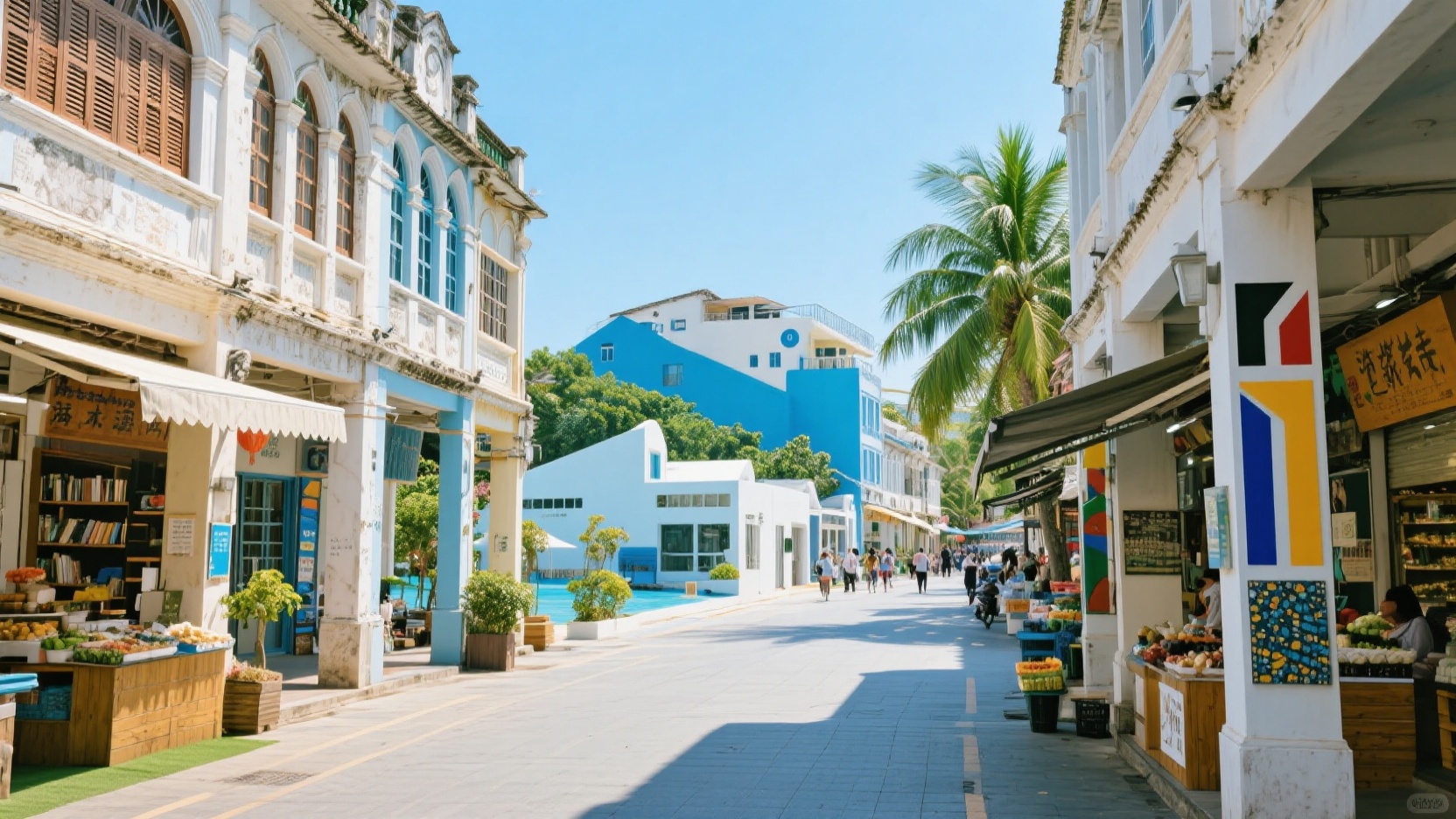
The most counterintuitive thing to do when looking for an artistic vibe in Sanya is: don't go to Tianya Town or Maling Blue and White Town. I've lived in Sanya for seven years, and local friends never give it a second glance when they pass by, let alone queue up for a photo under the blue wall—the real cultural depth of Sanya is hidden in the shadows of the arcade buildings, the sound of the erhu in the river breeze, and the fishy smell of the market before closing time.
Many people think Sanya is all about beaches and hotels, so they're led astray by travel guides to a few "artsy photo spots." I can say with certainty that some of these places aren't unknown to locals, but rather, they simply don't want to go in. Below, I'll first clarify three typical pitfalls, and then give you a five-kilometer walking route that I take every week.
Avoid these spots first: Even locals wouldn't go into these three "artsy photo spots" if they were passing by.
The first pitfall was the Blue and White Town of Maling in Tianya Town. The so-called "Santorini" site had grayish-blue walls, narrow alleyways, and was sunny and scorching; even at midday, the overhead light left your face in a lot of shadow. Tourists crowded around a few stairwells, taking turns posing for photos. Locals only went to the Maling Market to buy fish and wouldn't spend an afternoon under the walls. The restaurants nearby were also more expensive than in the city center.
The second pitfall is the West Island Floating Study. The boat is small, the books are few, and most people only come to sit on the cushions for photos; those who actually read don't want to stay. It's more like a photo prop at sea than a reading space. Locals don't make a special trip up there just because it's "at sea."
The third pitfall is the Jiqing Plaza in the Peninsula Resort. It's basically booked for wedding photography; for ordinary people, going there feels like stumbling onto a film set. The European-style artificial scenery clashes with the local climate of Sanya, resulting in photos that look like something out of a small-town photo studio. If you want to see the sea, the nearby sailboat harbor is a much more comfortable option.
A 5km Walk Overview: Sanya's Art and Culture in Everyday Life
This route starts at the old intersection of Shengli Road, heads north along the Linchun River walkway, passes through Fengxinglong Community Park, turns into a courtyard converted from an old warehouse in a fishing port, walks to an independent bookstore in Lane 2 of the Commodity Street, and finally ends at Ganghua Vegetable Market. The entire route is about five kilometers long, and it is most comfortable to walk after 4 pm.
Taking a taxi to check off landmarks is not recommended. The essence of this route is the walk itself: the shadows of the arcade buildings, the reflections on the river, the mossy smell of old factories, and the hawkers' cries at the market—these are the true local cultures of Sanya. The walk takes about two and a half hours, and you can see a lot without making any purchases.
The first stop was the old street entrance of Shengli Road, and the second stop was the Linchun River Trail.
Our first stop was the old street entrance on Shengli Road, worth a ten-minute stop. The arcade buildings here are relatively well-preserved; in the afternoon, elderly people sit under the eaves playing dominoes, and the tailor shops still have their lights on. The best spot is on the sidewalk east of the arcades, a low angle to photograph the arcade moldings and coconut trees, avoiding the electric bikes. Nearby, we ate at the braised pork knuckle rice stall at the intersection of Yuejin Road; it costs only a few dozen yuan per person, and locals eat there from morning till night.
The second stop is the Linchun River Trail, which leads to Fengxinglong Community Park. In the evening, you'll see people walking their dogs and fishing, and occasionally you might spot a Qiong opera enthusiast playing the erhu in a pavilion. The best spot for photos is on the small bridge on the east side of the park; backlit shots of the river reflections and mangroves are very photogenic. Nearby, there's a coconut milk dessert stall outside the park's north gate—it's affordable, plentiful, and significantly cheaper than in the scenic area.
The third stop was an old warehouse courtyard in a fishing port, and the fourth stop was an independent bookstore.
The third stop is a courtyard converted from an old warehouse in the fishing port. It used to be a cold storage facility, and the exterior walls retain their weathered cement. Inside, it occasionally hosts photography exhibitions of fishermen and displays of Li brocade handicrafts. Take a ten-minute break to take some rough-hewn photos next to the old fishing boat logs at the entrance; the afternoon sidelight is best. Nearby alleys have fish soup noodles, the broth made with mixed fish, a mid-range price costing a few dozen yuan per person.
The fourth stop was an independent bookstore tucked away on the second floor of an alley in the shopping street. The selection leaned towards Hainan local chronicles and marine literature, and the owner didn't push sales. It was worth stopping for ten minutes because the window overlooked a traditional courtyard where clothes were being dried, offering a glimpse into the everyday life of the old residential buildings. The best spot was the second seat by the window, capturing the courtyard and bookshelves side-by-side. Downstairs, the local tea shop was very cheap, serving iced black tea with fried buns—a perfect place to rest.
The fifth stop was a small street theater, and the sixth stop was the Hong Kong and China Vegetable Market.
The fifth stop was an old rehearsal hall next to the Mass Art Center. If you're not in a hurry, people often rehearse Hainanese opera or Li ethnic folk songs there in the evenings. Tickets are free, and listening to a short segment from the doorway is quite immersive. The camera position was outside the iron gate, shooting the side view of the stage through the door; avoid using flash. Nearby, in a nearby alley, there are roasted sugarcane and shrimp cakes, both reasonably priced.
The sixth stop, Ganghua Market, marks the end of this route. Discounts begin after 6 PM, and the fishmongers will teach you how to choose red snapper. The dried goods stalls sell local peppercorns. The best vantage point is from the footbridge on the east side of the market, looking down; the lights mixed with colorful banners create a very lively atmosphere. There's a small shop selling fermented vinegar (zaobo cu) near the back entrance of the market—a tangy and spicy appetizer, costing only a few dozen yuan per person.
In closing: Don't ask the locals if I didn't tell you.
1. Try to walk this route after 4 pm. At noon, the arcade buildings are hot and brightly lit, making it difficult to capture depth in photos and resulting in a poor overall experience. Don't be fooled by the blue sky photos in the travel guides.
Second, when filming in a farmers' market, avoid shooting directly at people's faces. Buy a bag of fruit or some dried goods first, then film the stalls. This will make the stall owners more relaxed, and the footage will have a greater sense of interaction.
Third, the old rehearsal hall does not sell tickets or have seating for the audience. If you happen to pass by and happen to see a rehearsal, just listen quietly for a few minutes. Do not interrupt the rhythm, and especially do not use flash photography.
Fourth, if you really want to visit Blue and White Town, Seaside Bookstore, and Jiqing Square, arrive before 8:00 AM to avoid crowds, take your photos, and leave quickly. Don't waste half a day on your itinerary.
Fifth, the true artistic charm of Sanya lies not in the props by the sea, but in the sound of erhu playing by the river at dusk, the exhibitions in the old warehouses, and the sounds of bargaining in the vegetable market.