
These 8 restaurants in Nanjing | Blogger's personal review: A foodie's must-visit list compiled after three trips (with 3 tips to avoid pitfalls)
To avoid those chain stores that became popular through short videos, I made three trips to Nanjing, specifically exploring residential areas like the old city south, Nanhu, Suojincun, and Nengrenli. None of the stores on this list have ever been on a must-eat list, nor do they have the long queues of internet-famous restaurants, but each one is a "secret code" I discovered by chatting with local elderly people outside their doors.
Secret snacks of the old city south: duck blood vermicelli soup and wood-fired wontons.
Hidden in an old residential area on Ping Shi Street, Chen's Duck Blood Vermicelli Soup has no signboard, only a handwritten plaque. The broth is made from old duck bones and duck fat, and the duck blood is cut into thick slices that float in the soup, so tender that it's hard to pick up with chopsticks. How to order the signature dish: order a small bowl of vermicelli with duck intestines and duck liver (a double combo), around ten yuan per person. Don't skimp on the chili oil—it's homemade, fragrant but not overpowering. Nearby: turn left after exiting the alley and you'll find a stall selling Osmanthus-scented glutinous rice lotus root, freshly sliced and drizzled with osmanthus honey, a perfect accompaniment to the duck blood vermicelli soup.
At five or six in the morning at the intersection of Yingao Lane, Grandma Wang's wood-fired wontons were already steaming. The wood-fired stove was gleaming black, the wonton wrappers were as thin as gauze, and the soup base contained only lard, dried shrimp, seaweed, and chopped green onions. The aroma of lard mixed with the green onions was very invigorating, and a bowl cost only a few yuan. How to order: ask for a bowl of "extra spicy oil," and ask Grandma to add a spoonful of pickled mustard greens. There was also a stall selling live eggs nearby; if you're adventurous, you can pick up a couple on your way.
Carbohydrate feast in Nanhu and Xiaguan
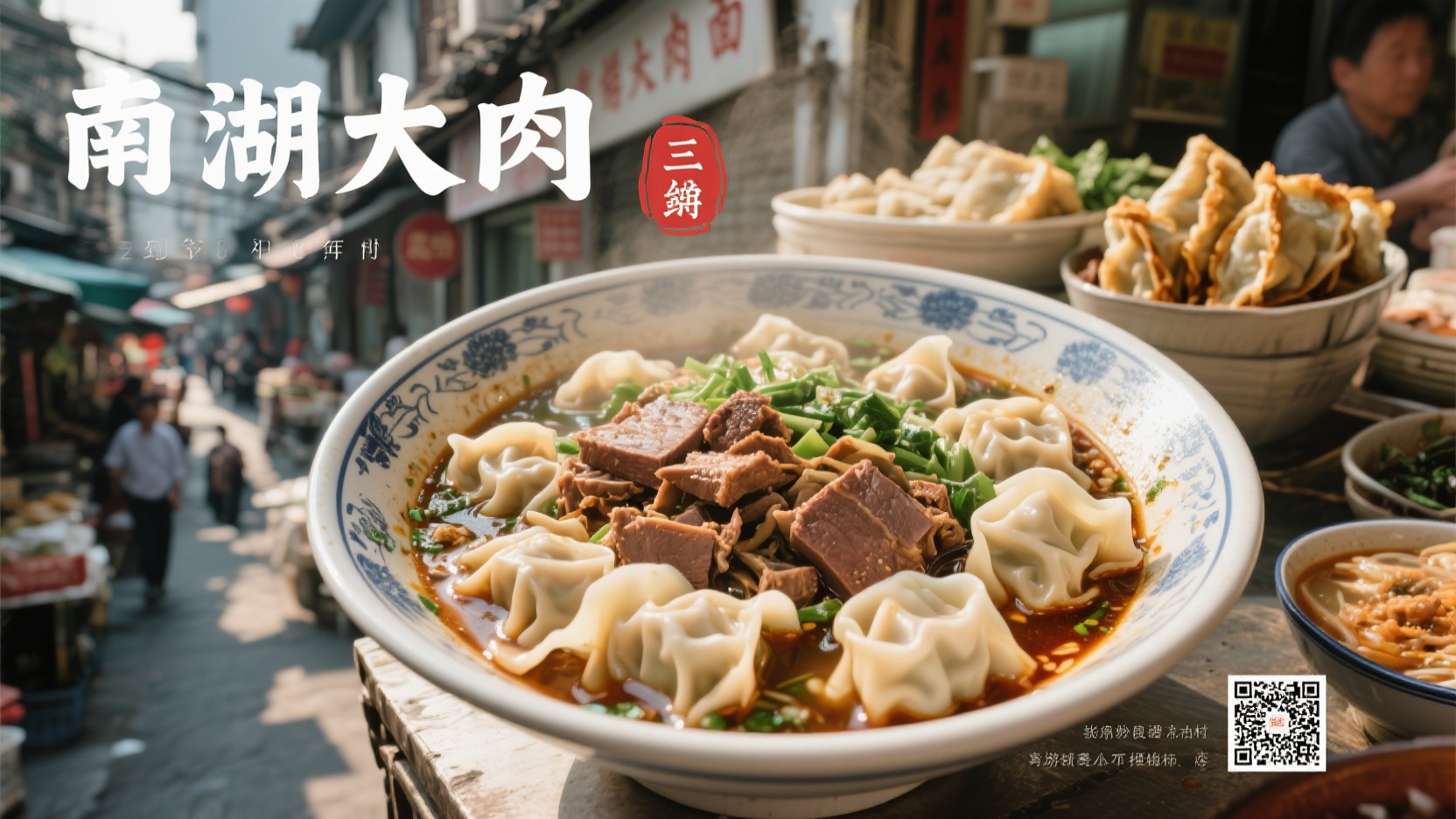
Nanhu Tea House's Nanda Meat Noodle Shop is a typical old neighborhood noodle shop. The braised pork is translucent and glistening, the fat melts in your mouth without being greasy, and the slices are thick. The broth is a reddish-sweet sauce. It costs a little over twenty yuan per person. A good order is: braised pork noodles with pickled mustard greens, wide noodles, and a tiger-skin egg. Next door is a Nanhu fried skewer stall; fried starch sausage and rice cakes are standard fare, and you can easily eat dozens of skewers without feeling guilty.
Xiaguan's Big Dumpling Shop has been open for over twenty years, only in the mornings and at noon. When the steamer is opened, a wave of steam hits you in the face. The dumplings are large, filled with juicy beef filling; take a bite and slurp it up first. It costs around ten yuan per person. A suggested order: a basket of dumplings with a free bowl of egg drop soup. On the way, buy some salted duck from the old Xiaguan braised food shop nearby; it's perfect for a late-night snack back at the hotel.
Hidden menus in the morning market
At Suojincun Market, Sister Liu's beef potstickers are freshly made and pan-fried, with a crispy bottom. The filling includes onions and curry powder, giving it an enticing aroma and plenty of juice. Two ounces of potstickers cost just a few yuan per person, paired with a bowl of tofu pudding (sweet or savory). Next door, there's a stall selling freshly ground soy milk, with a rich soy flavor; buy a bag and drink it on the go.
Master Zhao's sweet taro soup is hidden at the very back of the market in Nengrenli. His lotus root starch is cooked until thick and creamy, and the taro is soft yet slightly sandy, with consistently high quality. The osmanthus sauce is homemade. A small portion of sweet taro soup costs just a few yuan per person. To order: ask for a small portion and ask the chef to add an extra spoonful of osmanthus sauce. There's a stall nearby selling "live pearls" (a type of fried dough), a secret breakfast code among old Nanjing residents; you can pick up a couple while you're there.
Street noodle shops at Changfu Street and Guanghua Gate
At Lao Han's Pig Skin Noodles on Changfu Street, the pig skin is fried in-house, soaking up all the broth. The noodles are a type of "qiang mian" (a type of noodle made with a firm, chewy texture), cooked to order. It costs around 20 yuan per person. A recommended order is the Three Delicacies Pig Skin Noodles with chili oil, and you should drink the broth until it's empty. Next door, there's a roast duck stall that roasts and slices ducks fresh; buy a quarter of a duck to eat with the noodles – a classic Nanjing way of eating duck.
The soup dumplings at Jinling Community near Guanghuamen are known for their thin skin and juicy filling. The meat filling is so firm that they won't break when lifted with chopsticks. Served with ginger and vinegar, they're the perfect accompaniment. A basket of soup dumplings costs around ten yuan per person. A good order is to pair them with a bowl of duck blood soup – it's refreshing and warming. Duck oil flatbreads are also available nearby, both sweet and savory; buy a couple for breakfast the next day.
Blogger's Summary and Practical Checklist to Avoid Common Pitfalls
After three visits, my biggest takeaway is that the truly delicious food in Nanjing is never found in shopping malls, but rather at the edge of farmers' markets, at the entrances of residential areas, and at roadside stalls in the early morning. These places may lack a pleasant ambiance, but they are bursting with flavor and friendly atmosphere.
The first rule to avoid pitfalls: Don't go during mealtimes. Breakfast shops close before 9 a.m., noodle shops before 11 a.m., and steamed dumpling shops before 12 p.m. If you go past those times, they'll either be sold out or there will be long queues. Especially at the morning market on weekends, it's best to arrive before 8 a.m.
The second tip to avoid pitfalls: Don't just order the signature dish. Many restaurants have a hidden way of serving the signature dish: add side dishes or chili oil. For example, chili oil for duck blood vermicelli, pickled mustard greens for braised pork noodles, and roast duck accompaniments for pork belly noodles. Without these, the taste is halved.
The third tip to avoid pitfalls: Remember to bring cash. Some established stalls only accept cash, and mobile payments may not work, especially at early morning stalls selling wontons and at wet markets. Don't wait until you've reached the front of the line to realize you didn't bring any money.