
A comparison of accommodation options in Liuzhou | A blogger's personal review of three tiers of guesthouses and chain hotels to avoid pitfalls (with 3 quick questions for selection)
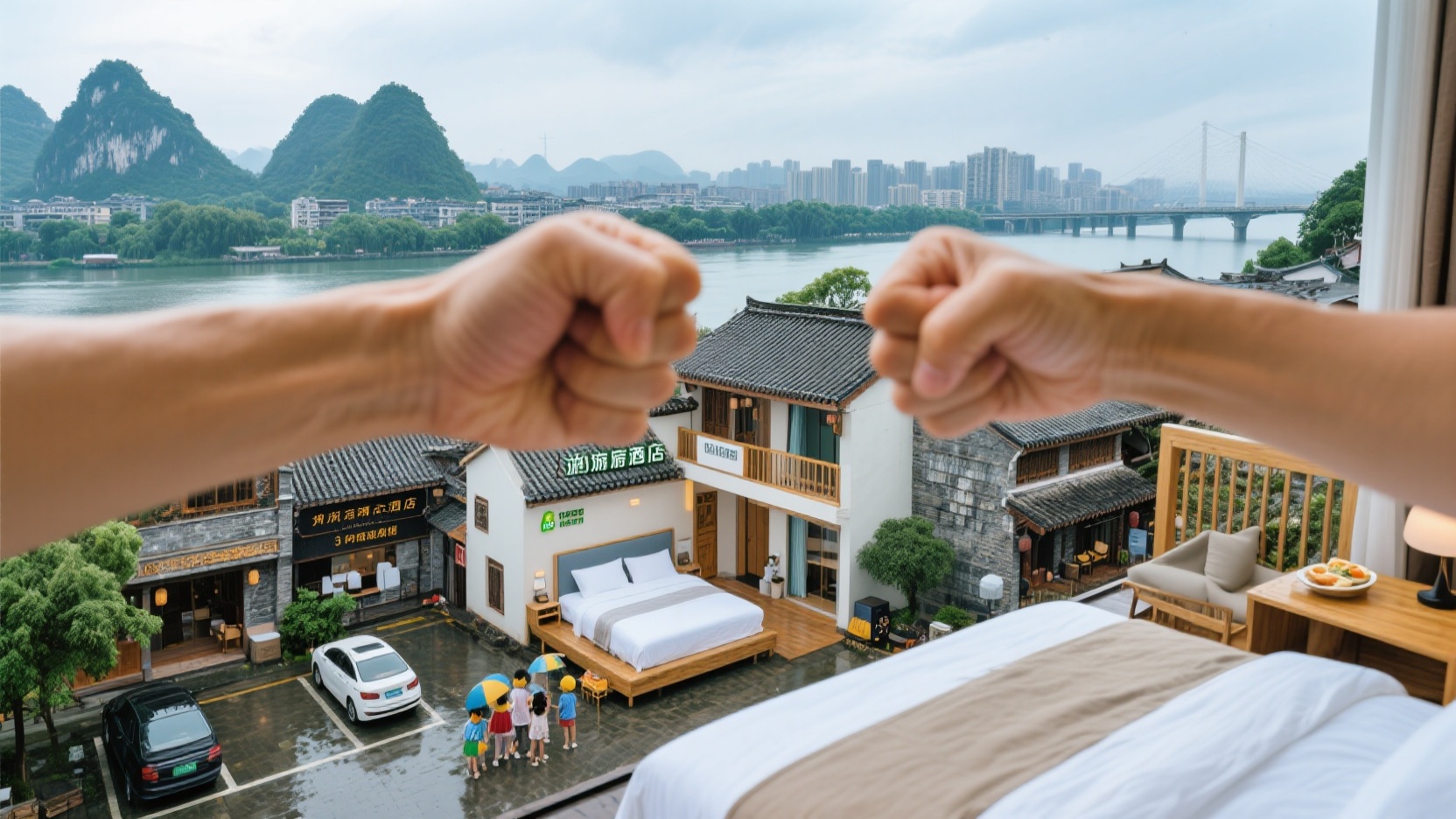
After staying in three different places over four days in Liuzhou, I decided to put "homestay atmosphere" and "chain standardization" on the same scale. Liuzhou's accommodation areas are actually quite concentrated: for the vibrant atmosphere of the old town, look to Qingyun Market and the train station area; for a nighttime stroll through the ancient town, visit the kiln wharf and Panlong Mountain; and for a quiet vacation, head to the Huanjiang waterfront and the MixC shopping district. This article won't list names, but will instead compare boutique homestays and chain hotels in the same area across three price ranges: budget, comfortable, and quality, considering six aspects: location, soundproofing, cleanliness, breakfast, parking, and luggage storage.
1. Budget-friendly options: Train station/Qingyun Market old town area – get a good night's sleep first, then talk about the local atmosphere.
For budget-friendly options, I prioritized the old town area between the train station and Qingyun Market. Most of the chain budget hotels in this area are located along the main road, making them easy to find by taxi from Liuzhou Station, and a short walk to Qingyun Market takes about ten minutes. Boutique guesthouses in the same price range, on the other hand, are mostly hidden in older residential areas or commercial buildings; even if the navigation shows you've arrived, you still have to walk through bike sheds and dimly lit staircases. In terms of location, chain hotels are more reliable, while guesthouses are more "local" but require more walking.
Soundproofing is the easiest area to fail in the budget-friendly segment. Chain budget hotels have at least three floors and uniform doors and windows; while not quiet, closing the windows blocks out most of the street noise. Older guesthouses are often converted from old buildings with thin floors and leaky windows facing the street, so you can hear even the sound of someone showering next door. Regarding hygiene, chain hotels have clear procedures for linens and restrooms; occasionally, the linens and restrooms might be worn, but it won't be outrageous. Budget guesthouses completely depend on the host; if you get a diligent cleaner, you're lucky; if you get one that only changes the garbage bags, you're out of luck. In this segment, chain hotels have a clear advantage in terms of hygiene and soundproofing.
For breakfast, most chain budget hotels offer simple buffets or takeout, enough for a quick bite before heading out; budget guesthouses likely don't offer breakfast, requiring guests to make their own way to the market, which, while more authentic, is time-consuming. Parking is generally inconvenient in the old town, but chain hotels usually have a few reserved spaces or partnered parking lots, while guesthouses practically don't. Luggage storage is the most obvious issue: chain hotels offer free storage until evening after check-out, while guesthouses require confirmation with the host regarding the time, and late arrivals may result in being turned away. Conclusion: For budget-friendly options, unless you absolutely need the atmosphere of the old alleyways, chain hotels are the top choice.
II. Comfortable Mid-Range: Riverside B&Bs in Yaobu Ancient Town – their advantage lies in the window views, but they lose out due to standardization.
For a comfortable mid-range option, I compared Yaobu Ancient Town and the riverside area of Panlong Mountain. This area has many boutique guesthouses, whose selling point is the night view of the Liujiang River and the lanterns of the ancient town. The location is indeed more "scenic" than mid-range chain guesthouses. Mid-range chain guesthouses are usually located on the outskirts of the ancient town or along the main road, requiring several minutes of walking to reach the dock. After strolling through the ancient town in the evening, returning to the guesthouse will make your steps and mood much more relaxed. In terms of location, guesthouses have the upper hand.
However, the cost of soundproofing in the ancient town's guesthouses became apparent. The bars and restaurants downstairs stayed open very late; the wooden terraces and decorative chandeliers were nice, but they didn't absorb sound. The night I stayed, I could still hear tourists singing in the alleyways well past midnight. Mid-range chain guesthouses in the same area were much better, at least their floors were more concentrated and the corridors had carpets. In terms of hygiene, mid-range guesthouses had good visual hygiene—white bedding, aromatherapy, and Instagram-worthy decorations—but details like bathroom drains and corners easily revealed their shortcomings. Chain guesthouses, with their group's random inspections, were more consistent. Hygiene and soundproofing: Chain guesthouses have a slight advantage.
Breakfast is the only factor that might sway me towards a guesthouse: some guesthouses in Yaobu Ancient Town partner with nearby noodle shops to offer a bowl of authentic snail rice noodles or rice vermicelli for breakfast, which is more memorable than the standardized hot dishes from chain restaurants. Parking is a major drawback of guesthouses in ancient towns; there are almost no private parking spaces, and if you drive, you have to park in a public parking lot and then drag your luggage along the cobblestone streets. Mid-range chain guesthouses at least have parking spaces in front of the door or underground garages. As for luggage storage, chain guesthouses will definitely allow you to store your luggage after checking out, while guesthouses will urge you to pick it up on time if there are new guests that day. Conclusion: The premise for choosing a mid-range guesthouse is that you don't drive, don't go to bed early, and want to go out at night; otherwise, chain guesthouses are more worry-free.
III. High-end Quality: Huanjiang Waterfront/MixC Commercial District, where chain store details are beginning to surpass design aesthetics.
For a high-end experience, I deliberately avoided touristy areas and chose the riverside area and the MixC shopping district. The upscale designer guesthouses here are mostly large single-level apartments or detached houses with unobstructed river views, offering excellent views and privacy, but public transportation and taxi services are slow, and many drivers are unfamiliar with the area. High-end chain guesthouses in the same price range are mostly located near MixC or Sunshine 100, with shopping malls and office buildings downstairs, making travel efficient. In terms of location, choose a guesthouse if you want a view, and a chain guesthouse if you want convenient access.
The soundproofing of guesthouses in this price range is significantly better than those in the old town, with double-glazed windows and thick curtains as standard. However, wind noise is still noticeable on higher floors overlooking the river, especially on rainy nights. High-end chain guesthouses offer excellent soundproofing, with even tighter wardrobe doors and gaps. In terms of hygiene, most high-end guesthouses have dedicated staff for deep cleaning, sometimes even more meticulously than chain guesthouses, but they lack standardized disinfection records; high-end chain guesthouses at least have traceable processes for linens and tableware. Hygiene is even, chain guesthouses have a slight edge in soundproofing.
For breakfast, high-end chains usually offer a complete buffet with hot dishes, fruits, and coffee available online; quality guesthouses may offer pre-ordered breakfasts, which are beautifully presented but take longer to prepare, suitable for guests who are not in a hurry. Regarding parking, high-end chains in the MixC shopping district generally have underground parking spaces, some even free; river-view guesthouses vary depending on the complex, and registration may be required to enter or exit the parking garage. For luggage storage, chains offer late check-out and luggage storage until the afternoon, and high-end guesthouse owners are usually easy to communicate with, but this can be uncertain if the place is fully booked. Conclusion: Unless you're specifically looking for a "sunrise over the Liujiang River from your room," high-end chains offer a more balanced overall experience in this category.
IV. Three hidden pitfalls in Liuzhou accommodation: Don't be misled by "river views" and "Instagrammable" spots.
Pitfall 1: The "walking distance to Qingyun Market" of the guesthouse in the old town may be a straight-line distance. The old alleys of Liuzhou are often hilly, and the cobblestone streets are slippery after rain. Dragging your suitcase from the alley entrance to the guesthouse, a few hundred meters away, is three times more tiring than it appears on the map. Before booking, ask clearly: Is it located on a main street? Does it involve climbing stairs? How long is the walk to the nearest parking spot?
Pitfall two: When choosing a riverside guesthouse, be sure to distinguish between "first-line river view" and "side river view." Many listings claim to offer a river view, but in reality, you only see a section of the Liujiang River from a corner of the balcony. The best way is to watch actual videos and confirm whether there are any buildings under construction in front. During Liuzhou's rainy season and humid weather, lower-floor riverside rooms are prone to musty smells; choose higher floors or rooms with dehumidifiers.
Pitfall three: Not all chain hotels are of the same standard. Some chain budget hotels in Liuzhou's old city rent older properties with small elevators and damp rooms, offering a far inferior experience compared to franchises in the newer city areas. When booking a chain hotel, prioritize the building's age and the year of most recent renovations, rather than just the brand name. I've fallen into this trap myself: the experience of the same brand at the train station and MixC shopping mall could differ by a full star.
V. Blogger's Summary + Practical Tips: The Three-Question Quick Selection Method
Choosing accommodation in Liuzhou essentially boils down to choosing between "certainty" and "atmosphere." For budget options, prioritize certainty and choose chain hotels; for comfort and a nighttime atmosphere, consider guesthouses, but avoid driving; for quality options, if you want river views, choose high-end guesthouses, otherwise, high-end chain hotels are a safer bet.
Before booking, ask yourself three questions: First, "Do you want to socialize?"—If you want to chat with the host, get local travel tips, or even share meals, choose a homestay; if you don't want to be disturbed and need privacy, choose a chain hotel. Second, "Do you need breakfast?"—If you want to have a hot breakfast at a fixed time, a chain hotel is more reliable; if you want to go out for a bowl of authentic snail rice noodles, then a homestay without breakfast is fine, leaving your budget for the local market. Third, "Do you need an invoice?"—If you need reimbursement or an itinerary, you can only choose a chain brand hotel; most homestay hosts cannot provide compliant invoices, so be sure to confirm this in advance. Ask yourself these three questions—whether you want to socialize, whether you need breakfast, and whether you need an invoice—and you'll generally avoid major problems with your accommodation in Liuzhou.