
Eat right in Liuzhou at the right time of year | Blogger's personal review of seasonal limited-edition lists – miss it and you'll have to wait another year!
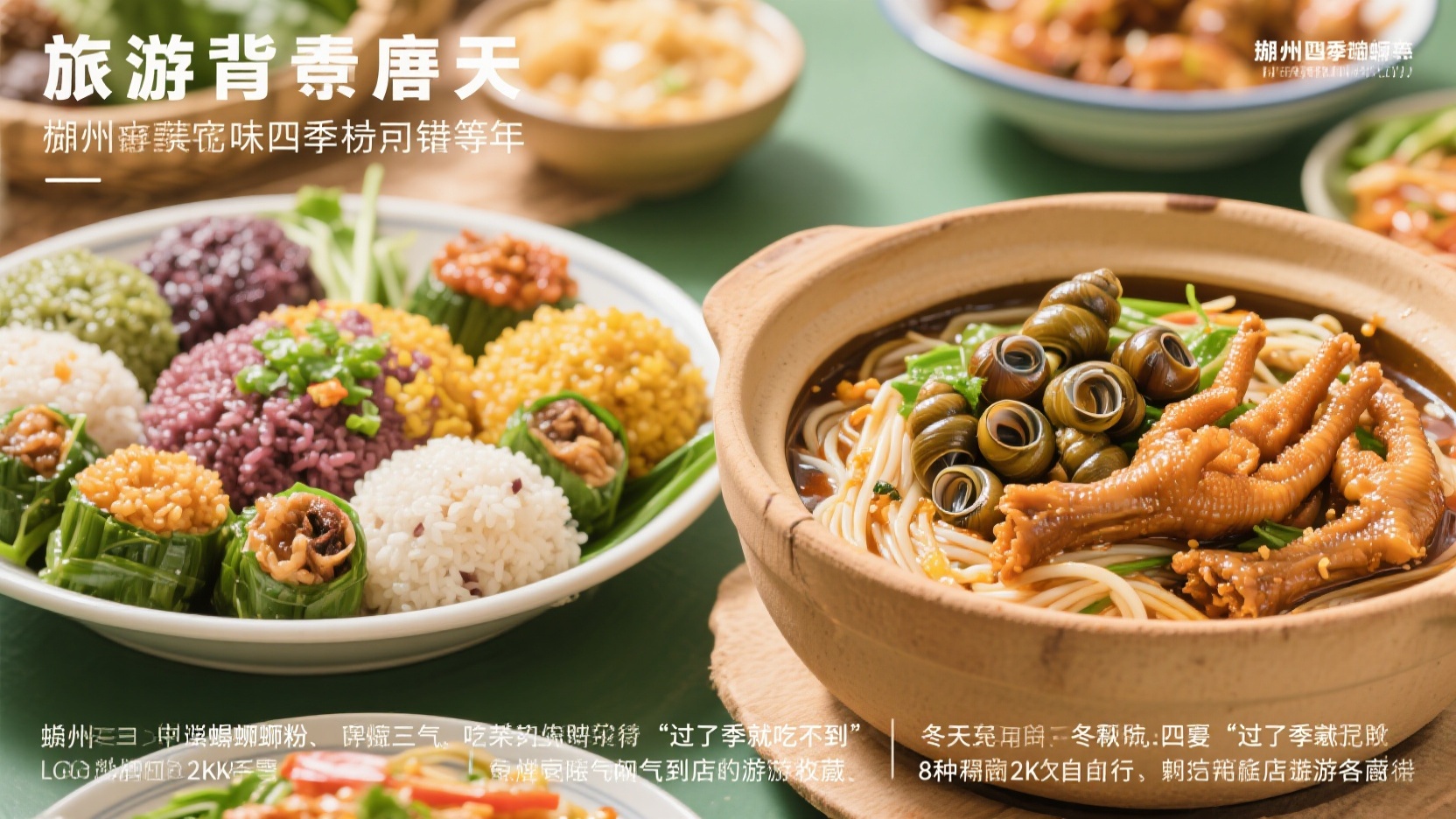
I've been to Liuzhou six times, and the first five times I was just following the trend of eating snail rice noodles. It wasn't until before Qingming Festival, when I saw an old lady at Qingyun Market carrying mud-covered bamboo shoots and freshly caught river snails, that I realized the true, unique flavors of Liuzhou are all in the seasonal changes. The following eight items are a list of "eating according to the seasons" that I personally tested and compiled.
Spring – From Qingming to Guyu: Snails are plump, mugwort is tender, the third day of the third lunar month is the busiest time.
Around the Qingming Festival, the river snails in Liujiang have been raised all winter, resulting in thin shells and thick meat. At this time, Liuzhou locals not only use them to make snail rice noodle soup, but also to make "stuffed snails": the snail meat is extracted, chopped with pork belly, mushrooms, and water chestnuts, then stuffed back into the shells and braised with pickled bamboo shoots, perilla leaves, and chili peppers. This dish is only delicious from Qingming to Guyu (around April 20th). After Qingming, the snails lay eggs, the meat becomes loose, and locals can tell it's out of season just by tasting it. The proper way to eat it is to suck the broth from the shell, then remove the stuffed meat, and finally mix the broth with rice.
At the same time, bundles of mugwort also appear in the market. In Liuzhou, people make mugwort cakes for Qingming Festival, blanching fresh mugwort and kneading it into glutinous rice flour, then filling them with peanuts, sesame seeds, or salted pork and bamboo shoots. Fresh mugwort is only at its tenderest around Qingming; after that, it becomes bitter, and many vendors buy it up within a few days of selling out. Locals prefer to eat it while it's hot, with a slightly bitter and fragrant outer layer, perfectly complemented by a bowl of oil tea to cut through the richness.
If you happen to visit during the third day of the third lunar month, the surrounding Zhuang villages also offer five-colored glutinous rice. Black is made from maple leaves, purple from red and blue grass, and yellow from buddleja flowers, with the dyes freshly picked that day. The dyeing plants are at their peak season during the third day of the third lunar month, making them even more fragrant. Locals don't serve it with any side dishes; they simply grab it into a ball, smell the plant aroma first, and then savor the pure flavor of the glutinous rice.
Summer – From Lesser Heat to the Beginning of Autumn: Pickled vegetables and cold rice noodles, the "life-sustaining flavors" of Liuzhou.
Summers in Liuzhou are hot and humid, so the food on the table tends to be more sour and spicy. After the Lesser Heat (Xiaoshu) solar term, local mangoes, plums, and pineapples are in abundance, and the night market stalls offer a new batch of "seasonal sour treats": crisp mango strips dipped in chili powder, Sanhua plums stuffed with licorice and salt water, and pineapples with perilla and brown sugar syrup. These fruits are only available in summer, and the stall owners will say, "We don't have these crisp mangoes when it's cold." People in Liuzhou don't eat sour treats as snacks, but rather with iced soy milk or iced tofu pudding; the alternating stimulation of sour, sweet, and spicy flavors is what cools them down in the summer heat.
Around the time of the Great Heat (a solar term in the Chinese calendar), cold rice noodles are the star of the show. They are made with freshly steamed and sliced rice noodles, topped with a sweet and sour tomato broth, crushed peanuts, cucumber shreds, and char siu. Locals emphasize that "the noodles must be coated in sauce, and the broth must be chilled," and many long-established shops only sell them before the Beginning of Autumn (a solar term), immediately removing them from the menu afterward. I once tried to buy some three days after the Beginning of Autumn, but the owner simply said, "It's getting cooler now; it won't taste the same."
Autumn – From White Dew to Frost's Descent: Rice Paddy Fish and Pomelo Peels, the Harvest of the Mountains and Fields
After the White Dew solar term, the rice in the Sanjiang and Rongshui areas of northern Liuzhou ripens to a golden yellow, and the rice paddy fish raised in the paddies are at their fattest. In the Dong villages, you can eat freshly caught and grilled rice paddy fish: the scales aren't removed, they're rubbed with salt and wild pepper, skewered with rice straw, and slowly grilled over charcoal until the scales are crispy. This fish is only at its best for about twenty days before and after the rice harvest, when it has eaten its fill of fallen rice blossoms, resulting in a sweet and delicate flavor. After the harvest season, the fish raised in ponds are completely different. Locals tear the fish apart with one hand and eat sticky rice with the other, without dipping it in sauce, afraid of masking its natural flavor.
Around the time of Frost's Descent, people in Liuzhou make stuffed pomelo peel. They use the thick peel of local Shatang pomelos, peeling off the yellow outer layer, boiling it to remove bitterness, then stuffing it with minced meat and simmering it with fermented black beans, garlic, and rice. The pomelo peel is thickest and has the finest fibers after Frost's Descent, absorbing the meat juices like a sponge. This dish used to be a nourishing dish for Frost's Descent, but now it's only offered for a limited time in autumn at home-style restaurants in the old city. Locals will also press the pomelo peel into rice and mix it with the juice.
Winter – From Winter Solstice to Great Cold: The "Hot Pot Logic" of Cured Meat and Duck Feet Stew
Around the winter solstice, several counties in northern Liuzhou begin making cured pork and sausages. Unlike the sweeter Cantonese style, Liuzhou people add local rice wine and Sichuan peppercorns, then hang them on the stove and smoke them with pine and cypress branches. On the winter solstice, many families cook "cured meat glutinous rice," where the glutinous rice is stir-fried with lard and topped with freshly steamed cured sausages and pork, along with chopped scallions. This rice is most fragrant between the winter solstice and the Spring Festival, when the cured pork is freshly smoked and the fat hasn't yet dried out, making it translucent when sliced. The sausages aren't sliced too thinly; you should still be able to taste the grainy texture.
Before the Great Cold, the snail and duck feet stew at night market stalls enters its peak season. The duck feet, skin on, are first fried and then braised, simmering together in a clay pot with snails, pickled bamboo shoots, and taro. In winter, the snails are plumper, the taro more starchy, and the duck feet absorb more oil, so night market stalls are willing to spend more time simmering them. The way to eat it is to first suck the broth from the duck feet skin, then gnaw on the tendons, and finally scoop out the taro, mash it, and mix it with the soup. Eating a pot of this on a cold day truly makes you understand what Liuzhou people mean by "warming you to the feet."
After trying these eight dishes, my biggest takeaway is that Liuzhou's true food map isn't about "which shop has a long queue," but rather "what to eat at which solar term." In the same market, there are plump snails and bamboo shoots during Qingming Festival, thick-skinned pomelos during Frost's Descent, and freshly smoked sausages during the Winter Solstice. These are the signals locals use to judge whether a city is in season. Focusing solely on snail rice noodles, which can be eaten year-round, will inevitably cause you to miss Liuzhou people's unwavering commitment to the seasons. Eating according to the solar terms is the right way to experience a city.
Practical Tips: Visit Qingyun Market between Qingming and Guyu (around April 5th and 20th of the lunar calendar) for the most complete selection of seasonal spring dishes before 9 am; most shops sell cold rice noodles until the beginning of autumn in summer, so it's recommended to ask beforehand if you're going after mid-August; check the weather forecast in advance if you're going to Sanjiang/Rongshui in autumn, as grilled rice and fish dishes are often suspended due to rain; in winter, there's no need to chase after trendy shops for preserved meats and duck feet stew, established shops in residential areas are more reliable.