
A 5-Day Slow Travel in Hohhot | A Checklist to Avoid Pitfalls When Traveling with Senior Parents (Autumn Edition)
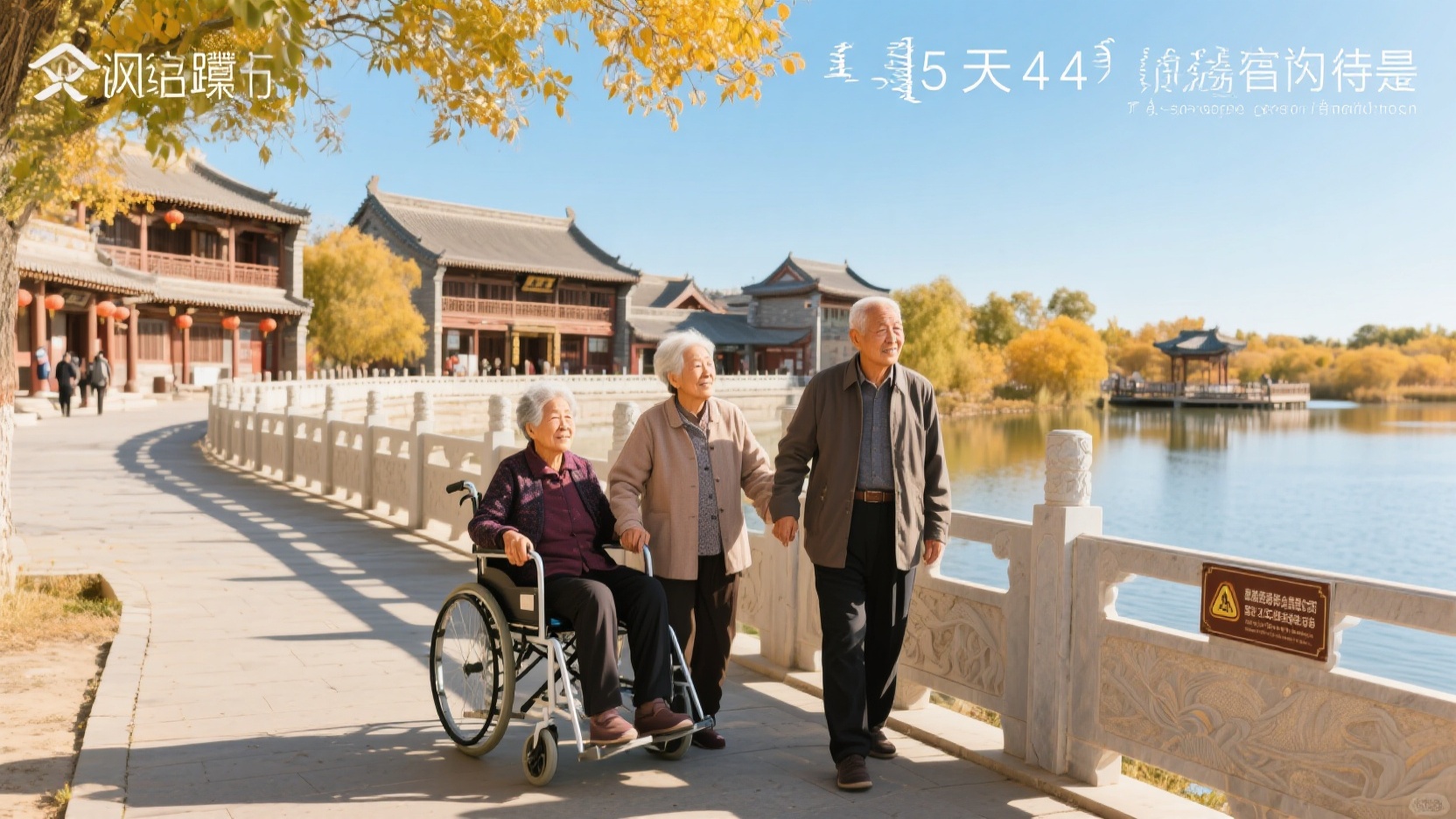
The first time I took my 70-year-old parents to Hohhot, I followed a young person's itinerary exactly, planning three places in one day. The result was that by noon the next day, my dad simply sat on a bench in Dazhao Square and said, "I'm not going anywhere else." Later, I took them back two autumns in a row, finally refining this "slow travel 5 days 4 nights" itinerary. The following isn't about rushing through attractions, but rather planning only one or two key points each day, prioritizing elevators, accessible pathways, toilet density, walking distance, and a midday rest.
This article is suitable for seniors with bad knees, slow legs, or who get tired easily, and it's also suitable for you who want to take your parents on a trip but are afraid of being told it's "too rushed".
First, let's look at the hotel's "lunch break radius": the pitfalls I encountered.
If you're traveling with elderly people in Hohhot, I recommend choosing a hotel near Xinhua Square and Zhongshan Road. It's not far from the Inner Mongolia Museum, Dazhao Square, and Qingcheng Park; the drive should be around 15-20 minutes, allowing you to get back to your hotel for a proper rest at lunchtime. Avoid staying near the airport or East Railway Station; while they may look new, the commute to and from the city center will shorten your lunch break.
The second time I took my parents to stay at a mid-range chain hotel on Zhongshan Road, the elevators covered all the room floors, there was no difference in elevation between the lobby and the rooms, the corridors had handrails, and the bathrooms had separate wet and dry areas with room for a folding chair in the shower area. There was a pharmacy within 300 meters of the building, and a hospital of level two or above was about two kilometers away, which was the "safety radius" that I cared about most when my parents were traveling. When booking a room, I would ask three things in advance: whether there was an accessible ramp, whether the elevator went directly to the floor, and whether the bathroom had a bidet shower.
II. Day 1-2: Actual walking data between the museum and Dazhao Square
On the first day, I only visited the Inner Mongolia Museum. It's perfect for seniors: the indoor layout is level, there are elevators on every floor, and the high density of restrooms on each floor, including accessible and third-gender restrooms. Wheelchair rentals are also convenient. Seniors don't need to see everything; I'll focus on the "Genghis Khan of the Grasslands" and "Birch Song of Northern Xinjiang" exhibition halls, keeping it within an hour and a half. The museum is also less than a ten-minute drive from a level-two or higher hospital, which puts my mind at ease.
We returned to the hotel for lunch and a two-hour nap. We went out again after 3 PM to stroll around Dazhao Square and the outer perimeter of Sai Shang Old Street. Dazhao Temple itself has many thresholds, requiring wheelchairs to be lifted in and out. Those with mobility issues can only explore the outer perimeter of the square and the outer circle of Tongshun Street. I measured the walking distance around the square to be less than one kilometer. There are benches, but the shade isn't very dense; it's perfect for an autumn afternoon.
The second day's itinerary should only include Xilituzhao and the area around Wuta Temple; choose one. Xilituzhao is smaller and has more flat ground, allowing wheelchair access to the front courtyard; Wuta Temple has many steps, so it's not recommended for those with knee problems, just take some photos of the outer red walls. The key is to avoid combining both, as the leisurely pace allows you to return to the hotel for a rest in the afternoon.
Day 3: Choose one of two options: leisurely stroll through the ancient town or relax in the hot springs. Don't decide based on your imagination.
On the third day, I'll give my parents a choice. Option A is a leisurely stroll through an "ancient town-style street," and I would choose Sai Shang Old Street and Tong Shun Avenue instead of a true suburban ancient town. The reason is that the city streets are smooth, there's a high density of restrooms, and we can easily return to the hotel for a midday rest if we get tired. The suburban intangible cultural heritage town has beautiful scenery, but it has many slopes and stone steps, making it difficult to push a wheelchair, so I wouldn't recommend it for my parents who have difficulty walking.
Option B is to visit the Hasuhai Swan Castle Hot Springs. The hot spring area has flat ground and ample rest areas, suitable for families who want to relax and soak. However, I want to point out a pitfall: it takes about an hour and a half to get there from the city center one way, and the return trip is also long, meaning you can only have your lunch break in the car; moreover, the nearest level-two or above hospital near the hot springs is about an hour's drive back to the city center, so it's not recommended for elderly people with high blood pressure, heart disease, or unstable blood sugar to soak in the high-temperature pools, and each time they should not stay in the water for more than fifteen minutes. If my parents don't usually enjoy hot springs, I would choose Option A directly.
IV. Days 4-5: Park and General's Office – minimize walking distance.
On the morning of the fourth day, we'll choose between Qingcheng Park and Manduhai Park. Both have gentle walking paths, plenty of shade, and numerous public restrooms. Many local elderly people are doing morning exercises, creating a relaxed atmosphere. I'll have my parents sit on a bench by the lake to enjoy the sun, instead of walking around the entire lake. The General's Mansion can be visited in the afternoon; the courtyard isn't large, mostly flat, and a leisurely visit takes about an hour. Wheelchairs can use the gentle ramp at the main entrance, but some exhibition hall thresholds are still in place.
On the fifth day, don't plan to visit any tourist attractions. Sleep in, check out, leave your luggage at the front desk, and buy some souvenirs like sugar-free milk tea and beef jerky at a supermarket near the hotel. Dairy products are overpriced in tourist areas, so chain supermarkets are more affordable. After lunch, head to the airport or train station. Take your time.
The core of the entire trip wasn't "how many places we visited," but rather returning to the hotel each day for a two-hour nap. If an elderly person gets too tired after that point, they'll lack energy for the next three days. This is something I only truly learned after walking the Hohhot route five times.
V. Packing list for seniors (20 items) + reminders for 5 categories of commonly used medications
I've compiled a travel checklist for senior citizens in Hohhot this autumn, and every item is personally tested and used: 1. Foldable lightweight wheelchair or walker; 2. Foldable shower chair; 3. Non-slip slippers; 4. Knee and back supports; 5. Warm vest; 6. Lightweight down jacket; 7. Sun hat; 8. Sunglasses; 9. Sunscreen; 10. Lip balm; 11. Insulated water bottle; 12. Regular medications for chronic diseases; 13. Copies of medical insurance card and ID card; 14. Foldable umbrella; 15. Disposable toilet seat covers; 16. Disinfecting wipes; 17. Inflatable pillow; 18. Power bank; 19. Blood glucose meter or blood pressure monitor; 20. Family contact card.
Five categories of commonly used medications: First, antihypertensive drugs; take them as prescribed morning and evening, and do not stop taking them on your own during periods of intense sunlight at high altitudes. Second, hypoglycemic drugs; carry some candy to prevent hypoglycemia. Third, cardiovascular emergency medications; pay attention to the expiration date of drugs such as nitroglycerin. Fourth, gastrointestinal medications; lamb and milk tea in Hohhot are high in fat, which can easily cause bloating in the elderly. Fifth, topical plasters or joint pain relief patches; long periods of sitting in vehicles can easily lead to stiffness in the lower back and legs, especially if you walk less. Do not check any medications in; carry them with you and include a card listing your allergies and medical history.
The blogger concludes: A trip for seniors in Hohhot isn't about how many temples you visit, but whether you can get back to your hotel by 2 PM. By minimizing walking distances, ensuring a proper afternoon nap, and knowing the distance to hospitals, this city is more suitable for a leisurely trip with your parents than you might imagine.