
Hefei Old City 4km Loop | A Citywalk Secret Route I Walked Three Times Before Daring to Leave (Includes Two Side Routes to Avoid Pitfalls)
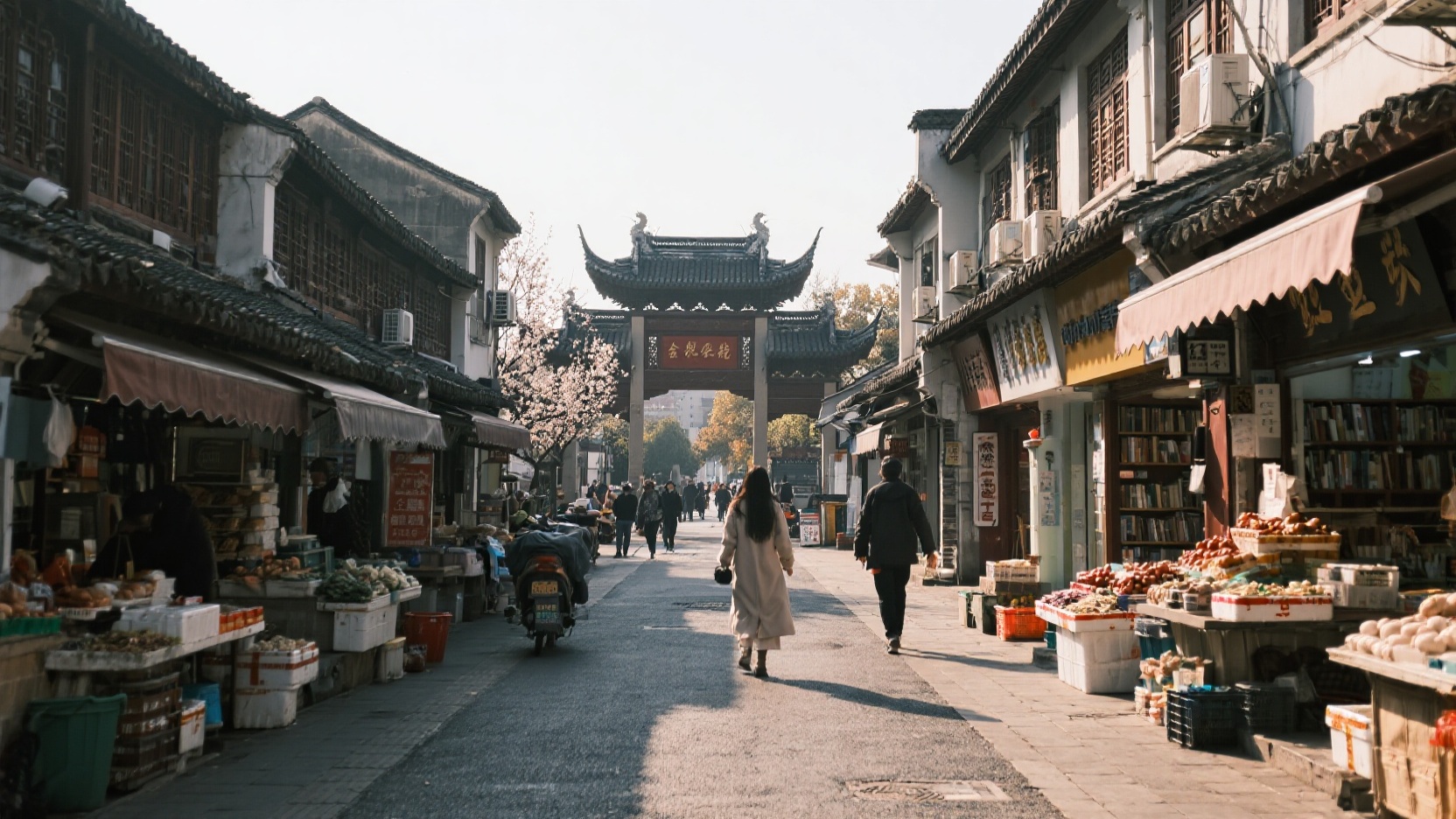
After walking around Hefei's old city for three days, I discovered that the truly "cultural and artistic" scenes are almost never inside glass-walled shopping malls, but rather along a 4-kilometer-long pedestrian loop around the old city, enclosed by a ring park. The route below is organized as a "main route plus two branch roads," and is suitable for starting around 1:30 pm on a weekend in autumn or winter, when the light shines obliquely on the plane trees and horse-head walls, producing much better photos than at noon.
Tip to avoid pitfalls: Don't start your stroll from the department store section of Huaihe Road Pedestrian Street. On weekend afternoons, it's packed with electric scooters and promotional loudspeakers, making it difficult to enjoy a leisurely walk. Instead, start from the old Anhui Provincial Museum near Sanxiaokou subway station. First, quietly admire this old Soviet-style building from the 1950s, then gradually move towards the bustling streets. This will be a much more pleasant experience.
I. Overview: How to walk a 4.2-kilometer loop around the old town without getting tired?
The main route starts from the old Provincial Museum, passes through the City God Temple, Huaihe Road Pedestrian Street, Li Hongzhang's Former Residence, Mingjiao Temple, Lihua Lane, Hongxing Road, and finally ends at the Jinzhai Road intersection and the Ring Park. A pure walking trip takes about 1 hour and 20 minutes. Including stops, shops, grocery shopping, and coffee, the actual time required is 3.5 to 4 hours. The first section is about 800 meters (12 minutes walking); the second section is about 1.1 kilometers (15 minutes walking); the third section on Hongxing Road is about 900 meters (14 minutes walking); and the final stop at the Jinzhai Road intersection is about 400 meters (6 minutes walking). Two branch lines diverge at the east entrance of Lihua Lane and the middle section of Hongxing Road, one leading to Yimin Street Market and the other to the Yinhe Park pocket park, both no more than 600 meters apart.
What's most remarkable about this route is that it connects Hefei's "old city fabric," which is rarely noticed by tourists from other provinces: the Ming and Qing Dynasty City God Temple, late Qing Dynasty residences, old Suzhou-style buildings, old company dormitories, farmers' markets, vinyl record shops, and pocket parks—all within walking distance. I walked it three times before confirming that the order couldn't be reversed; you had to start from the quiet old buildings on the west side and gradually move towards the bustling streets on the east side, otherwise you'd lose patience in the latter half.
Part Two: From the old Provincial Museum to the City God Temple, a 12-minute walk through Hefei's old character.
Starting from the south gate of the old Anhui Provincial Museum, head east along Anqing Road. Don't enter the main exhibition hall; first, circle around to the west side to view the facade. Recommended location: Stand under the shade of the plane trees on the north side of Anqing Road and use a telephoto lens to compress the Suzhou-style portico, the five-pointed star relief, and the modern buildings in the distance into a single frame. Why it's worth stopping for 5 minutes: The old museum itself is an exhibit. Built in 1956, its Suzhou-style architecture is rare in Hefei. The proportions of the portico and the texture of the gray bricks are easily overlooked, but it represents the starting point of Hefei's old cultural character.
Continue walking for about 800 meters to enter the City God Temple area. When passing through the Huoqiu Road small commodity street, remember to look up at the wooden windows and firewalls on the second floor and above, instead of just looking at the shops on the ground floor. Best shooting location: At the intersection of Huoqiu Road and Miaodong Street, look north and shoot up at the City God Temple's gable walls and tangled wires. Bring along a few old-fashioned electric bikes; the image will have more of a lived-in feel than a typical tourist photo. Stop for 5 minutes because this area features a rare Ming and Qing dynasty streetscape in Hefei, with the old houses on both sides still retaining traces of the "front shop, back residence" layout.
Part 3, Section 2: From Huaihe Road Pedestrian Street to Lihua Lane, a 15-minute journey through a century of bustling city life and a bowl of wontons.
Heading east from the City God Temple onto Huaihe Road Pedestrian Street, first turn into Li Hongzhang's Former Residence. Don't follow the crowd and photograph the plaque from the main entrance; instead, choose a spot at the alleyway east of the residence, framing the firewalls of this late Qing Dynasty Jianghuai-style house alongside the modern light boxes of the pedestrian street. The reason for stopping for 5 minutes: This is the best-preserved late Qing Dynasty residence of a prominent figure in Hefei. The architectural details, such as the carved beams and rafters and the lighting in the courtyard, are more worthy of close examination than the "historical figure introduction."
After leaving the former residence, continue east. When passing Mingjiao Temple, there's no need to buy a ticket or offer incense; simply take a photo of the overlapping eaves and glass curtain wall at the northeast corner of the square in front of the temple. Then, turn left onto Suzhou Road into Lihua Lane. This lane is short, but it transports you from the tourist area to Hefei in the 1990s: old residential buildings have tailor shops, key stalls, and a few small wonton shops on the ground floor. Shooting location: In the middle of Lihua Lane, below a balcony filled with greenery, use a vertical composition to photograph the clothesline and old brick wall, with a bowl of steaming food in the foreground. Reason for stopping for 5 minutes: Lihua Lane is the only "time capsule" next to the Huaihe Road commercial district. Around 5 pm, the light is softest, and elderly people sit at their doorsteps picking vegetables, creating a very natural scene.
IV. Section 3: Hongxing Road Main Street and Two Branch Streets: How to Choose Between Independent Bookstores, Vintage Clothing Stores, and Farmers' Markets
Exit from the south entrance of Lihua Lane and turn right onto Hongxing Road. This is the most scenic section of the main road, about 900 meters long. The canopies of the plane trees lining the street are almost completely closed, and there are independent bookstores, affordable cafes, vintage clothing stores, and a small vinyl record store on both sides. It is recommended to spend only 10 to 15 minutes in each store, and not to linger too long in the first bookstore, because the further west you go, the more small shops you will find that are "run by locals and do not welcome posed photos." Best viewpoint: At the intersection of Hongxing Road and Shucheng Road, stand on the median strip to capture the depth of the plane trees, taking photos from a low angle that includes the fallen leaves on the ground and the warm lighting of the shops.
Side Route 1: From the east entrance of Lihua Lane, turn onto Shucheng Road and walk to Yimin Street Market. This section is about 500 meters long and is suitable for those who want to capture the everyday life of the market. The best spot is at the fruit stall at the market entrance; use a wide aperture to frame the colorful fruit displays and the vendors cutting sugarcane behind them. I stopped for 5 minutes because Hefei's markets are rarely mentioned in travel guides, but Yimin Street Market is most active in the afternoon, where you can buy freshly made egg dumplings and local pickled vegetables—a more authentic "local taste" than chain food streets.
Branch Route Two: Turn right onto Jinzhai Road from the middle section of Hongxing Road, then head south to the Yinhe Park pocket park. This area belongs to the ring park system, and in the evenings, elderly people often play the erhu (a two-stringed bowed instrument) or chess. The best vantage point is north of the stone bridge in Yinhe Park. Wait for a cleaning boat to pass by, and capture the greenery along the ring canal and the old dormitory buildings as "green spaces in an urban canyon." The 5-minute stop is because this branch route fills in the crucial "blank space" needed for an art walk. After exploring the artsy shops along Hongxing Road, sitting by the water completes the route's rhythm.
V. Blogger's Summary and Practical Tips
The most valuable aspect of this old city loop isn't any particular trendy shop, but rather its preservation of Hefei's rare old-city layers within walking distance: a market next to a temple, an affordable coffee shop opposite a Suzhou-style restaurant, and old community balconies just around the corner from a former residence of a famous person. After walking it three times, I recommend: starting on Friday afternoon or Saturday morning to avoid the return traffic on Huaihe Road Pedestrian Street on Sunday evening; wearing soft-soled shoes, as some sidewalks on Hongxing Road are paved with old bricks; and keeping your phone fully charged, but don't hold a gimbal the whole time, as many shops have signs saying "No Commercial Photography."
Practical Tips: The total route length is approximately 4.2 kilometers. Allow 4 hours for the main route with stops, or about 1 hour and 20 minutes for the main route only. Choose one of the two branch routes. If time is tight, prioritize Yimin Street Market; if the weather is good, choose Galaxy Park. Most cafes and bookstores along the way are concentrated on Hongxing Road, with prices mostly around tens of yuan per person. Most vinyl record shops require reservations, so check the notices at the entrance before you pass by. In autumn and winter, the light is more stable after 2 pm. In summer, it is recommended to walk the second half in the evening.