
Eating right for the seasons in Harbin | My four-year trial and error guide to seasonal limited-edition foods (personally tested to avoid pitfalls)
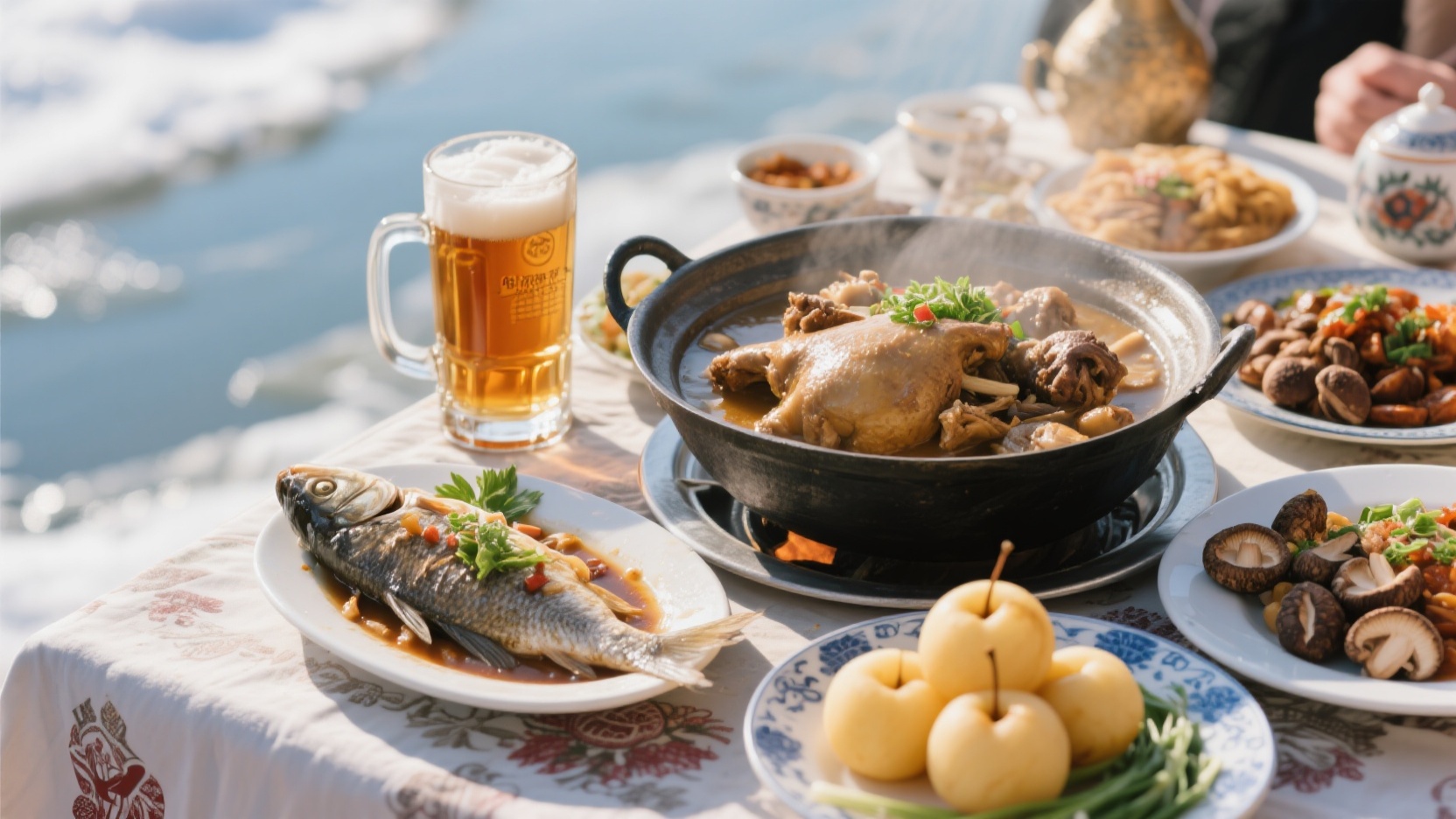
Having eaten in Harbin for six years, my biggest lesson is that the city's cuisine isn't about finding the right "restaurant," but rather the right "solar term." For the first two years, I haphazardly followed guides, trying different things. In the summer, I went to Central Street looking for braised goose in an iron pot, only to be deterred by a local owner's comment, "That's only good after it snows." In the winter, I wanted to eat river fish after the ice melted, but after searching the entire Songhua River, I only found frozen surfaces. Later, I followed local friends for four years, chasing the solar terms, before finally figuring out which dish was best served in each season. Harbin is located at 45 degrees north latitude, meaning its food availability window is extremely short, and many dishes only taste right during specific solar terms.
From Qingming to Guyu in spring: River fish and wild mountain vegetables are most delicious during the few days when the river surface cracks open.
The thawing of the Songhua River is the most important event in Harbin during spring. After the ice cracks, the river fish, having been frozen all winter, have their earthy taste suppressed by the low temperature, resulting in firm and tender flesh. This optimal window of opportunity lasts only about ten days, from around Qingming Festival to Guyu (around April 20th). Locals commonly eat crucian carp and common carp, and prefer the most common and homely method of braising them in soy sauce, one of the "three flowers and five luo" (a traditional Chinese cooking method). The sauce shouldn't be too strong; you should taste the fish's natural sweetness—that's the soul that distinguishes thawed river fish from frozen ones.
At the same time, wild mountain vegetables such as dandelion, prickly ash shoots, and bracken sprout. They are at their tenderest around Grain Rain, and become tough after a week. Locals eat them simply: wash them and dip them in egg sauce, or blanch them and then make a cold salad, and serve them with freshly made spring pancakes. They also roll up braised river fish and wild mountain vegetables together, and one bite is a taste of Harbin's shortest spring.
Summer Solstice to Minor Heat: Russian-style cold dishes paired with freshly brewed kvass, a cool sensation rising from the cellar.
Harbin summers are cool, but the midday sun is intense. Locals avoid greasy dishes in the summer, opting instead for Russian-style cold meals: pickled cucumbers, chilled borscht, cold-cut sausage, and Russian potato salad. These cold dishes are best enjoyed between the summer solstice and the minor heat, when the temperature is just right to enhance the fermented sourness without being cloying.
Freshly brewed kvass is a true summer exclusive. Bottled kvass is available year-round, but only the kvass freshly brewed from large vats at street stalls in summer has the active effervescence, a wheaty aroma with a hint of tartness. Locals enjoy it like this: a glass of chilled kvass paired with a Madier popsicle, slowly savored while standing on the cobblestones of Central Avenue, the coolness seeping from their throat to their toes. Around the time of Lesser Heat (Xiaoshu), a bowl of Harbin-style Korean cold noodles is a perfect complement: buckwheat noodles rinsed in cold water, broth with ice crystals, served with kimchi and half a boiled egg. Those who know their stuff will add a spoonful of yellow mustard—the pungent spiciness that brings tears to their eyes is what makes it truly refreshing.
From the White Dew to the Frost's Descent in autumn: stewed chicken with hazel mushrooms and ground cherries, the fifteen days when mountain delicacies are at their most abundant.
Autumn in Harbin is surprisingly short. Once the White Dew solar term passes, hazel mushrooms begin to sprout in the surrounding forests. Hazel mushrooms cannot be cultivated artificially and can only be harvested wild, making them a truly seasonal mountain delicacy. Locals say that the mushrooms in "chicken stew with mushrooms" must be hazel mushrooms; other mushrooms cannot produce that woody aroma and smooth, chewy texture.
This dish should be eaten before the first frost. The hazel mushrooms are more fragrant after being touched by frost, but they will be covered by snow if eaten later. Use free-range chicken and stew it until it falls off the bone, allowing the hazel mushrooms to soak up the broth. Locals eat it by first taking a sip of the soup, then tearing off a piece of flatbread to dip in the soup, and finally picking out the mushrooms to eat separately, without rushing to add the meat.
At the same time, ground cherries have also reached their peak season. Their outer skin resembles a small lantern, and inside are golden-red berries that burst with juice when you bite into them. They are sweetest between the White Dew and Frost's Descent periods, becoming soft after Frost's Descent. In Northeast China, people eat ground cherries without washing the skin; they simply pinch the small lantern, tear it off, and eat it directly—a small detail that reveals whether someone knows how to eat them.
From the Great Snow to the Winter Solstice: Frozen pears, frozen persimmons, and stewed goose in an iron pot are the perfect remedy for temperatures as low as -20 degrees Celsius.
The most magical foods in Harbin during winter are frozen pears and frozen persimmons. After the Great Snow solar term, the outdoors becomes a natural freezer. Fresh pears and persimmons are left outdoors to freeze completely, their skin turning black and as hard as rocks. Before eating them, you can't bite into them directly; you have to put them in cold water to "soften" them until the outer shell forms a layer of ice crystals and the inside softens.
Locals eat it this way: First, bite a small hole and suck out the juice—the frozen pear juice mixed with the icy texture. Then, suck the frozen persimmon until only the skin is left, and finally, eat the flesh. This method can only be achieved at sub-zero temperatures; frozen persimmons lack the frost-like flavor. You can also try a few frozen crabapples for a sharper, more tangy taste.
Stewed goose in an iron pot is a staple dish around the winter solstice. The goose meat tightens after snowfall, and the subcutaneous fat is thickest, making it incredibly flavorful when stewed. A large iron pot is heated over a wood fire, served with potatoes, dried green beans, and glass noodles, with cornbread arranged around the rim. Locals have a tradition of "three stews and three uncoverings": halfway through stewing, uncover the pot to add the glass noodles; just before it's done, uncover the pot again to add the cornbread; and finally, uncover the pot again to sprinkle with scallions and cilantro. A group of people gathered around the pot to eat is the most comforting ritual of winter in Harbin. In the twelfth lunar month, a pot of sticky rice cakes is steamed to finish the meal; yellow millet flour wrapped around red bean filling and dipped in white sugar—a sweet treat for the season.
The blogger concludes: Getting the timing right is more important than collecting trendy shops.
When searching for food in Harbin, the biggest mistake is mistaking "evergreen" for "seasonal." In the same city, the freshwater fish caught around Grain Rain (around April 20th) and the frozen pears enjoyed during Heavy Snow (around November 20th) are completely different. If you're only visiting once, determine the season before deciding what to eat to avoid missing the optimal culinary window.
Practical Tips: ① In spring, from Qingming to Guyu, prioritize asking about the freshly caught fish at riverside restaurants. If the fish isn't on the menu, just ask the owner. ② In summer, eat cold dishes and kvass after 3 PM to avoid the midday crowds on Central Street. ③ In autumn, from Bailu to Shuangjiang, choose small restaurants with dried hazel mushrooms drying outside for stewed chicken with hazel mushrooms. ④ In winter, don't eat frozen pears or persimmons indoors; they're more fun outdoors or by the window. ⑤ Don't force yourself to go to trendy restaurants for seasonal items; small shops frequented by locals are more reliable.
Eating according to the seasons is the right way to experience a city.