
These 8 households in Fuzhou rely on the weather for their livelihood | A blogger's personal test of a seasonal list of places to stay; non-locals might easily miss out.
Having spent three years in Fuzhou searching for food, the biggest mistake I made wasn't finding the food bad, but rather arriving "too early" or "too late." The first year, a week after Qingming Festival, I went to the old town looking for "Bo Bo Guo" (a type of steamed rice cake), only to be laughed at by three different aunties: "Who still makes it after Qingming?" The second year, I didn't get to eat longan with porridge on the day of White Dew, and that's when I realized that Fuzhou people's dining tables really do follow the solar terms. This list is something I gathered by observing the seasons and shamelessly asking local grandmothers; it only lists limited-edition flavors that are "available only at this time of year," not regular items that are available all year round.
I. Spring: Aojiu porridge and Bobo cake, twice a year during the first month of the lunar calendar and Qingming Festival, are "once gone, gone."
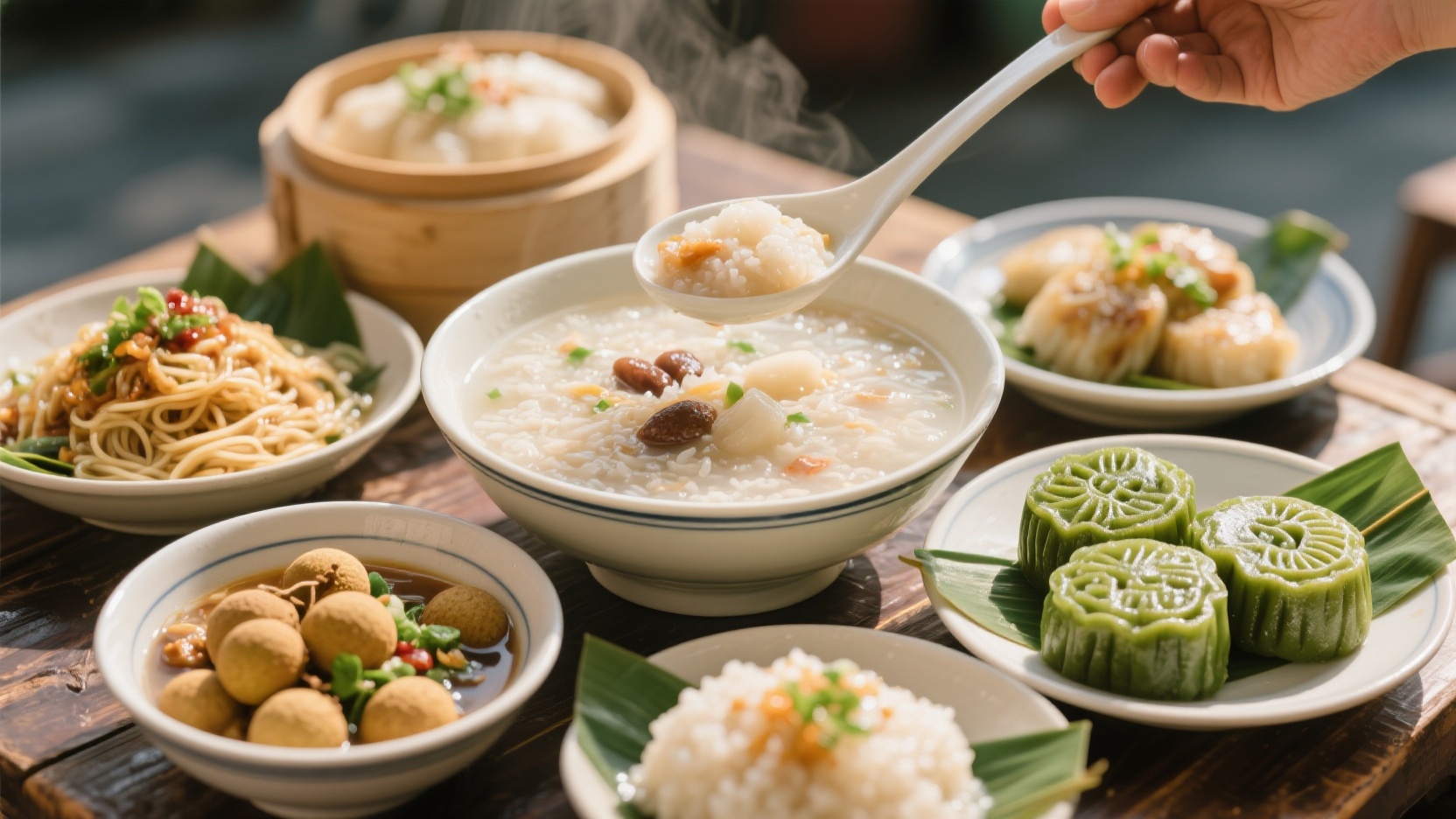
The most easily overlooked event for tourists in Fuzhou during springtime is the Aojiu Festival on the 29th day of the first lunar month. On this day, every household cooks Aojiu porridge, made with glutinous rice, red dates, longan, peanuts, and brown sugar, emphasizing the number "nine." Families with elders also have the porridge delivered to their door. Aojiu porridge is only truly delicious a few days around the 29th of the first lunar month. It's not available in shops every day, but rather at temporary stalls set up near the market or at the entrances of old neighborhoods on that specific day. The porridge should be cooked until the rice grains have opened up but are still chewy, the brown sugar is fragrant but not cloying, and the longan flesh is thick. Locals eat it without side dishes, simply enjoying a bowl while it's hot, sprinkling a few roasted peanuts on top, a gesture said to "pass the nine" for good fortune. After this day, the atmosphere is lost.
The preparation of Bobo Kueh around Qingming Festival is even more "strict." The outer skin is made from Bobo grass juice and glutinous rice, giving it a deep green color. The filling is often either sweet red bean paste or savory radish shreds. Many guides refer to it as "Qingtuan," but Fuzhou's Bobo Kueh is softer, less oily, and has a stronger grassy aroma. It only appears a week before Qingming Festival to two or three days after, with established workshops starting production in the early morning and selling out by the afternoon. Local aunties will advise, "Don't steam it for too long, or it will collapse." When you bite into it, you should be able to see distinct radish shreds, and the sweet version should have a smooth, non-greasy red bean paste filling. Once Qingming is over, the Bobo grass is too old, and the color and aroma are no longer right; you'll have to wait until next year to enjoy it again.
II. Summer: On the day of Lixia (the beginning of summer), rice noodle rolls with shrimp crisps are served, and at noon eggs during the Dragon Boat Festival are Fuzhou people's "summer switch."
In Fuzhou, the Start of Summer isn't about eating ice cream, but rather "Guobianhu" (a type of rice noodle soup). This particular Guobianhu is different from the usual breakfast stalls; it's made by pouring rice batter around the edge of the pot, letting it rise when heated, and then immediately scooping it into the broth. The broth is enhanced with clams, dried shrimp, and celery for freshness. On the Start of Summer, many old shops have queues starting as early as four or five in the morning. Locals say that eating Guobianhu on the Start of Summer prevents summer ailments. Afterward, it's paired with a freshly fried shrimp crisp, crispy on the outside and soft on the inside. This combination is most ceremonial around the Start of Summer; it's eaten for breakfast on other days, but on the Start of Summer, it's a way to pray for good fortune.
Besides zongzi (sticky rice dumplings), another tradition in Fuzhou for the Dragon Boat Festival is "noon-time eggs." Eggs are boiled in "noon-time water," which dyes the shells red and is worn around the necks of children. The yolks of these eggs are cooked more thoroughly than usual. Locals eat them with a little salt, along with freshly boiled lotus leaf wrappers or alkaline zongzi. Tourists strolling through Fuzhou's old neighborhoods on Dragon Boat Festival will easily see red eggs and mugwort displayed at doorways. After noon, the "seasonal" nature of this water disappears, so older Fuzhou residents cook it precisely at the right time, sharing it among family members.
III. Autumn: Longan with porridge during White Dew, and pick persimmons from Minqing during Frost's Descent that are "almost soft but not quite."
When the White Dew season arrives, people in Fuzhou peel fresh longans and soak them directly in hot porridge. Outsiders might mistake this for a dessert, but locals have enjoyed it since childhood. Longans harvested around White Dew are thick, juicy, and sweet, perfectly balancing the light flavor of the porridge. More discerning families will choose local varieties like "Fuyan" or "Wulongling," peel and pit them, then bury the whole fruit in the porridge, letting it simmer briefly to allow the longan juice to infuse the rice water. Only between White Dew and the Autumn Equinox are longans sweet enough without becoming cloying; after the season, longans become too moist and lose their sweetness, making them unsuitable for this season.
Around the time of Frost's Descent, persimmons in the mountains of Minqing reach their peak. The local way of eating them isn't the crisp kind, but the soft kind—the skin is as thin as paper, easily peeled open, revealing almost molten flesh. Old Fuzhou locals would choose persimmons that are "almost soft," with a slight springiness, and let them sit at home for a day or two. When eating them, they use a spoon to scoop out the flesh, without biting into the skin, paired with a small cup of Wuyi rock tea or simply as a dessert. Persimmons after Frost's Descent have been touched by frost, losing all astringency and becoming directly sweet. If you come too early, the persimmons are astringent; if you come too late, they're too soft and mushy to handle. Only during those few days do you realize that "frost-touched persimmons are as sweet as honey" is not just a figure of speech.
IV. Winter: When rubbing rice on the Winter Solstice, the Taiping Rice Bowl is the final piece on New Year's Eve.
In Fuzhou, people don't eat tangyuan (glutinous rice balls) on the Winter Solstice; instead, they eat "mishi." Mishi is made by rolling glutinous rice balls into small strips, then coating them in a mixture of soybean powder, sesame powder, and sugar. It's eaten hot. The night before the Winter Solstice is called "cuomishi," where the whole family gathers to roll the rice balls. Children roll them into various shapes. The next morning, the rice balls are cooked and offered to ancestors. Mishi only evokes that sense of family reunion on this one day, and the aroma of freshly rolled soybean powder from street vendors is irresistible. Old Fuzhou residents say, "Eating mishi means you've grown a year older." It's more bouncy and smaller than tangyuan, perfect for a single bite, without filling; the flavor comes solely from the outer powder coating. If you miss the Winter Solstice, although some old shops still sell it, the "rolling" process is missing, and the taste is diminished.
On New Year's Eve, the grand finale on the Fuzhou dinner table isn't a feast of meat and fish, but a bowl of Taiping noodles. Thin, long noodles are served in a rich broth, topped with two duck eggs, symbolizing peace and longevity. The noodles themselves are extremely thin and absorb the broth quickly, so they must be eaten immediately after being served, otherwise they'll clump together. Locals have a tradition of "saving the eggs after eating the noodles," or sharing the eggs with family members. Taiping noodles are eaten at other times, but the New Year's Eve bowl is the most elaborate of the year; the broth must be made with old duck or fish soup, and the noodles must be bought that day. If tourists visit Fuzhou during the Spring Festival, don't look for the menu on the New Year's Eve dinner table; this bowl of noodles in local homes is the true exclusive.
V. Blogger's Summary: When eating in Fuzhou according to the solar terms, remember three "don'ts".
First, don't rely on a year-round guide to find seasonal foods. Many seasonal foods only appear two or three days before or after, or even on the exact day itself. If you want to eat them, check the dates first, and then ask the locals, "Where are they being made today?"
Secondly, avoid buying freshly made rice cakes like "Bo Bo Guo" and "Mi Shi" from "Fuzhou Specialty Shops" near tourist attractions. These seasonal specialties are meant to be made and eaten on the same day, and shops near tourist attractions often sell frozen and re-steamed items or factory-made goods year-round, resulting in inferior color, aroma, and taste. It's much more reliable to find freshly made stalls near older neighborhood markets.
Third, don't just ask "Do you have it?", ask "What's the best today?" A Fuzhou auntie will open up when you ask about the solar terms, telling you how long to soak longan and which type of persimmon to choose. Buying from them is more reliable than reading ten lists.
In Fuzhou, the solar terms aren't just words on a calendar; they're the red plastic buckets that suddenly appear at the entrance of the market, the basket of spinach next to an old lady, and the rolling soybean powder on the night of the Winter Solstice. Eating according to the solar terms is the right way to experience a city.