
Chongqing Xiahaojiang Riverbank | Blogger's Personally Tested 4km Afternoon Hiking Itinerary (Avoiding the Crowds at Hongyadong; Suitable for Spring and Autumn)
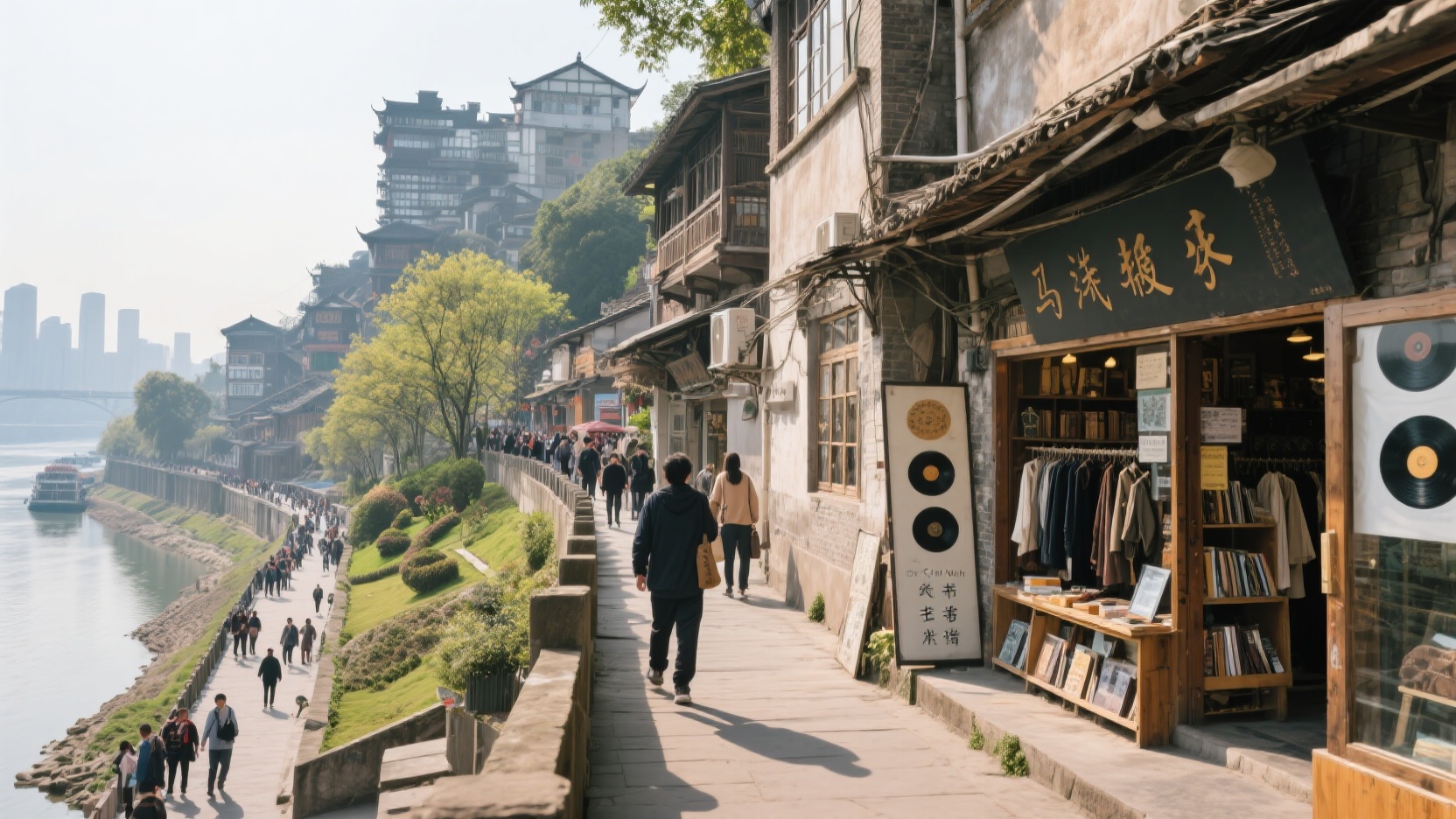
This approximately 4-kilometer stretch of old alleyways along the south bank of the Yangtze River was a route I only managed to walk smoothly on my eleventh trip to Chongqing. Before, I would either take the wrong turn at a fork in the road in Xiahaoli or get so engrossed in watching the cable car at Ma'anshan that I almost missed the Blue River Bridge before dark. Later, I fixed my starting time at 2:30 PM, beginning at the "Shangxin Street Light Rail Station," and walked without looking back, finally turning it into a replicable cultural and artistic Citywalk.
It avoids the crowds of Hongyadong and Shibatidi, connecting old buildings from the port's opening to the outside world, stilted bookstores, community markets, vintage clothing and vinyl record shops, and cliffside pocket parks on the same walking route. The entire route is divided into six sections, taking about 85 minutes on foot, but it is recommended to allow at least 4 hours including stops.
Section 1: Shangxin Street to Longmenhao Old Street (approximately 600 meters, 10-minute walk)
After exiting the Shangxin Street light rail station, don't rush down to the riverbank. First, walk slowly down Longmen Road towards Longmenhao Old Street. This area has steep stone steps and sharp bends, serving as a "warm-up slope" for the entire route.
The blogger positioned their camera near the stone railing under the banyan tree at the entrance: the old brick building and the Dongshuimen Bridge, one in front of the other, create a sense of "old Chongqing and new bridge city" in the photos. It's worth stopping for 5 minutes to look around because the former customs villa and the stone walls from the port opening period haven't been fully renovated. In the afternoon, the light filters through the brickwork and archways, creating a perfect contrast of light and shadow with the moving shadows of the light rail on the bridge.
If it happens to be before 3 p.m., the sunlight will be shining obliquely into the arched window, and you can wait for a light rail train to come into view from the same spot.
Core section: Longmenhao to Xiahaoli (approximately 800 meters, 15-minute walk)
Turning into Xiahaoli from the connecting staircase in the middle section of Longmenhao, you will pass several side gates of embassy villas from the War of Resistance against Japan. The gates are small, and the stone gate carvings and moss are often more detailed than the main gates.
Xiahaoli is the most culturally rich section. Hidden among the stilted houses are independent bookstores, vinyl record stores, and vintage clothing shops, all with small storefronts, some requiring a climb up several old wooden stairs. You can press your camera against the wooden windows of a bookstore and shoot outwards, capturing the old tiled roofs and the distant river in a single frame. Why stop for five minutes? Because here, unlike in a commercial district, there's no rush. Most shop owners are willing to let you listen to a record or flip through a few pages of a book. Southwestern folk tunes waft from vinyl speakers, and once you sit down, it's easy to lose track of time.
You don't need to have a specific shopping purpose when you visit this area. Many small shops are exhibits in themselves. Remember to lower the ISO of your camera, as the indoor lighting is rather dim.
Branch Line 1: Rice Market Street Intersection (approximately 500 meters round trip, 10-minute walk)
Turn into the "Rice Market Street" sign in the middle of Xiahaoli. This is a side street that many tourists miss. The street is about 500 meters long, and the old foreign company warehouses and blue brick arched windows are in a mottled state. Bamboo chairs and flower pots belonging to nearby residents are piled up at the base of the walls.
The camera is positioned at the end of the stone steps at the end of Rice Market Street, looking back up to capture the old warehouse's wooden windows, the stilted houses of Xiahaoli, and the distant Dongshuimen Bridge all in one frame. It's worth watching for 5 minutes because the walls retain traces of repairs from different eras, like an open-air history book of the port's architecture.
Don't wear new shoes on this side trail, as the stone steps are very slippery when the moss grows in the spring.
Fireworks section: Tushan Road to Shangxin Street Market (approximately 900 meters, 20-minute walk)
Emerging from the other end of Xiahaoli and crossing Tushan Road, the tourist density immediately decreases. Along the street are old tea stalls, tailor shops, and noodle shops selling pork intestines at the foot of residential buildings. The shadows of trees cast on the gray walls reminiscent of the 1970s and 80s make it a perfect spot for street photography.
Walking to the community market behind the Shangxin Street roundabout, you can lower your camera and squat at the intersection to photograph the bamboo baskets, red peppers, and vendors in blue aprons. Why is it worth stopping for five minutes? The shouts, the rising and falling scales, and the rustling of plastic bags here are the most authentic everyday white noise of Chongqing's old communities, more vivid than any cultural and creative exhibition.
Every time I go, I buy a bag of freshly weighed shredded beef at the market entrance. It's not expensive, and I eat it while walking. It's the most down-to-earth part of the whole route.
Branch Line 2: Ma'anshan Community uphill fork in the road (approximately 600 meters, 15-minute walk)
Turning off the small road next to the market onto Ma'anshan Mountain, you'll enter an old community built against the mountainside. Several family-run cafes and pubs line the stone steps, wind chimes hang from their balconies, and the roots of banyan trees have created cracks in the old walls.
The camera is positioned on the highest platform in Ma'anshan Community Park, offering a panoramic view of the Yuzhong Peninsula and the Yangtze River Cableway. Why stop and watch for 5 minutes? In the evening, backlit by the sun, the cable car cabins glide like small boxes between the buildings, and the river surface shimmers with gold—making it the most photogenic spot on this route.
This branch road has the steepest gradient, so it's recommended to slow down and stop at a roadside coffee shop for water.
End point and summary: Pocket Park under the cliff at Dongshuimen Bridge (approximately 700 meters, 15-minute walk)
Descend slowly from Ma On Shan to the cliffside trail next to the Socialist Academy; this is actually a pocket park frequented by locals for leisurely walks. Arrive half an hour before dark, when the blue sky and the lights of the Dongshuimen Bridge illuminate simultaneously.
Personal experience summary: The entire route is approximately 4 kilometers, taking about 85 minutes on foot. With stops, it's recommended to allow at least 4 hours. Tips to avoid pitfalls: Don't rely entirely on navigation; there are many alleyways and forks in the road. Familiarize yourself with the banyan trees and stone steps for better direction. Stone steps are often covered in moss after rain, so wear non-slip shoes. Longmenhao is most crowded at midday on holidays; starting after 2:30 PM is a better time to avoid peak hours. In summer, be sure to bring water and mosquito repellent.
This route connects the river, bridges, old alleys, vegetable markets, and independent shops in the same walking path, bringing you closer to the fabric of Chongqing's old city than just checking off popular viewpoints.