
These 8 fresh delicacies from Yantai | Non-trendy, seasonal recipes I've compiled (tested and tested by the blogger to avoid common pitfalls)
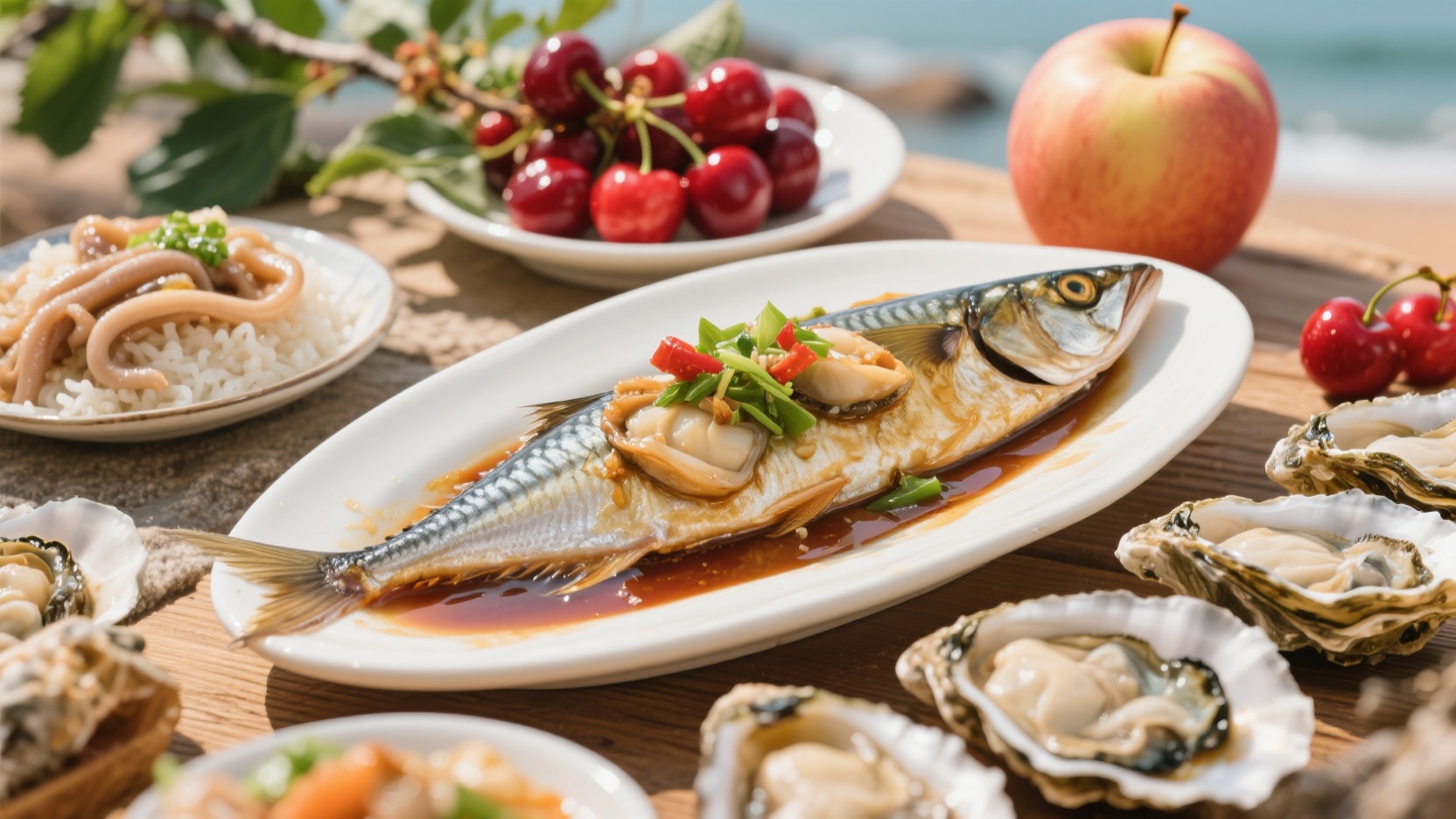
Having eaten in Yantai for five years, the biggest mistake I made wasn't going to the wrong restaurant, but not checking the seasonal calendar. For the first two years, I loved looking for cherries in winter and oysters in summer, only to find them either ridiculously expensive or pitifully thin. Later, I followed local friends to the seasonal markets and fishing ports, finally discovering that Yantai's truly fresh produce is arranged according to the "Twenty-Four Solar Terms." This post won't recommend trendy restaurants, but rather share eight limited-edition flavors I discovered after making those mistakes by following the seasonal calendar.
Around Grain Rain: Limited-time spring fishing season for mackerel and peach blossom shrimp.
Around the time of Grain Rain each year, there's an old saying in Yantai: "When the mackerel jumps, the father-in-law smiles." At this time, the mackerel migrate from their wintering grounds to the Bohai Bay. Their flesh is firm, with a thin layer of fat under their skin. After Grain Rain, by May, the flesh begins to dry out. Locals buy mackerel not only by looking at the eyes but also by squeezing the body; those that spring back quickly are considered fresh. The most authentic way to eat mackerel is in "mackerel dumplings," where the fish meat is minced, mixed with chives and a little fat, and the dumplings are as big as small steamed buns. More discerning families also make "mackerel balls," simply poached in clear broth to bring out the fish's natural freshness.
Another must-try during this period is Laizhou peach blossom shrimp. These small shrimp only appear for about ten days between Qingming and Guyu (around April 5th and 20th in the lunar calendar). They have soft shells and a pinkish color, and are gone once the season is over. Peach blossom shrimp don't need complicated seasonings. Locals like to stir-fry them with spring chives or toss them with a pinch of salt to enjoy their natural sweetness. The first year I went, I was three days late, and the market only had frozen shrimp left. They tasted fishy and were completely different from fresh ones.
From Grain Buds to Summer Solstice: The "Golden Ten Days" for Cherries and Sea Urchins in Cool Regions
Many people believe that Yantai cherries are available from spring, but greenhouse-grown and cool-climate-grown cherries differ by season. Truly delicious Yantai cherries are harvested around the time of Xiaoman (the 8th solar term), when the fruit is grown in cool-climate areas. These cherries have crisp flesh and a balanced sweet and sour taste, especially the Meizao and Hongdeng varieties. Picked in the morning, they arrive at the market with a bloom still on them in the afternoon. After the summer solstice, with increased rainfall, cherries are prone to cracking and softening, and their sweetness drops quickly. Locals don't ask about sweetness when buying cherries; they only ask if they are from cool-climate areas. When washing them, they don't remove the stems but soak them in salt water for a few minutes before rinsing.
Purple sea urchins are also limited to this time of year. From the Lesser Fullness of Grain (Xiaoman) to the Summer Solstice (Xiazhi) is when the sea urchin roe is at its fullest, and when you open the shell, it looks like a piece of golden, glistening "liver paste." In Yantai, there are two ways to eat them: the old-fashioned way is to eat them raw with a couple of drops of lemon juice; the newer way is to steam them with eggs, resulting in a perfectly tender texture. I once had sea urchin dumplings at a small restaurant near the fishing port; the filling was half sea urchin and half shrimp, so fresh that I didn't even want to dip them in vinegar. But sea urchins are sensitive to heat, and the roe dissipates after summer, so don't expect to find them in autumn or winter.
From the Autumnal Equinox to Frost's Descent: the peak season for swimming crabs and Yantai apples to be harvested fresh.
Autumn in Yantai begins with the autumnal equinox. When the Laizhou swimming crabs reach their peak plumpness, their navels bulge with roe. Locals buy crabs by holding them up to the sunlight to check if the pointed corners of the shell are full of roe. Unlike the southern style of steaming with ginger and vinegar, Yantai locals prefer to dry-roast or stir-fry with scallions and ginger to preserve the fresh, briny flavor of the sea. Once, I picked out a soft-shell crab at the market, and the vendor immediately told me not to buy it, saying it wasn't fully grown and would just release water when steamed at home.
Around the time of Frost's Descent, Yantai apples are truly harvested. At this time, the temperature difference between day and night is significant, allowing the apples to accumulate sufficient sugar, resulting in the highest probability of having a translucent "sugar core" when cut open. A local friend told me to choose apples with green stems and vertical stripes on the skin, not necessarily the reddest ones. Freshly picked apples are the crispest, and their aroma intensifies after a week. I tried picking them directly from the orchard on the day of Frost's Descent; one bite and the juice splattered all over my wrist—completely different from apples stored in supermarket cold storage for six months.
From the Winter Solstice to Qingming Festival: The "Cold Water Saturation Line" for Oysters and Sea Cucumbers
Unlike most seafood, the peak season for Yantai oysters is from the winter solstice to the Qingming Festival of the following year. The cold water allows the oysters to store more glycogen, resulting in plump, creamy meat. Locals choose oysters with tightly closed shells that feel heavy, then pluck them open and enjoy the juice along with the meat. Classic ways to eat them are "oyster and tofu soup" or "fried oysters"—the former for its refreshing taste, and the latter for its crispy exterior and juicy interior. After Qingming, oysters enter their breeding season, and the meat becomes leaner and softer.
Sea cucumbers from Yantai are another dish that "tastes better the colder it gets." Sea cucumber rice has become a popular local dish in recent years, but true Yantai locals know that sea cucumbers are at their crispest and sweetest between the beginning of winter and the beginning of spring, and they don't shrink or have a fishy smell when stir-fried. Restaurants often use chives to enhance the aroma of sea cucumber rice. The sea cucumbers are cut into sections, stir-fried quickly over high heat, poured over rice, mixed, and coated with sauce—one person could easily eat three bowls. I ordered it once in the summer; the sea cucumbers were small and soft, a completely different texture from those in winter.
Blogger's Summary and Practical Tips
Eating according to the solar terms in Yantai isn't some mystical art; it's a hard and fast rule based on local produce and temperature. After five years of traveling around, I finally realized that those "signature seafood" dishes that appear on menus year-round are often just frozen or imported goods. What locals really crave are the short-lived seasonal seafood items that only appear in the market for ten or twenty days.
Here are some practical tips for first-time visitors to Yantai: 1. Check the solar terms before booking tickets. For example, go for mackerel during Grain Rain, cherries during Lesser Fullness, apples during Frost's Descent, and oysters during Winter Solstice. Timing is crucial; 2. Choose accommodation near a market or fishing port in the old town. The morning market is busiest before 7 am, so buy whatever the locals are carrying. 3. Don't just focus on seafood stalls when ordering. Small restaurants in Yantai prioritize "what's available that day." Ask the owner directly, "What's local today?" It's more effective than looking at the menu. 4. Don't stock up on things you can't eat immediately. Seasonal freshness loses its essence once the seasons change, and freezing it will ruin the texture.
You only learn after making mistakes. In Yantai, eating according to the seasons is the right way to experience the city.