
Xuzhou's Hidden Art and Culture Map: 8 Spiritual Corners from Old Factory Art Museums to Community Cafes
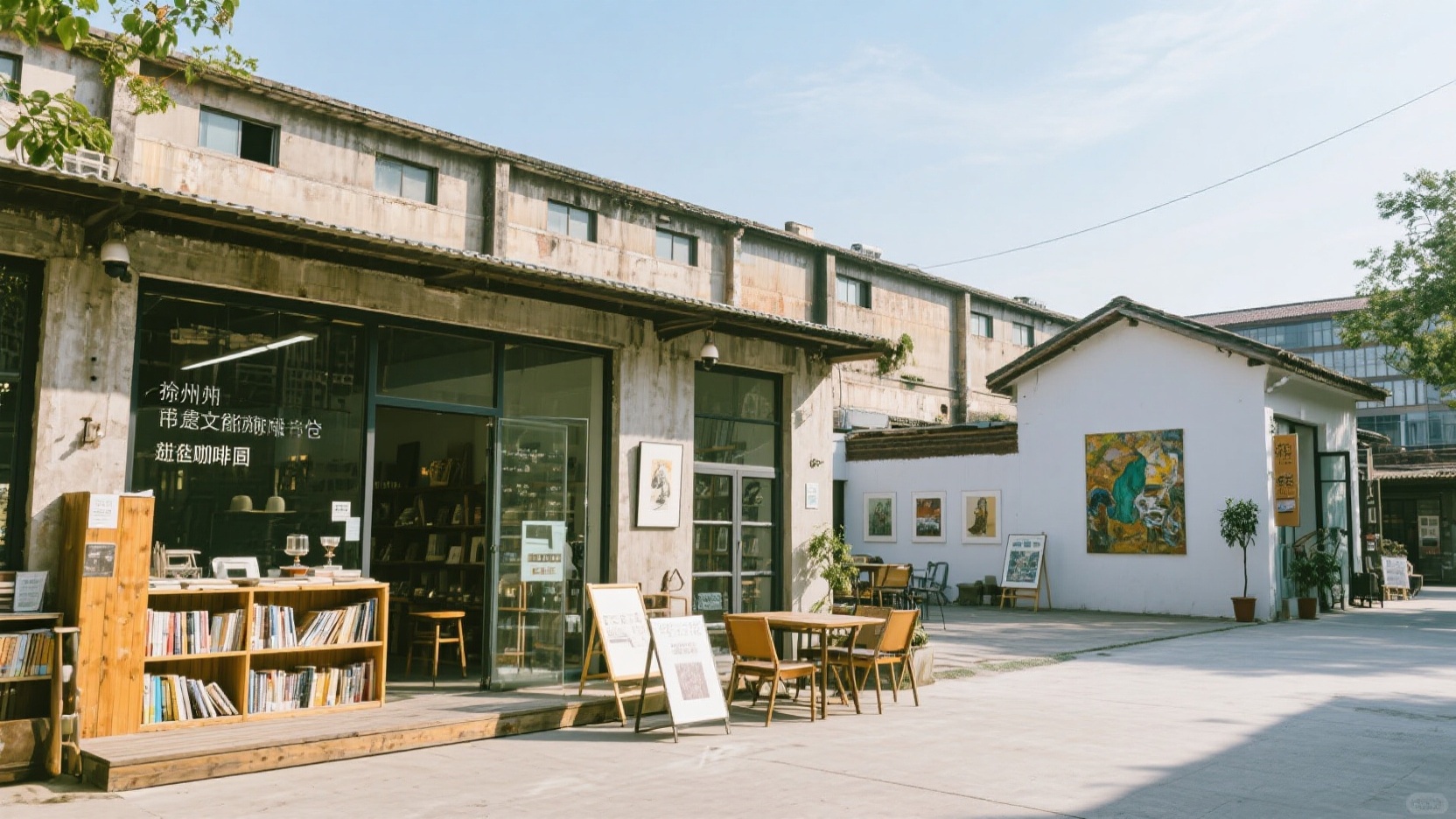
Xuzhou's artistic heritage isn't just hidden in Han Dynasty stone carvings and museum displays; it's also scattered throughout the everyday fabric of cultural and creative parks transformed from old factories, vintage warehouses, and community cafes. Compared to the well-known Han Dynasty cultural scenic spots, these locations are smaller in scale, yet they preserve a more relaxed and youthful spirit of the city. The following eight spots can be connected on foot or by short bike rides, perfect for setting aside half a day for leisurely exploration.
I. Weaving and Cultural Creative Park: Industrial Breathing Under the Serrated Skylight
Converted from a former textile factory workshop, the red brick walls and sawtooth skylights have been completely preserved. The park is not overly commercialized, but rather houses independent design studios, small exhibitions, and weekend craft markets. Its atmosphere is rugged and restrained, with peeling paint revealing traces of past processes. The highlights are the building's lighting structure and the semi-open nature of the studios, where exhibitions are often being set up and can be observed. It's recommended to visit between 3 and 4 pm to take advantage of the oblique light from the skylights to capture industrial-style portraits against the red brick walls, and to photograph clean geometric lines at the stairwell corners and intersections with old pipes.
II. Unread Book Bureau: Local History Shelves in Old Residential Buildings
Hidden on the ground floor of an old residential building, the bookstore has an unassuming entrance, revealing walls lined with bookshelves and old wooden floors. The selection leans towards art, architecture, and local history of Xuzhou, featuring a dedicated "Xuzhou Memories" shelf with local photo albums, old maps, and a small selection of rare art books. Handwritten recommendation cards from the owner are placed along the spines of the books, adding a high density of information. There's no coffee area, making it more of a pure reading space. For photography, it's recommended to use the natural light at the wooden tables by the window to capture the reading scene; the depth of the bookshelves allows for symmetrical composition. Photographing the details of the book spines and recommendation cards is more evocative than broad shots; please be mindful not to disturb other readers.
III. Warehouse No. 3 Art Museum: White Cube Experiments in an Old Warehouse
Converted from an old warehouse, the art museum retains its concrete columns and high ceilings. Exhibitions primarily feature solo shows by young artists, installations, and videos, with frequent updates. The space has a rugged yet refined feel, with a continuous contrast between the white-box walls and the original industrial structure. The highlight is how experimental works relate to the beams, columns, and floor traces of the old warehouse; installations often require walking around to view them. Photography is best done against solid-color backgrounds or in front of large-scale works, or by framing views using the columns. Note that flash photography is generally prohibited. The museum is quieter on opening days in the afternoon, perfect for a slower pace.
IV. Old Warehouses Under the City Wall: Xuzhou in the 1980s that Were Preserved
This place collects old doorplates, enamel mugs, sewing machines, industrial parts, and old furniture from Xuzhou, recreating a family living scene from the 1980s. Under the warm yellow light, the old objects are not just displays in glass cabinets, but rather tangible traces of life that you can touch and sit down to experience. Highlights include a wall of old Xuzhou trademarks, an old drawer cabinet, and an old sewing machine that still works. For photography, it's recommended to wear retro colors, use old sofas and lamps as foregrounds, and shoot details from above rather than panoramic views for a more story-telling effect. When taking portraits, sit next to an old rattan chair and let the ambient light fall naturally on your profile.
V. South Wall Coffee: A corner for hand-drip coffee and independent publishing in the community.
Located on the ground floor of an ordinary residential building, the shop has limited seating and primarily serves pour-over and cold brew drinks. The walls are adorned with works by local illustrators. Inside, there's a small independent publishing corner where you can browse brochures, maps, and photography collections related to Xuzhou's urban memories. The atmosphere is quiet and casual, with most customers being local residents, making it a suitable rest stop along the way. For photography, it's recommended to sit at the counter and capture the brewing process, using the steam and lighting to enhance the ambiance. Seating near the entrance can be used with greenery or a half-open door as a foreground; the morning light is softer, while the afternoon is ideal for taking photos of the window views.
VI. White Night Gallery: Small-Scale Expressions in Printmaking and Local Imagery
The space is small, focusing on prints, photography, and works on paper. It features a permanent collection of urban photographs by local photographers and also sells limited-edition prints. The space is largely white, with spotlights drawing attention back to the images. The highlights are the attention to detail in the small-scale works and the constantly changing scenes of Xuzhou's streets and people in the images. It's quieter than large art museums, perfect for viewing at a leisurely pace. When taking photos, it's advisable to maintain distance from the artworks, capturing the viewer's back or using the spotlights' projections on the ground to add depth. When photographing details of the paintings, turn off your phone's flash to avoid glare.
VII. Boiler Room Art Bookstore: Black Vinyl Records and Magazines Under a Black Steel Frame
Converted from an old boiler room, the industrial pipes and black steel frame were all preserved. The first floor features independent magazines and an art book wall, while the second floor houses a vinyl record listening area. The space has a rugged feel, but the selection of items is soft, emphasizing visual design, urban culture, and independent publishing. Highlights include the independent magazine wall, the vinyl record listening area, and the overall structure viewed from the second-floor platform. For photography, it's recommended to shoot from below under the pipes, looking up at the space's lines. Wearing headphones in the listening area and looking sideways can help avoid a cluttered background; the vinyl record covers have rich colors and are suitable for use as a foreground for blurring.
8. Slow Printing House: A Landscape of Movable Type Amidst the Smell of Ink
This is a traditional letterpress printing workshop, preserving a large number of metal type and old-fashioned printing presses. The space is filled with the strong smell of ink, and the workbenches are piled high with type, cardstock, and semi-finished products. The highlights are the wall of type and the process of making handmade cards. If you happen to witness a craftsman setting out the type, you can quietly observe. The atmosphere is more like an old workshop still in operation than a static exhibition space. When taking photos, it is recommended to use the lamplight to capture details of the typesetting table. When the metal type is closely packed, use macro or a wide aperture. For scenes of people working, it is best to take close-up shots of their hands and avoid using flash, which may interfere with the work.
These eight locations are not far from each other and can be connected on foot in sections, allowing you to see another side of Xuzhou in half a day. Measure the spiritual corners of this city with your footsteps.