
The Twelve Hours of Naan and Meat: Eight Street Foods Locals in Urumqi Eat from Morning to Night
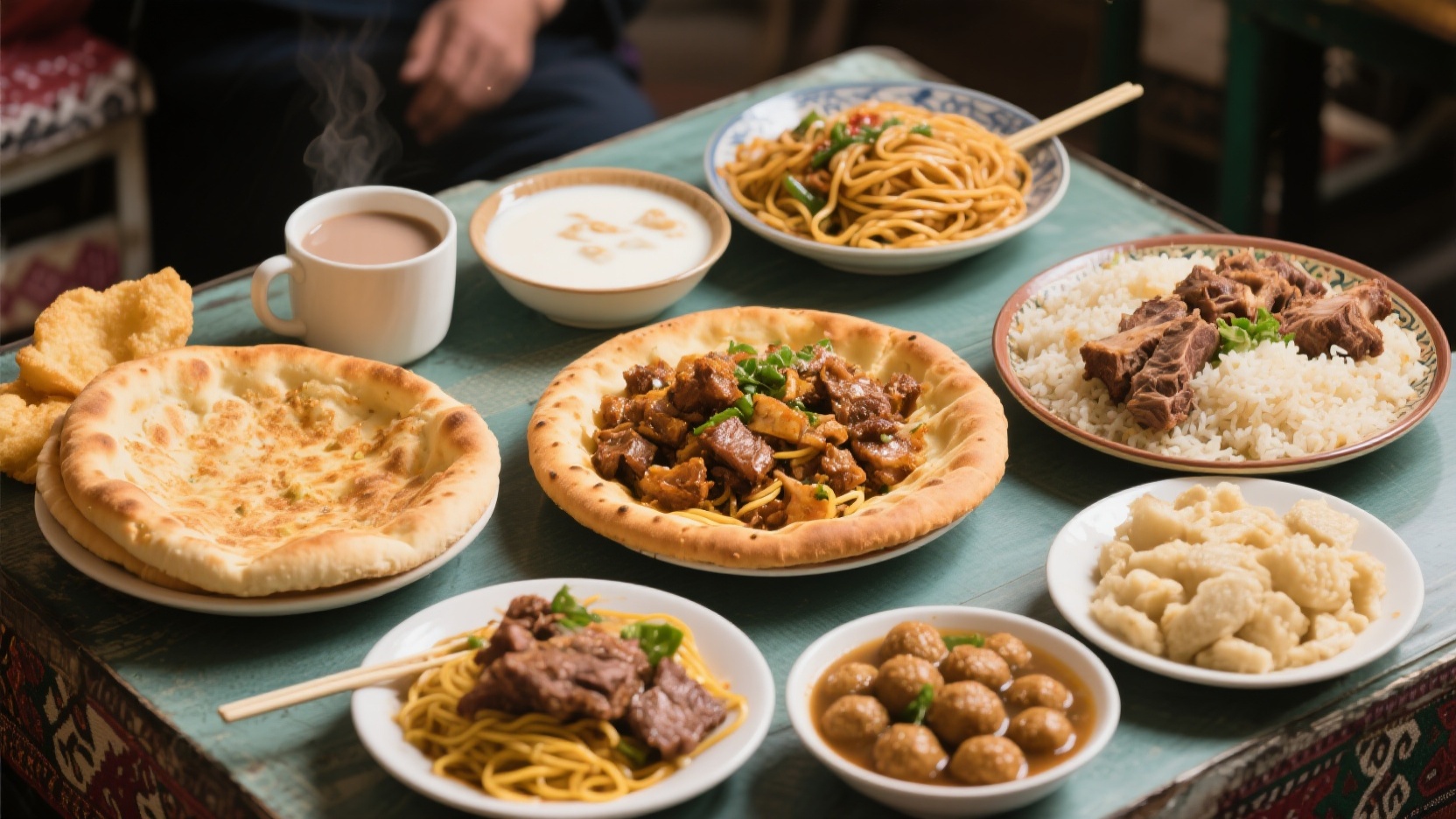
A day in Urumqi begins with a pot of piping hot salty milk tea and a freshly baked naan bread. Locals don't care much for fancy presentation at their meals, but they follow a timetable that has been followed for many years: a savory hot meal to wake up the stomach in the morning, a hearty staple food to sustain energy at noon, dairy products and pastries to transition in the afternoon, and roasted meat and hot soup to conclude the day late at night.
Early Morning Breakfast: Salty Milk Tea with Naan
Salty milk tea is not sweet; it's made by boiling brick tea, cow's milk or goat's milk with salt, and sometimes a small amount of ghee. The preparation emphasizes "raising the tea," repeatedly ladling and pouring the tea and milk over each other to ensure full blending. It has a salty, slightly astringent taste with a rich milky flavor. It's served with freshly baked hot naan bread; a piece is broken off and dipped into the tea, or simply soaked until soft and eaten. For the people of Urumqi, this bowl of milk tea is not only for warming the body but also signifies the start of a day's work.
Early Morning Breakfast Shop: Baursak
Baursak is a common fried pastry among the Kazakh people. It's made with flour, yeast, milk, eggs, and a small amount of salt or sugar. After fermentation, the dough is cut into small pieces and deep-fried until golden brown. It has a crispy exterior and a soft interior, with a slightly milky and sweet-salty flavor. It's often served with salty milk tea at breakfast stalls and is also eaten dipped in honey or ghee. Originally a portable dry food for nomadic life, it remains a quick and easy breakfast choice for locals.
Lunchtime at a local eatery: Stir-fried pork noodles
Braised beef noodles are a common lunch for office workers in Urumqi. Slices of beef tenderloin or lamb leg are marinated, quickly stir-fried in hot oil, then stir-fried with green and red peppers, onions, tomatoes, and garlic. Finally, the sauce is poured over hand-pulled noodles. The noodles are chewy and smooth, the meat is tender and not dry, and the broth is savory with a hint of tomato acidity. In these small, local eateries, "free extra noodles" is common, and a bowl of this can keep you full all afternoon.
Lunchtime at a local eatery: Lamb pilaf
Lamb pilaf is made primarily with bone-in lamb, carrots, radishes, onions, and rice. The lamb is first stir-fried until the fat is rendered, then the radishes and soaked rice are added and simmered. The finished dish features glistening rice grains, tender lamb, and the sweet aroma of the radishes. Locals often eat pilaf with a small bowl of yogurt to cut through the richness, and sometimes a thin-skinned steamed bun. In Urumqi, pilaf is both a weekday lunch and a respectable main dish for entertaining guests.
Afternoon Tea Snack: Yogurt Curds
Yogurt curds are a traditional dairy product of nomadic peoples. Fresh milk is boiled, cooled, and then yogurt is added for fermentation. The cream is skimmed off, and the mixture is boiled again. After filtering out the whey, it is shaped into balls and set by sun-drying or air-drying, sometimes with added salt. The texture varies from soft and chewy to hard and dry, with a sour and salty taste and a very strong milky flavor. Local families often eat it as an afternoon snack, enjoying it slowly with naan or tea. It serves as both a source of protein and an ancient way of preserving milk.
Afternoon Tea: Bahari
Bahali is a common honey walnut cake in Uyghur households. Eggs are beaten with brown sugar and honey, then flour, chopped walnuts, raisins, and a small amount of mutton fat or ghee are mixed in and baked into a thick, dark brown cake. It has a dense, smooth texture, a prominent nutty aroma, and a restrained sweetness. A small piece is often served with tea in the afternoon, a common accompaniment for entertaining guests and for everyday tea breaks, and it frequently appears on festive tables.
Late-night food stall: Yellow noodles and grilled meat
Yellow noodles are alkaline cold noodles, cooked, rinsed in cold water, and then mixed with minced garlic, vinegar, chili oil, and shredded cucumber—a tangy and spicy flavor that whets the appetite. Grilled meat refers to lamb skewers, simply seasoned with salt, cumin, and chili powder, rendered of fat over charcoal. At late-night food stalls, both are often ordered together: a bite of cold noodles, a bite of grilled meat, and a glass of ice-cold kvass. This combination is a relaxing way to unwind after get off work on a summer night, the alternating sensations of sour and spicy, cool and hot in the mouth.
Late-night food stall: Meatball soup with fried dough sticks
The meatball soup is made primarily with beef meatballs, beef bone broth, glass noodles, frozen tofu, greens, and mushrooms, with plenty of white pepper sprinkled on top. The oil-fried dough is made by spreading mutton fat on leavened dough, sprinkling it with Sichuan peppercorn salt, rolling it up, and steaming it, resulting in distinct layers. A bowl of this late at night offers a clear, fresh, and slightly spicy broth, firm meatballs, and soft oil-fried dough. It's especially suitable for cold nights, providing a warm ending to the day.
From the salty milk tea of the morning to the meatball soup of the night, the taste timeline of Urumqi residents is not fancy, but solid and direct. From the streets to the alleys, you can understand this city through its food in a day.