
Half a Day of Leisure in Tangshan: Stepping into the Backstage of Shadow Puppetry, Yangko Dance Troupes, and Handmade Paper Workshops, Spending Half a Day as a Local from Eastern Hebei
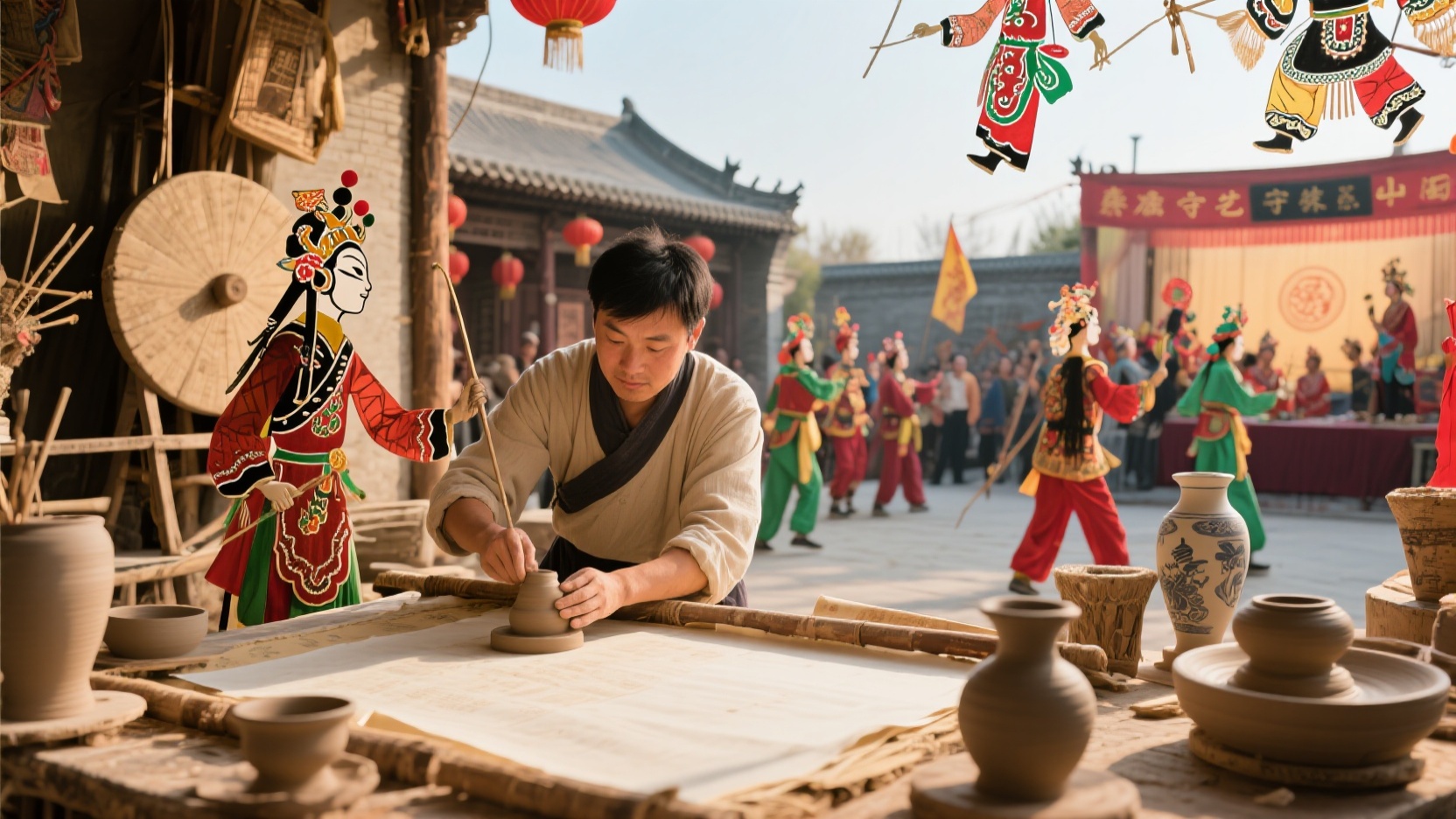
Tangshan is often interpreted as a "steel city," but if you shift your focus from the blast furnaces to the streets and alleys, you'll discover a different dimension: the gongs and drums of Jidong shadow puppetry, the fan-shaped dance of the local folk songs, the pulp in the papermaking pools, and the clay on the ceramic wheel. These festivals, folk customs, and intangible cultural heritage crafts are the most direct entry points to understanding this city. The following four scenes don't require a rush to check off tourist attractions; instead, set aside half a day to sit down and experience life as a local.
Luanzhou Yangko Dance: The "clowns" in the temple fair processions are the most skilled.
In terms of timing, Luanzhou Yangko dance is most concentrated from the Spring Festival to the Lantern Festival (January 15th of the lunar calendar), and can also be seen at the Jingzhong Mountain Temple Fair on the 18th day of the fourth lunar month and at the Luanzhou Ancient City Festival. Especially at the Jingzhong Mountain Temple Fair, pilgrims and Yangko troupes meet outside the mountain gate, with the sound of gongs and drums resounding from dawn to afternoon. The troupes walk and sway along the stone steps, and the smell of incense and cosmetics mix together, making it the most vibrant scene of festivals in eastern Hebei.
Unlike the thrilling stilt dance, ground yangko keeps the feet on the ground, relying on expressions and movements. The most eye-catching performers are usually the "ugly old woman" or "plaster-wielding man," whose exaggerated and impromptu antics elicit laughter from the audience, making the clowns twist and turn with even more energy. Before taking photos, stand at the back of the line and learn the cross-step. Experienced performers will start by teaching the "heel press," emphasizing "steady yet playful, playful yet charming." The fan isn't just a prop; its opening and closing should move in opposition to the footwork. Learning a short, humorous phrase is more memorable than watching it ten times. The underlying logic stems from the rural labor and temple fairs of eastern Hebei; yangko itself is a social activity inherent in village festivals.
Tangshan Shadow Puppetry: Go behind the curtain to see "a single voice narrating a thousand years of history".
Tangshan shadow puppetry, also known as Leting shadow puppetry, is one of the "Three Flowers of Eastern Hebei." Performances are frequently held during festivals at the Tangshan Museum, Nanhu Scenic Area, or Luanzhou Ancient City, and exhibitions are also available at other times to observe its production. When watching a performance of excerpts from "The Five Peaks" or "The Generals of the Yang Family," pay attention to the "pinched throat" singing style: the performer pinches their throat between their thumb and forefinger to produce a high-pitched, bright tone—this is the most distinctive feature of Tangshan shadow puppetry. Old artists often say, "One mouth narrates a thousand years of history, two hands command a million soldiers," which perfectly describes the high density of performance in shadow puppetry, where one person plays multiple roles.
What's truly worth experiencing is going backstage. A shadow puppeteer often manipulates three rods with both hands, singing and reciting simultaneously, while also stepping on gongs and drums. The puppets' joints are assembled after being carved from donkey hide; somersaults, beard strokes, and sleeve flicks all rely on wrist flicks, twists, and turns. If permitted, you can pick up a puppet and try to make it walk three steps steadily. You'll find that making the puppets "obey" is much more difficult than you imagine. Shadow puppet carving involves processes such as scraping the skin, drawing patterns, carving, coloring, and pressing. The semi-finished products hanging on the backstage wall are a brief history of the craft.
Qian'an Handmade Papermaking: A Northern Paper-Making Village Emerges from a Pool of Pulp
Qian'an, known as the "Paper Town of the North," produces handmade paper using mulberry bark and cotton stalks as raw materials. Historically, it has long supplied paper for calligraphy, painting, and official use in the capital region. Experiences are typically held in Qian'an's handmade papermaking workshops or intangible cultural heritage venues. Autumn is the best season for paper production, but it can be done year-round. The master craftsman will first let you touch the pulp to judge the fiber length. Then, holding a bamboo screen with both hands, he will tilt it into the pulp vat and gently swirl it back and forth two or three times. This step is called "swishing the screen," and the thickness depends entirely on the smoothness of his wrists. Water leaks through the screen's seams, leaving the fibers evenly on the surface. The screen is then covered, the paper is pressed, brushed, and dried.
Don't underestimate the importance of repetitive movements; the first three sheets are often uneven in thickness. The master craftsman's saying, "Hands must be steady, mind must be calm," encapsulates not only the papermaking process but also the life philosophy of the people of eastern Hebei. Qian'an handmade paper has long been used for calligraphy, painting, and restoration. After completion, you can ask the craftsman to stamp a small mark on the corner of the paper to take home as a bookmark or letter paper.
Tangshan ceramics hand-thrown: Sitting in front of the "Northern Porcelain Capital" wheel
Tangshan is known as the "Porcelain Capital of the North," with its kilns burning for centuries, from the Ming Dynasty's earthenware kilns to modern bone china. Today, in ceramic cultural and creative parks or workshops, you can sit down and experience hand-throwing. Don't rush onto the wheel after receiving the clay; the key is to knead the clay to remove air bubbles and find the center. Support yourself with your elbows, cup the clay in your palms, and shape it into concentric circles as the wheel rotates. When making a hole, press your thumb vertically down, then slowly lift; the cup wall will rise from between your fingers. Tangshan bone china is famous for its thinness and translucency, but hand-throwing experiences usually use more malleable clay or coarse porcelain clay, suitable for beginners.
Pottery masters often say, "The clay follows the hand, and the mind follows the hand's steady hand." Every inch of deviation in the throwing process will be left on the clay body, and cannot be concealed after firing. This immediate feedback makes the experience solid. If you are not firing that day, you can ask the master to repair the clay body, let it dry, and take it with you. If there is a pottery market nearby, you can also see the translucent quality of bone china, as thin as an eggshell, and understand that "the porcelain capital of the North" is more than just a signboard.
What these four scenes have in common is that they all require you to give your hands and attention. The festive drums never stop, the workshop wheels keep turning, but their true charm lies not in watching, but in participating. Spend an afternoon in Tangshan, learn a Yangko dance, manipulate shadow puppets, swing a piece of paper, or make a clay pot—this will leave a deeper impression of the city's warmth than a fleeting visit.