
Suzhou 5-Day Slow Travel Itinerary | Tested with Parents | Elevator Accessibility Checklist + 2-Hour Daily Nap Checklist to Avoid Common Pitfalls
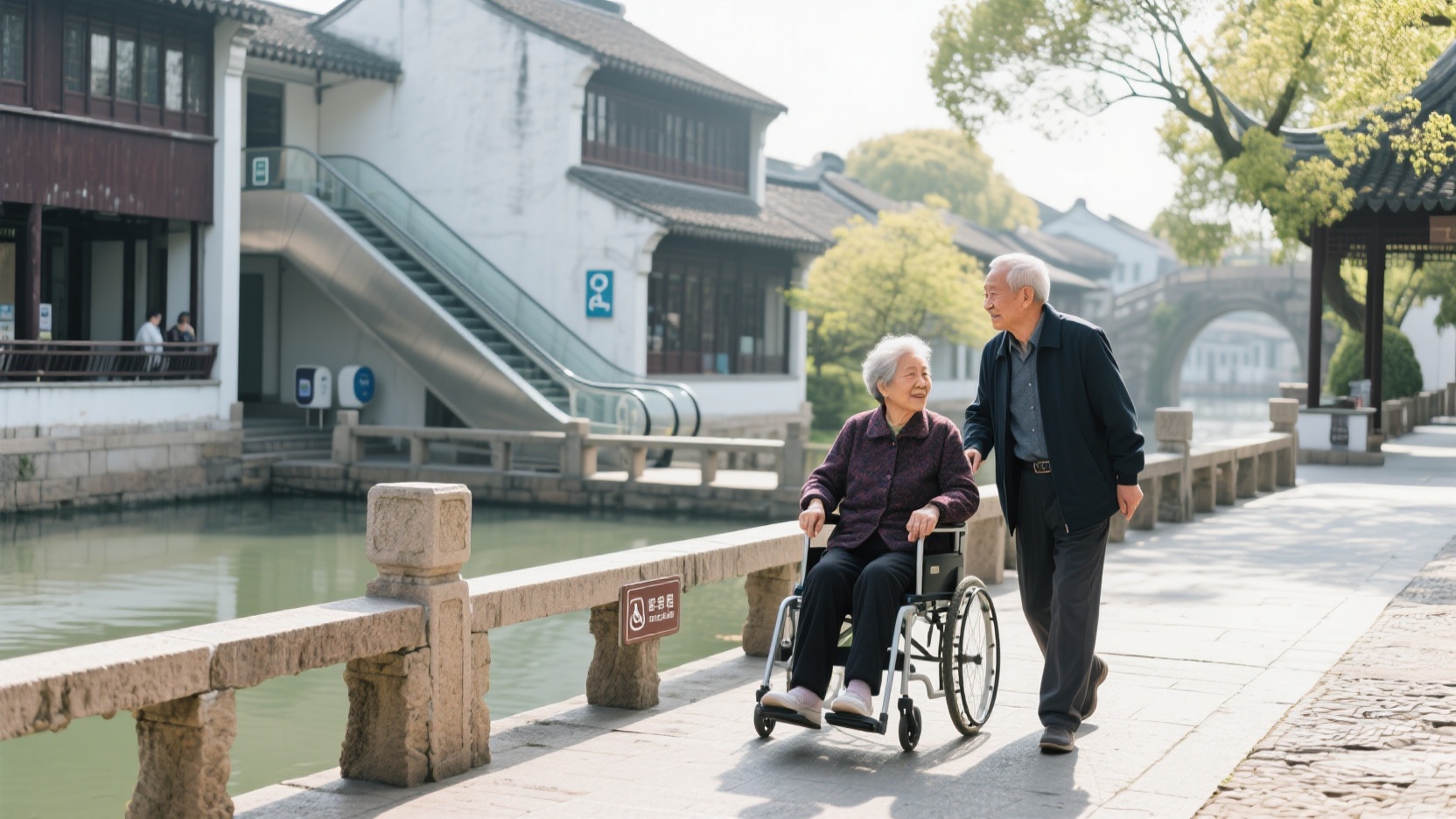
First, consider three things when choosing accommodation: elevator, toilet density, and hospital accessibility.
When traveling with my parents in Suzhou, I wouldn't recommend the old-style guesthouses on Pingjiang Road; the cobblestone streets make dragging luggage and wheelchairs difficult. This time, we stayed at a mid-range chain hotel near Leqiao Metro Station. It had an elevator, a lobby with public restrooms, and plenty of convenience stores and pharmacies nearby. Most importantly, there was a tertiary general hospital about an eight-minute drive away, so I wasn't worried if my parents' blood pressure fluctuated at night. Every day before leaving the house, I would check the navigation and change any routes that were "more than 800 meters away" to taxis.
Many hotels in Suzhou's old city advertise themselves as having a "traditional charm," but in reality, they lack wheelchair accessible facilities. Before booking, I always call to confirm whether both elevators are working properly and whether there are steps between the room and the elevator entrance. For seniors, the biggest fear is getting up at night, so the location of the toilet is more important than the view.
Day 1-2: Only half of the garden was visited, with lunch break as a mandatory part of the itinerary.
On Day 1, after arriving in Suzhou, we didn't rush to visit any scenic spots. In the afternoon, we only went to the northern section of Pingjiang Road, walking about 600 meters before turning back. The toilets along Pingjiang Road were more numerous than in the previous two years, but the stone-paved road was uneven, and my mother, using a cane, had to dodge tricycles. We found a riverside bench at the intersection of Baita East Road to sit and listen to Pingtan (a traditional Suzhou storytelling and ballad singing art), not intending to walk to the southern section. We went back to the hotel and slept until 4 pm, and in the evening, we only ate Suzhou-style soup noodles nearby.
On Day 2, we visited the Lingering Garden (not the Humble Administrator's Garden) in the morning. The advantage of the Lingering Garden is its continuous corridors, which are slippery when wet, and wheelchairs can be easily pushed from the entrance to near the central waterside pavilion. We only explored the eastern and central half of the garden, skipping all the arched bridges and rockery steps. The restrooms were clearly marked, and my mother went twice. We left the garden at 11:30 am to return to the hotel for a midday rest, and then went to the Master of the Nets Garden at 3 pm. We didn't participate in the night garden activity. The Master of the Nets Garden is even smaller; a complete loop takes less than a thousand steps.
The key takeaways from these past two days: Only explore the "essential half" of a garden; don't try to walk the entire thing. Allow at least an hour between each attraction to find a restroom and have a drink. Try to keep your daily walking under 6,000 steps. A midday nap is not an option; it's crucial to prevent afternoon hypoglycemia.
Day 3: Choose between an ancient town and a hot spring; explore both slow-paced options.
If your parents are still able to walk, choose Tongli Ancient Town. It's about a 40-minute taxi ride from Suzhou city center. There are electric shuttle buses from the parking lot to the visitor center, and the accessible restrooms at the visitor center are very clean. The ancient town has many bridges and steps; I only took my mother along the flat riverside path for about one kilometer, avoiding the alleyways. Staff at the docks of the rowboats provide assistance, making boating less strenuous than walking. We ate white fish by the river for lunch, and had to be back at the hotel for a nap before 2 PM. There's a level-two hospital near Tongli, about a 10-minute drive away; you can mark it on a map beforehand.
If your parents are sensitive to the cold or have knee problems, choose a hot spring hotel in the Shushan area. I prefer these hotels because they have elevators, short routes from the rooms to the hot spring pools, and handrails and non-slip mats along the pool edges. We had brunch at the hotel after waking up in the morning, soaked in the hot spring at 10:30 am, rested in our room for lunch, and soaked again at 4 pm, finishing before dark. The hot spring lounge had blankets and warm water, and my mother didn't experience any dizziness after soaking. The downside is that these hotels are often located in the suburbs, so check the location of hospitals within 20 kilometers beforehand and don't be misled by advertisements for "private hot springs."
The key to choosing between the two options isn't which is more fun, but whether you can guarantee a two-hour lunch break and be able to sit down whenever you want. If the weather forecast predicts rain, head straight to the hot springs; if it's sunny for several days in a row, only take the "half-way waterway" through the ancient town.
IV. Days 4-5: A low-walking version of the museum and lake view
On Day 4, we visited the Suzhou Museum in the morning, having made a reservation in advance. The museum has elevators and accessible pathways throughout, wheelchairs can be wheeled into the exhibition halls, and restrooms are available on every floor. We only visited the calligraphy and paintings on the second floor and the porcelain on the first floor, spending about an hour and a half there, without a guided tour. We returned to the hotel for lunch and rested. In the afternoon, we went to Yipu, a small garden where locals drink tea. There are stone benches under the eaves, and we spent more time sitting than walking.
Day 5, the return trip, we went to a shopping mall by Jinji Lake in the morning. The indoor air conditioning was stable, the number of restrooms was high, and there were elevators on every floor. The lakeside path was very flat; we only walked the section from Moonlight Wharf to Suzhou Center, about 500 meters one way. We returned to the hotel at 11:00 AM to pack, and then headed back in the afternoon. This way, the last day was almost completely unexhausting, and the elderly arrived home without feeling tired.
V. A Checklist for Medical and Toilet Safety for Senior Citizens in Suzhou
Over the five days, I did three things that were unrelated to "playing" but were very important: I checked the nearest level-two or higher hospital to the destination before setting off each day; I made sure my mother used the restroom before getting in the car; and I always carried a card in my bag listing her allergies and underlying medical conditions. The roads in Suzhou's old city are narrow, so taxis are more reliable than buses. I mostly used ride-hailing services, selecting the scenic area parking lot as the location rather than the main entrance to avoid walking hundreds of meters extra.
In terms of toilet density, Suzhou Museum, Jinji Lake Shopping Mall, Lingering Garden, and Tongli Visitor Center all meet the standards; toilets are less frequent in the middle section of Pingjiang Road and near Yipu Garden, so you should search for "public toilets" in your navigation app in advance. For elderly people with frequent urination, it's better to take a detour than to hold it in—this is a strict rule.
VI. Blogger's Summary: Taking parents on a trip to Suzhou – slow pace is not a compromise, but a necessity.
Throughout the five-day, four-night trip, my mother never complained of being tired, and her blood pressure was even more stable the day after we returned than before the trip. The most important thing about taking my parents to Suzhou isn't how many gardens we visited, but rather ensuring they took two hours of rest each day, walked no more than 6,000 steps, and knew exactly where the restrooms and hospitals were at every point in the city. Below are two lists I compiled; I suggest saving them before you go.
20-Item Packing Checklist for Seniors: 1. Folding walking stick; 2. Two pairs of non-slip soft-soled shoes; 3. One lightweight jacket; 4. Hat; 5. Thermos cup; 6. Commonly used medication containers; 7. Blood pressure monitor; 8. Blood glucose meter (if needed); 9. Reading glasses; 10. ID card and medical insurance card; 11. Allergy history card; 12. Disposable toilet seat covers; 13. Two packs each of tissues and wet wipes; 14. Small bottle of hand sanitizer; 15. Portable folding stool; 16. Chocolate or soda crackers; 17. Knee pads; 18. Band-aids and alcohol wipes; 19. Power bank and short charging cable; 20. Two raincoats.
Five common medication categories to remember: 1. Blood pressure medication: bring three days' worth extra. 2. Cardiovascular emergency medications, such as nitroglycerin tablets, should be carried on, not checked in. 3. Gastrointestinal medications: to prevent diarrhea due to traveler's environment. 4. Cold and fever medications: keep them on hand overnight. 5. Topical ointments: to prevent mosquito bites and eczema. Keep all medications in your carry-on bag, not in your suitcase, and include a label with instructions. Suzhou experiences large temperature differences between day and night in spring; it's better to bring extra medication than just a five-day supply.