
Avoid Pingjiang Road in Suzhou | Local's Guide to Avoiding Pitfalls: These 5 Areas are the Best Places to Stay
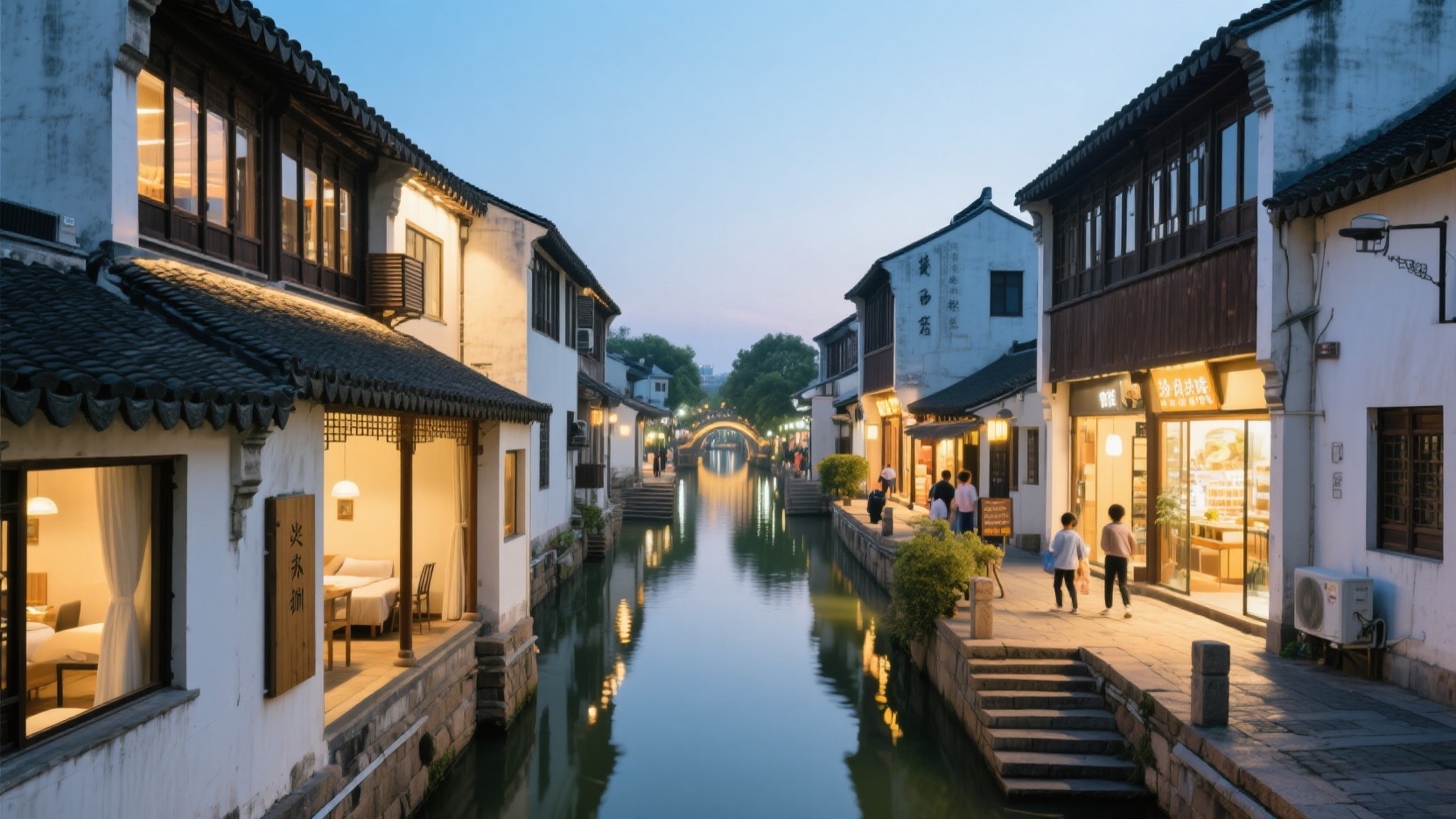
The last time I stayed with a friend from out of town on Pingjiang Road, I was woken up at 1:30 a.m. by the loud bass from a bar across the river, and then at 7 a.m. by the warning sound of a garbage truck reversing – this was the fifth time I had advised people not to stay in that area, but no one listened.
Suzhou accommodation guides invariably place Pingjiang Road, Guanqian Street, and Shantang Street at the top three, accompanied by beautiful pictures, making it seem like you haven't truly experienced Suzhou if you don't stay there. However, anyone who has lived in Suzhou for more than five years knows that these three areas are typical examples of "looking convenient but actually a nightmare to stay in." The problem isn't that they're bad for sightseeing, but rather that they're unsuitable for overnight stays. You can visit the attractions during the day and leave at night to find a place where you can actually sleep soundly. Below, I'll dismantle that pitfall and then provide five areas that locals would genuinely recommend.
I. Pingjiang Road Historic District: Dragging luggage on the stone-paved streets is just the beginning; the noise at night is the real problem.
Pingjiang Road appears to be close to the Humble Administrator's Garden and Suzhou Museum, with its picturesque bridges and flowing water, making it a must-see in travel guides. However, the cobblestone streets are actually very unfriendly to suitcase wheels. Many guesthouses are hidden in alleys, inaccessible to ride-hailing services and taxis, forcing travelers to drag their suitcases across three or four bridges.
Older houses generally have poor sound insulation; you can hear footsteps next door and water flushing upstairs. Riverside bars and teahouses stay open until the early hours, and the sound of water amplifies low-frequency noise, which can be unbearable for light sleepers. Some side alleys are dimly lit and have few security cameras at night, posing safety risks when returning home late.
2. Guanqian Street Commercial Area: Downstairs promotions continue until 10 PM, and the backstreets late at night make people feel even more uneasy.
Guanqian Street seems to be in the city center, close to everything. However, if you stay in a commercial or residential building or a guesthouse converted from an old village near the pedestrian street, the noise from electric vehicle horns during the day and outdoor restaurants and shops' promotional speakers will continue until very late at night.
Parking is difficult and expensive here, and many old buildings don't have elevators, so it's common to carry your luggage up several floors. If you walk through back streets and alleys late at night to return to the hotel, you might encounter drunk people or cats suddenly darting out; the safety isn't as high as the map suggests.
3. Shantang Street, from Xinmin Bridge to Xing Bridge: Highest tourist density, caught between dampness and early morning cleaning.
The most scenic section of Shantang Street is indeed suitable for taking photos in the evening, but the old houses along the river are damp, have many mosquitoes, and the rooms always smell musty. At night, the sounds of the cruise ship engines and the noise along the river make it virtually impossible to go to bed early.
The garbage trucks start work at 5:30 a.m., and the sound of them reversing and the clanging of the metal bins are their constant alarm clock. Taxis are stuck in deep traffic on Guangji Road, and while going to Tiger Hill and Lingering Garden seems close, public transportation often involves detours or traffic jams, making it not actually faster.
Suzhou Industrial Park, Hudong: The top choice for families with car-hailing needs and those with high sleep requirements.
This area is suitable for families with children, the elderly, those traveling by car, or people who prioritize cleanliness and quietness in their accommodations. It's not a tourist area, but it has well-developed amenities, with numerous shopping malls nearby such as Yuanrong, Jiuguang, and Eslite Bookstore. Dining options range from tens to hundreds of yuan per person.
It takes about 30 minutes by subway line 1 to the ancient city, and about 25 minutes by taxi to Pingjiang Road and Suzhou Museum. Jinji Lake is within walking distance, and evening walks along the lake are very safe. The roads are wide and heavily monitored, so returning to the hotel late at night is worry-free. Parking is exceptionally good, with ample underground parking in shopping malls and hotels.
The area around Shishan Road and Huaihai Street in the new district is a comfortable place for people who enjoy late-night snacks and Japanese food.
It's suitable for people who want to eat well, have a place to stroll at night, and don't want to be crowded with tourists. Huaihai Street is a gathering place for locals to eat Japanese food and have late-night snacks. It's still lively at 11 pm, but not chaotic.
Metro Lines 1 and 3 intersect here. It takes about 20 minutes to Shantang Street, 25 minutes to Pingjiang Road, and 20 minutes to Suzhou Railway Station. Hotels are mostly concentrated on both sides of the main road, with good nighttime lighting and plenty of convenience stores, so single women returning home late at night won't feel uneasy. Parking is better than in the old town, with underground parking garages in shopping malls and roadside parking lots, but traffic can be slow on the main road during the evening rush hour.
The area around Shiquan Street and Wangshi Garden in Gusu District: Want to experience the atmosphere of the old city but don't want to be woken up by tourist areas.
This area is perfect for couples, photography enthusiasts, and those who enjoy strolling through gardens in the early morning. It retains the atmosphere of old Suzhou, with small cafes, local noodle shops, and pastry shops, but it's not as crowded and noisy as Pingjiang Road. It's just a few minutes' walk to the Master of the Nets Garden and Canglang Pavilion.
Located about a 10-minute taxi ride from Pingjiang Road and Guanqian Street, it's considered a secondary core area of the old city. There are many restaurants, with locals queuing up at small shops from morning till night. When returning to the hotel late at night, try to choose the main street or avenue; the alleys are dark, and walking alone is not recommended. Parking is extremely difficult; if you're driving, it's not advisable to choose this area, otherwise, finding a parking space will be a real test of patience.
The Shihou and Yuexi area of Wuzhong District: a transit option for self-driving travelers and families camping with children.
This area is suitable for those driving to Shangfang Mountain, Shihu, and Wangshan, or planning a trip to Tongli or Luzhi Ancient Town the following day. It's a local residential area with wide roads, less traffic, and many chain hotels and apartments, all at more affordable prices than in the industrial park.
Metro Lines 2 and 4 connect to Suzhou Railway Station and the Old Town in about 30 minutes, and to Shantang Street in about 35 minutes. There are plenty of shops and neighborhood centers in the surrounding communities, so there's no shortage of food options, but the nightlife is relatively quiet. Safety is not a problem late at night, as the area around the resettlement communities has dense streetlights and numerous security posts. Parking is generally easy, and many hotels offer free parking spaces.
Xiangcheng High-speed Railway New City and Vitality Island Area: A Practical Choice for High-speed Rail Travel and Limited Budget
This is suitable for people who come to Suzhou by high-speed rail and only stay for a day or two. It's a short taxi ride from Suzhou North High-Speed Rail Station, and Metro Line 2 provides direct access to Shantang Street and Suzhou Railway Station. It takes about 20 minutes to get to the ancient city.
This is a new urban area with concentrated commercial complexes, making dining and shopping convenient. Even after 10 PM, the streets are less crowded but brightly lit, ensuring high safety. Hotels are mainly mid-range chains with reasonable prices. Parking is excellent, with ample space on the streets and in underground garages, making it ideal for overnight stays by car.
In conclusion
1. Don't ask locals why they don't live on Pingjiang Road. The answer is always the choice between the deep bass of the bars at midnight and the cobblestone streets with your suitcase.
Second, if you are sensitive to noise, you should think twice about any "view house" along the river or facing the street, as the sound insulation of old houses in Suzhou is generally weak.
Third, self-driving tourists should prioritize the Industrial Park, New District, and Xiangcheng. Parking in the ancient city will make you question your existence.
Fourth, if you want to stay in the old town, look for hotels on the main streets around Shiquan Street and Fenghuang Street, and don't be tempted by cheap prices to book guesthouses in back alleys.
5. When returning to the hotel from Pingjiang Road or Shantang Street late at night, try to take a taxi to the main road and then walk. Do not follow the navigation through alleys.