
Don't be a victim at Guanqian Street | A local's list of Suzhou market stalls, tested and proven by locals – don't be fooled by travel guides!
In my sixth year living in Suzhou, the most unpalatable plate of squirrel-shaped mandarin fish I've ever eaten was surprisingly from an upstairs restaurant on Guanqian Street, plaques adorned with "time-honored brand" signs. The fish was fried like a plastic model, the batter thicker than the fish itself, and the tomato sauce so sweet it made my throat sticky. At that moment, I realized: those "must-eat Suzhou" lists online are rarely followed by locals.
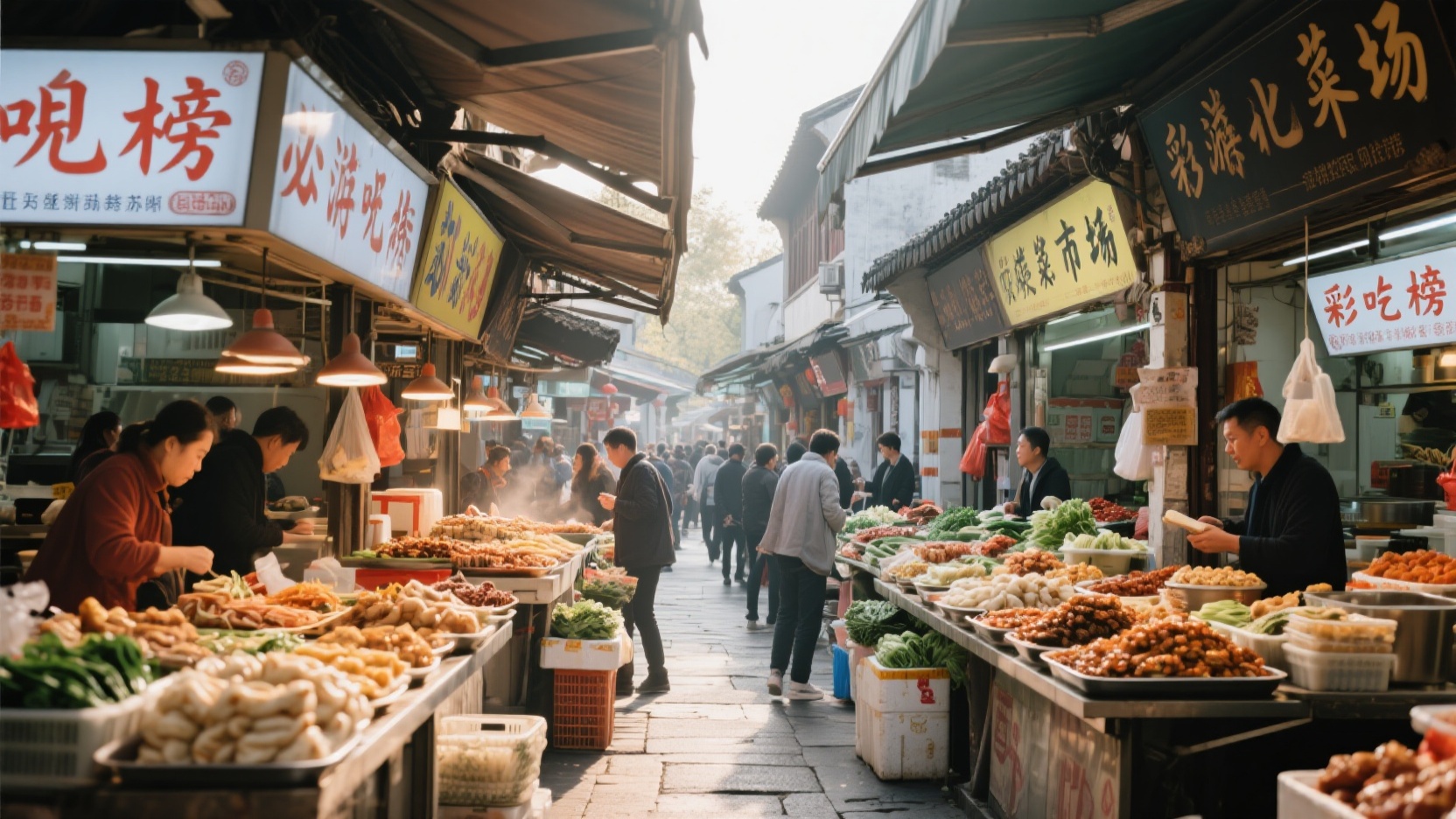
Out-of-town travel guides often simplify Suzhou's flavors to "sweet, glutinous, and noodle-like," then direct tourists to the scenic areas of Guanqian Street, Pingjiang Road, and Shantang Street. In reality, the most common culinary experiences for Suzhou locals are often found in farmers' markets, at the entrances of old residential areas, and at stalls that only operate in the morning market. The following list may not be the most comprehensive, but it's certainly not a rote memorization.
That "old-established squirrel-shaped mandarin fish" dish on Guanqian Street is no longer served at local banquets.
Several old restaurants on Guanqian Street that used squirrel-shaped mandarin fish as their cover image now mostly cater to tour groups. The fish isn't freshly killed, and the batter is so thick it's like a quilt, leaving only the taste of sweet and sour batter when it's served. Locals would rather treat guests to modern Suzhou-style restaurants or simply make sweet and sour spare ribs at home than take out-of-town friends to these kinds of "must-eat" restaurants piled high with awards.
The method to avoid bad restaurants is simple: if they prominently feature dishes like squirrel-shaped mandarin fish and braised eel in hot oil in their signboards, you can basically skip them. Suzhou cuisine emphasizes seasonality; you shouldn't eat the same main dish all year round. True Suzhou locals will ask, "What's new today?" before ordering from a guidebook.
The green rice dumplings and crab shell pastries on Pingjiang Road, and the sweet rice porridge and water chestnut rice on Shantang Street are special offers for tourists.
The riverside shops along Pingjiang Road sell qingtuan (green glutinous rice dumplings) all year round, their color so vibrant it looks like industrial dye. Suzhou qingtuan were originally a seasonal food eaten around the Qingming Festival, colored with wheat straw or mugwort, and made and steamed fresh. Locals don't buy the brightly colored, pre-sealed ones, much less give them as gifts.
The sweet rice porridge stalls along Shantang Street in the scenic area cook the water caltrop seeds until they're incredibly soft and powdery, like over-soaked plastic beads, topped with a thick layer of osmanthus sauce. Locals eat water caltrop seeds with a strict "just cooked through" approach, adding only rock sugar and a touch of osmanthus. If you want this taste, go to Fengmen Heng Street to buy freshly peeled water caltrop seeds, boil them quickly at home—it's far superior to the version found in the scenic area.
These two streets are better for sightseeing than for a proper meal. Most of the "Suzhou specialties" in the scenic area are just for taking photos and checking in on social media.
First, head to Fengmen Hengjie; the morning market is the true kitchen of Suzhou people.
Fengmen Hengjie is where local elderly people pull their carts to buy their goods. The morning market offers freshly killed and fried fish, freshly made egg dumplings, and deep-fried dumplings. The deep-fried dumpling stall in the middle section has meat dumplings with a crispy outer skin and juicy meat filling; they're very satisfying to eat while they're hot. They're not suitable for taking away, as they turn into a lump of oil when they cool down, so you must eat them on the spot.
How to order without making a mistake: One fried glutinous rice ball with a bowl of savory soy milk. Ask the vendor to add dried shrimp and fried dough stick crumbs to the soy milk. Don't buy too many; this kind of fried glutinous rice dish is very filling, one is enough.
The pastry shops on Hengjie Street are also worth checking out. They only have stir-fried meat dumplings in spring and summer, with a thin outer skin that lets the filling see through, and they're made to order. Pair them with half a piece of mint sponge cake, and ask the vendor to cut it into smaller pieces so the sweet and savory flavors don't mix.
Don't go to the entrance of the scenic area to eat noodles; look for the first bowl of noodles near the old Xincun village.
The soul of Suzhou-style noodles lies in the clear broth and firm noodles, not in the abundance of toppings. Locals in Suzhou eat noodles early, arriving at dawn to wait for the first bowl of broth, when the soup is clear and the noodles are tender. Noodle shops near tourist attractions often have cloudy broth and clumped noodles after 9 am, resulting in tourists often getting "a mushy mess soaked in soy sauce broth."
I recommend going to the noodle shops near Changmen West Central Market and Wuqufang, the kind where the entrance is full of electric scooters and elderly people read newspapers inside. Order a bowl of braised pork noodles, with a side of shredded ginger, and plenty of broth (no greens). The braised pork should be submerged in the broth to warm up before eating; this is the local custom, not just for show.
If you want the noodles to be firmer, don't tell the chef "firmer," just say "noodles should be undercooked," and the experienced chef will know what you want.
Pan-fried buns, wontons, and rice cakes – no need to queue at the market stalls!
The pan-fried bun stall next to the Caixiang Village market sells small pan-fried buns with crispy bottoms and plenty of juice, unlike the thick-skinned, cloyingly sweet chain stalls found in tourist areas. How to order: Half a serving of pan-fried buns plus a bowl of small wonton soup with egg skin and chopped green onions. When eating the pan-fried buns, first take a small bite to sip the juice; don't stuff the whole thing into your mouth, or you'll burn yourself.
The chive and egg pancakes at the breakfast stalls in Shuyuan Lane are made by spreading out the batter, then scalding the chives and eggs on a griddle, and finally brushing them with sweet or spicy sauce. Served with a crispy fried dough stick and a cup of hot soy milk, it's best not to go too late, as nearby students and office workers line up early in the morning.
Don't crowd into tourist areas to buy rice cakes and sweet rice porridge. Instead, try the wooden bucket sweet rice porridge stalls in Wuqufang or Hengjie. The rice balls are ladled out fresh, and the porridge base is smooth but not greasy. Order a bowl of sweet rice porridge with half a portion of sweet fermented rice balls, and ask the owner to add a small spoonful of osmanthus sauce—the sweetness will be just right.
Late-night snacks and cooked food: the end of old Suzhou life isn't in the bar streets.
In the western section of Shantang Street, outside the scenic area and near the Xinmin Bridge market, there are cooked food stalls offering freshly fried fish and salted goose. The fried fish is made from grass carp segments, fried and then soaked in braising liquid, resulting in a crispy exterior and tender interior. Buying a small portion of fried fish and adding a side of vegetarian chicken, and enjoying it at home with congee or a bowl of clear soup noodles, is much more satisfying than the grilled skewers found in the scenic area.
The soy milk shops near Changmen are even more bustling at night than during the day. Savory soy milk topped with fried dough stick crumbs, dried shrimp, and pickled mustard greens, served with a lotus leaf-wrapped egg pancake—a classic Suzhou evening pick-me-up for many longtime residents. When ordering, don't just say "a bowl of soy milk," but rather "savory soy milk, less chili oil, extra dried shrimp," and the owner will know you're not a tourist.
These kinds of late-night food stalls usually have a basic environment, but the food is authentic. Don't judge them by the standards of shopping mall chains; what you're looking for is the warmth and the neighborhood atmosphere.
In conclusion
First, don't ask if Suzhou cuisine is spicy; the owner will immediately recognize you as a tourist. The spiciness in Suzhou dishes mostly comes from pepper powder, which is completely different from chili peppers. Second, avoid going during peak meal times, especially near tourist attractions. After 1:30 PM, many market stalls only have leftover stock; the morning and evening markets are where locals truly experience the local atmosphere.
Third, avoid wearing white clothes, as the oil and sugar stains from pan-fried dumplings, braised fish, and sweet porridge are difficult to wash off. Fourth, don't use online reviews; many truly delicious restaurants in Suzhou don't operate online. Restaurants with many elderly people at the entrance, handwritten menus, and those only open half a day are often more reliable. Fifth, don't order large portions. Suzhou snacks and noodle toppings are best enjoyed in small, varied portions; large portions will only make you feel overwhelmed and unable to eat at the next restaurant.