
A Day to Explore Shijiazhuang's Street Food Scene: From Baked Clay Oven Cakes in the Morning to Beef Stewed Baked Buns at Night
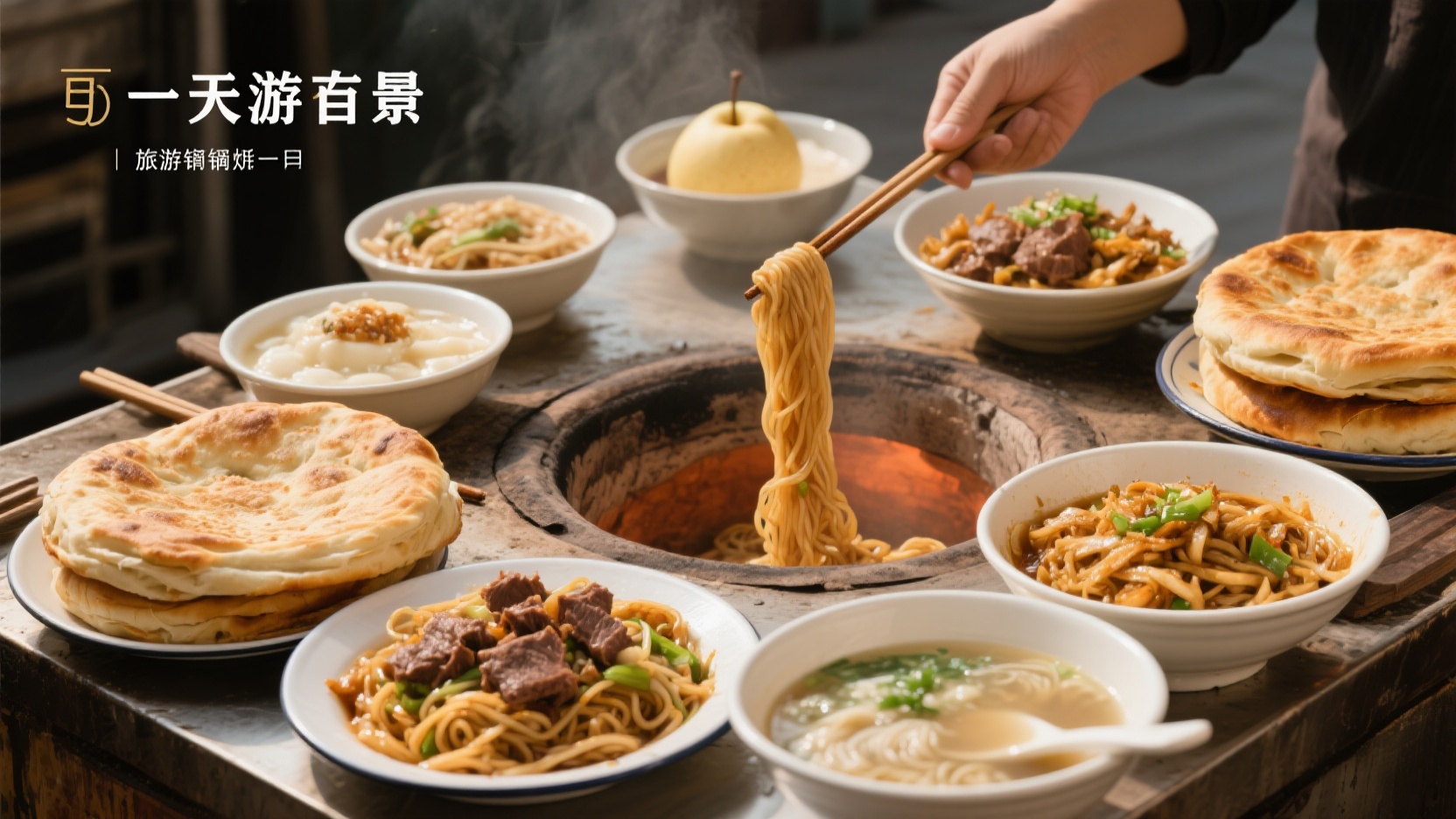
The everyday flavors of Shijiazhuang don't revolve around tourist attractions, but rather unfold around mealtimes. In the old city, mornings begin with the sesame aroma of oven-baked flatbread; midday brings the red oil of beef noodles and the wok-fried bread's smoky flavor; the afternoon is a mid-morning respite with Zhaoxian snow pear soup and crispy sesame flatbread; and late at night, it returns to the hot soup of beef stew with baked flatbread and he luo noodles. These dishes don't rely on elaborate plating, but rather on the sedimentation of time and habit. Eight kinds of street food string together the most frequently repeated day for locals.
7:00 AM: Baked flatbread and tofu pudding
Clay oven baked flatbread is a staple food at breakfast stalls. The dough is semi-fermented, rolled into long strips, oiled, sprinkled with salt and pepper, and coated with sesame seeds before being baked on the inner wall of a clay oven at high temperature. The high oven temperature causes the flatbread to puff up and set quickly, resulting in a hard, crispy outer shell with a fragrant sesame aroma, while the inside remains soft and chewy. Locals often stuff it with donkey meat stew or braised meat. The stew is made by simmering sweet potato starch, meat broth, and minced meat until cold, resulting in a chewy, savory, and fragrant flavor that complements the dry aroma of the flatbread. This way of eating requires no utensils, making it suitable for those rushing to work early in the morning—a popular mobile meal in old industrial cities.
Tofu pudding and sesame flatbread often appear at the same stall. The gravy, thickened with daylily buds, wood ear mushrooms, and egg flowers, is savory and slightly thick, and is poured over the soft tofu. Some vendors add chive blossoms or chili oil. The tofu pudding is smooth and tender, and the gravy carries a complex aroma of mushrooms and egg flowers, which not only balances the dryness of the sesame flatbread but also provides moisture. Regular customers are mostly early-shift workers, drivers, and vegetable vendors, who often finish this meal before seven o'clock, starting their day with a high-carbohydrate diet.
Noon: Beef noodles and fried pancakes
Beef noodles are a frequent lunch choice in Shijiazhuang. Although originating from northern Anhui, they have become a local icon. The dough is made with high-gluten flour, salt, and alkali, kneaded thoroughly, and then rolled into wide strips before being stretched and cooked fresh. The broth is made with beef tallow, chili peppers, Sichuan peppercorns, star anise, and cinnamon, resulting in a rich, red oil. The chili peppers are fried until deep red without burning. The noodles are often served with boiled eggs, bean curd sheets, meatballs, and sliced beef. The wide noodles are smooth yet chewy, with a pungent spiciness that builds up quickly, a rich beef tallow flavor that lingers on the tongue, and bean curd sheets and meatballs that absorb the broth for a savory and delicious taste. It's quick to prepare, high in calories, and a practical choice for those working at lunchtime.
Stir-fried flatbread is another lunch option. The dough is made with cold water and cooked into thin flatbreads, then shredded and stir-fried with cabbage, bean sprouts, minced garlic, and shredded meat in hot oil, drizzled with soy sauce and quickly tossed. The edges of the flatbread shreds are slightly charred, while the vegetable shreds remain crisp, with a pronounced garlic and soy sauce wok hei (wok aroma). It can be made at home or in small restaurants; the ingredients are flexible, and leftover flatbread with seasonal vegetables is all you need. For office workers, stir-fried flatbread is inexpensive and filling, forming a carbohydrate-rich dual axis with flat noodles in Shijiazhuang's lunchtime market.
3 PM: Snow pear soup and Shita crispy sesame flatbread
Zhaoxian snow pears are an important local product around Shijiazhuang and a staple ingredient in local afternoon sweet soups. The pears are peeled, chopped, and simmered in water with a small amount of rock sugar, sometimes with the addition of white fungus or red dates. The pear soup is slightly yellow, sweet and refreshing, with soft but not mushy flesh and a slight tartness, perfect for soothing a dry throat. It doesn't aim for intense sweetness but rather focuses on replenishing fluids and moisturizing dryness, making it a popular afternoon tea alternative for many families.
Shita Crispy Sesame Cake originates from Zhao County and is a common afternoon snack for locals. The dough is wrapped around an oil-based filling, folded and rolled out multiple times, sprinkled with a little five-spice powder, and baked until golden brown. The cake has thin, flaky layers that crumble when bitten, with a slightly salty interior. Served with pear soup, the sweet and salty flavors alternate without being greasy. This afternoon tea, without a fixed ritual, reflects the continuation of agricultural traditions from the Hebei Plain in urban life and is a daily memory for older generations of Shijiazhuang residents.
10 PM: Beef stewed with baked buns and hele noodles
Beef stewed with baked flatbread is a representative halal dish for late-night dining. The flatbread is torn into irregular pieces and placed at the bottom of a bowl. Boiling hot beef broth is poured over it repeatedly, allowing the flatbread to absorb the broth without falling apart. Slices of braised beef are then added, along with chopped scallions and cilantro. The broth is clear, the beef is fragrant, and the softened flatbread is smooth on the outside and firm on the inside, with the aroma of scallions enhancing the flavor. A bowl of this is a perfect way for night shift workers to warm up and quickly replenish their energy, making it a popular choice for taxi drivers after a long day at work.
Heluo noodles are made by pressing buckwheat or sweet potato dough into boiling water using a heluo press. The noodles are thick, round, and slightly rough in texture. They are topped with mutton or beef gravy and served with a spoonful of chili oil. The slight bitterness of the buckwheat is neutralized by the savory gravy, and the whole grains have a satisfying texture. Eating them late at night provides a slow but lasting feeling of fullness. These two dishes don't aim for refinement; they satisfy the hunger of late-night travelers with their warmth and generous portions, offering a simple and comforting ending to the city's late-night dining scene.
From the first batch of baked flatbread in the morning to the last sip of soup from the late-night pancakes, the culinary clues of Shijiazhuang are hidden in the unchanging rhythm of the locals' three meals a day. These foods may not be amazing, but they are authentic enough. From the streets to the alleys, understand this city through its food in a day.