
Shenyang Food Safety Tips | Don't Be Fooled by Guides: These 4 Must-Try Restaurants Are Not Recommended by Locals, But These 8 Are Tested by Locals
In my fifth year living in Shenyang, the most outrageous thing I did was take a college classmate to wait in line for forty minutes at that supposedly must-eat dumpling restaurant on Zhongjie Street. After we ate, he said it was "just so-so," and I could only lower my head and drink the vinegar from my dipping sauce dish. At that moment, I realized: many of the "must-eat dishes in Shenyang" listed online are no longer made for locals.
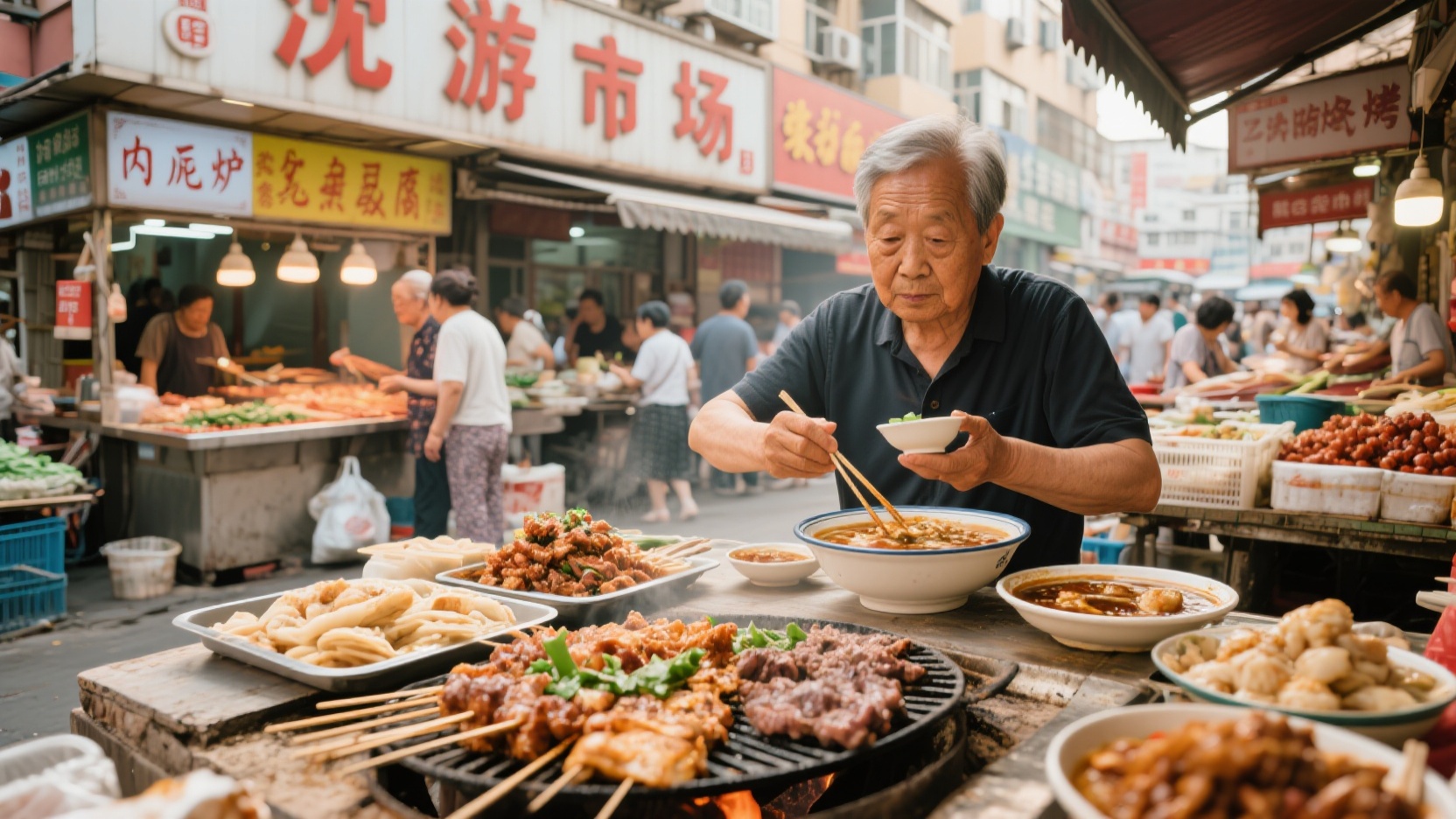
The best food in Shenyang isn't advertised on the pedestrian street signs, but rather found in the hands of the aunties queuing up with their pots at the morning market, by the mud stoves and charcoal fires on the ground floor of residential buildings, and behind the rice cake stalls at the end of the vegetable market. The following list of places to avoid and hidden gems is a genuine local guide based on my five years of experience. I can't guarantee a great environment, but I guarantee they don't cater to tourists.
First, a dose of reality: locals have long since stopped going to these "must-eat" spots.
That old dumpling restaurant on the corner of Zhongjie Street has been getting bigger and bigger, the dumpling wrappers are getting thicker and thicker, and the filling is becoming more and more like seasoned minced meat. Locals don't avoid it; they only go when accompanying relatives from out of town. My advice is, if you want dumplings, just find a small restaurant in a residential area.
Near the main entrance of Xita Street, the brightest lights illuminate several stalls selling soy-marinated crab and grilled eel, each table filled with tourists who have found them using their phones. The crab meat is sticky, the sauce is overly sweet, and the prices aren't cheap. Locals, on the other hand, head straight to the bulk food stalls behind the market.
The "Chicken Frame Main Store" that became famous through short videos had a line stretching to the street corner at 4 PM. The fried chicken frames were dry and tough, and all the seasonings tasted the same. Locals only recognize the boiled chicken frames and braised chicken frames from the noodle shop in the old residential area.
The century-old ice cream shop on the pedestrian street has become increasingly less creamy, and a single scoop isn't cheap. Tour group loudspeakers are even louder than the air conditioning. Local children prefer the old-fashioned ice cream carts on the street or the yogurt popsicles in the market during the summer.
The real gems are found in the morning markets: Dadongmen tofu pudding and Xita Market rice cakes.
The Dadongmen morning market is bustling from 6 a.m. A tofu pudding stall has seven or eight stainless steel buckets; the auntie ladles the broth with steady hands, while older men and women bring their small pots to get theirs. The plastic stools are shiny with oil, and the pot for frying dough sticks next to them is black and gleaming—this kind of environment brings out the true flavor.
How to order without making a mistake: Start with a small bowl of tofu pudding, but don't ask for too much chili oil. Ask for a spoonful of chive blossoms and a spoonful of garlic juice. Pair it with freshly fried cakes. Don't order the cold side dish. The soul of the morning market is to eat it while it's hot.
At the far end of the Xita Market, a Korean woman makes rice cakes fresh every day. The wooden mallet pounds the rice cakes into a stone trough, sending bean flour flying everywhere. Next to her are several other kinds of rice cakes, such as perilla leaves, red bean paste, and mugwort, sold by weight, her hands deftly and skillfully cutting and chopping them.
Half a pound of plain rice cake with a touch of perilla leaf flavor, plus a cup of freshly ground rice milk—it's sticky and chewy with a slightly bitter aftertaste. Don't buy the gift boxes at the entrance; those are for tourists to take home, and the taste is completely different.
The joy of smoke and fire: Gliding clay oven barbecue and Tiexi old-fashioned spicy hot pot
On the first floor of an old residential building in the Gliding Community, there's only a faded sign hanging at the entrance, and it doesn't open until 4 PM. A clay stove is brought out, the charcoal crackling, the iron mesh blackened with a patina. An auntie hands over a dish of dry seasoning and a pot of white vinegar. You order lean beef, fatty beef, and squid. The original-flavored meat cooks quickly after a couple of flips over the charcoal, dipped in the dry seasoning and a splash of white vinegar—the aroma is so enticing, you don't want to say a word.
How to order without making a mistake: Two portions of lean beef, one portion of fatty beef, and one portion of squid, served with a side of mixed cauliflower, and cold noodles as the main dish. Avoid the restaurant's "secret marinated meat"—it makes all the meat taste sweet and it's prone to becoming mushy.
Behind Tiexi Square, on a small street, stands an old-fashioned mala tang (spicy hot pot) shop, its storefront so small that only three people can stand side by side. A bowl of standard ingredients includes vermicelli, bean curd sheets, kelp, duck blood, and bean sprouts, with chili oil floating on top but not pungent. The owner, in his fifties, only asks, "Is this normally spicy?" and then says nothing more.
Order a bowl of traditional Mala Tang (a type of spicy hot pot) with three fried skewers: chicken cutlet, mushrooms, and chicken skin, brushed with sweet and spicy sauce. Don't order the self-service Mala Tang; that's no different from the nationwide chains. And don't order the all-vegetarian option; duck blood and bean curd sheets are the soul of this bowl.
I ate a bite, then slurped up another mouthful of cold noodles.
In a hutong next to the South Market, a Hui Muslim shop sells only beef skewers and mutton soup. The skewers are long and thin, freshly wrapped and pan-fried until the skin is golden brown and glistening, while the beef filling is coated with a little juice. Inside, the exhaust fan whirrs, and you can pour your own vinegar and chili oil from the bottles on the table.
A steamer of mutton offal soup comes with a small bowl of mutton offal soup, and a piece of freshly baked flatbread is added to the soup. Don't order stir-fries or salads; this place only makes the mutton offal soup and the soup well. If you order too much, the owner will tell you, "That's enough."
Sujiatun is far from the city center, but the cold noodles are worth the trip. The bowl of noodles is served with ice crystals floating on top, and the soup is a dark, salty beef broth. You can add white vinegar and sugar syrup to taste. The noodles are freshly pressed, and they have a chewy texture when you bite into them. It comes with a small dish of mixed dried tofu.
Don't add any seasonings yet. Take a sip of the original broth, then add white vinegar and chili powder to taste. Half a bowl of corn noodles and a serving of mixed dried tofu is enough. Don't order a large bowl, or the noodles will clump together and be ruined if there's too much broth.
The hand-pulled noodles and sweet and sour pork sold in residential areas are more reliable than those sold at tourist attractions.
The noodle shop next to the Daxi Vegetable Market is packed with delivery drivers and taxi drivers from the surrounding area at lunchtime. They offer three types of noodles: extra thin, medium thin, and leek-leaf style. The chef swings his arm and pulls the noodles, while a large pot of water boils, and a chicken carcass gleams in a separate bucket. Garlic cloves and chili oil are available for free on the table.
A bowl of thin noodles with a braised chicken frame, and a bottle of Lao Xue beer. Tearing the chicken frame apart to serve with the noodle soup is a standard after-work routine for people from Shenyang. Don't order set meals, and definitely don't order fried noodles; the soup noodles and chicken frame are the lifeblood of this restaurant.
In a small restaurant tucked away in the doorway of an old building in the South Market, the aroma of traditional sweet and sour pork wafts straight from the table, the white vinegar filling the air. The pork slices are thin and crispy, the sauce not sticky at all. The proprietress is in charge, the sound of her tossing the wok echoing from the kitchen to the doorway. The restaurant only has six tables, and they stop taking orders after 7 PM.
A serving of traditional sweet and sour pork with a side of red bean paste is just right for four people. Don't order the sweet and sour pork with ketchup, and don't ask for "less sugar or less vinegar." With the traditional sweet and sour pork, there are no worries; you're enjoying the kick.
In conclusion: Don't ask the locals if they didn't tell you.
Don't ask if it's spicy. In Shenyang, "not spicy" and "mildly spicy" are often two different concepts. Many old shops just have one default spiciness level. Even if you ask the owner, they're too lazy to explain. Just make sure you're sweating after eating it.
Avoid going during mealtimes. It's difficult to even find a table at this hidden gem restaurant at noon and 6 pm. For the morning market, you need to arrive before 8 am. The best time to go is around 4 pm when the clay oven barbecue just opens.
Don't wear white. The deep fryers, charcoal stoves, spicy hot pot oil, and sweet and sour pork at the morning market won't treat a white shirt well. Wear dark, old clothes; that's the only way to show respect to these hidden gem shops.
Don't use review apps. Many of the truly delicious restaurants in Shenyang don't even have ratings; they just have a shabby sign hanging outside. Follow the old men in their pajamas carrying pots and pans—that's more reliable than any online ranking.
Don't order large portions. Northeastern Chinese cuisine is known for its generous portions, especially in hidden gem restaurants. Order a small or regular portion first, and add more if needed. If you order too much, the owner might refuse to take your order, saying, "You can't finish this."