
Shanghai Avoidance List | Revised 3-Day 2-Night Trips Not Recommended by Locals – Don't Be Fooled by Travel Guides Anymore
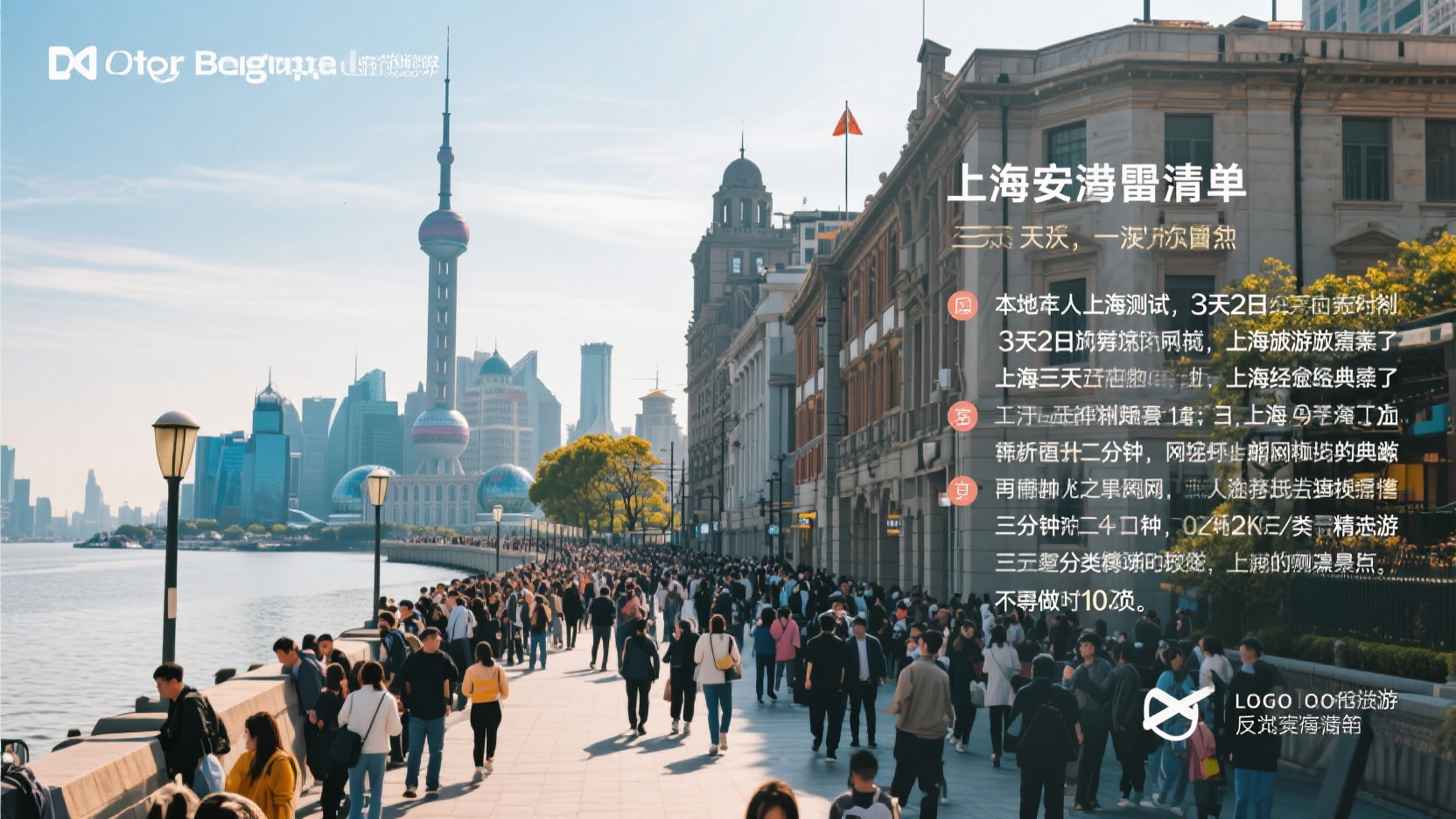
If you follow that "classic 3-day, 2-night Shanghai itinerary" found online, on the first day you'll be pushed around by crowds on Wukang Road, lose your heels on the Bund, and wait in line for a single pan-fried dumpling until you question your existence. The biggest problem with this itinerary is that it treats Shanghai as a backdrop for photo opportunities, rather than a city with a vibrant, lived-in atmosphere.
I've lived in Shanghai for over five years and traveled there no fewer than twenty times. I've seen friends follow travel guides for three days straight and then say, "I'm never coming back." It's not that Shanghai isn't fun; it's that many travel guides are completely wrong in terms of order, timing, and expectations.
Wukang Road to Anfu Road: It's not that you can't come, it's just that you shouldn't waste half a day here.
Classic routes always include Wukang Road and Anfu Road on the first morning, as if you haven't truly experienced the area if you don't visit them. In reality, the essence of this street lies in a few old villas and a corner of the Wukang Building; on a sunny morning, it's practically packed with people after 10 am. It's difficult to find a good vantage point without seeing the back of someone's head, and it's not convenient to slowly appreciate the architectural details.
Locals suggest compressing the trip to 30 minutes to an hour: take a few photos at the Wukang Building before 8 AM, then turn off along Hunan Road or Gaoyou Road. Those quiet little streets are typical of Shanghai's Wutong District; there's no need to queue for the trendy bread on Anfu Road.
Yu Garden and City God Temple: You can visit them, but don't have your main meal here.
Yu Garden itself is worth seeing, especially the layout of the gardens and the Nine-Turn Bridge. However, online routes often lead you to a series of visits including "Yu Garden + City God Temple + lunch + the Bund," resulting in being overwhelmed by expensive xiaolongbao (soup dumplings) and long queues at the City God Temple food plaza at lunchtime. Locals rarely consider the City God Temple a dining destination; they tend to visit it outside of peak meal times.
I recommend having your meal at Yu Garden earlier in the morning or in the afternoon, keeping it under 90 minutes. For your main meal, head east to the Bund area or back to Laoximen; the options there will be more local and relaxed. If you really want soup dumplings, look for nearby casual eateries, not the ones near the tourist attractions.
Nanjing East Road to the Bund: Don't follow this straight line; instead, go to the North Bund or South Bund.
The "Nanjing East Road Pedestrian Street - Bund - Lujiazui" route is the most classic and notoriously congested. Especially on weekends and holidays in the evening, the section from Nanjing East Road subway station to Chen Yi Square is practically moving at a snail's pace. The Bund viewing platform is not off-limits, but there's no need to enter through the most crowded entrance.
Locals prefer to visit the North Bund or the South Bund. The riverside promenade on the North Bund offers a complete view of the Lujiazui skyline and is much less crowded; the South Bund also has a quiet stretch of riverside along Fuxing East Road. To see the Bund lights, choose a weekday evening, or look back from the opposite Pudong Riverside for a more comfortable view.
Tianzifang can be removed and replaced with Shaoxing Road, Jiashan Old Town, or Suzhou Creek.
Tianzifang used to be fun, but now it feels more like an overcrowded narrow alley, with high pedestrian density and homogenized goods. You'll want to leave after half an hour. It's not suitable for a tight three-day, two-night itinerary, especially when traveling with elderly people or children, as the experience is very poor.
After removing Tianzifang, you can replace it with the small bookstores and old publishing houses on Shaoxing Road, or the community feel near the old city of Jiashan. If you like waterfront areas, take a walk along the Suzhou Creek, from Sihang Warehouse to Waibaidu Bridge; it's more Shanghai-style and less trendy than Tianzifang.
Most of the popular local dishes and pan-fried buns that require queuing for two hours are not worth it.
Guidebooks often recommend certain local Shanghainese restaurants and pan-fried bun shops, with queues of two hours each for lunch and dinner. The problem is that the taste of these restaurants is not irreplaceable, and the physical and tempting experience of queuing outweighs the food itself. The soul of Shanghainese cuisine lies in its rich, dark sauces and home-style cooking techniques, which many neighborhood eateries do quite well.
The local way of eating is to remove trendy restaurants from your regular meal list. If you want pan-fried buns, choose a restaurant near a residential area where local elderly people line up during mealtimes; if you want Shanghainese cuisine, find a restaurant with an average price of around 100 yuan per person, located in an alleyway or near an old neighborhood. The taste is just as good, and you don't have to wait in despair.
Similarly, don't wait in long lines on Huaihai Road or Nanjing West Road for a cup of milk tea or a butterfly pastry. Those are better suited as something to grab along the way, rather than being the main focus of your trip.
Indigenous Optimized Version: 3 Days 2 Nights + 1 Day Flexible Alternative
Revised Itinerary Day 1: Visit the Wukang Building before 8 AM, then head to Hunan Road and Gaoyou Road. Have a light lunch near Urumqi Road. In the afternoon, stroll around Yu Garden. Watch the sunset over Lujiazui from the North Bund in the evening. Have dinner near Laoximen or Jinxian Road. Day 2: In the morning, walk along the Suzhou Creek from Sihang Warehouse to Waibaidu Bridge. In the afternoon, visit the Bund Source area to see old buildings. In the evening, avoid Nanjing East Road and watch the lights across the river from the South Bund. Day 3: In the morning, choose a museum or exhibition you want to see, such as the Shanghai Museum East Branch or West Bund. In the afternoon, wrap up your visit in the Jiashan Old Town or Shaoxing Road area.
For an extra day of flexibility, if the weather is good, you can go cycling in the Qiantan or Xuhui Riverside area; if it rains, you can explore the art museums in Pudong or the West Bund; if you're with elderly people, you can choose Sinan Road-Fuxing Park, which is slow-paced and has good shade. This version doesn't focus on the number of attractions, but rather replaces the most congested spots with more comfortable alternatives of the same type.
Seasonally, March to May and October to November are the most comfortable months. The experience is poor during the rainy season and the height of summer on the Bund and Wukang Road, and locals don't like to push themselves to hike outdoor trails.
In closing: Don't ask the locals if I didn't tell you.
First, don't schedule the Bund, Nanjing Road, and Yu Garden on the same day, and don't go to the Bund to see the lights on a weekend evening—these two things will ruin your first day in Shanghai.
Second, do not have a proper meal at the City God Temple or the entrance of tourist attractions, and do not queue for two hours for popular pan-fried buns or butterfly pastries; locals will only eat there if it's on their way, and they will not make a special trip to stand in line.
Third, don't cram three popular tourist spots—Tianzifang, Xintiandi, and Wukang Road—in one day, and don't believe that walking "Pedestrian Street—The Bund—Lujiazui" won't be tiring; Shanghai is very large, and traveling between districts takes more time than you imagine.
Fourth, don't just focus on the subway, and don't rely entirely on taking a taxi; short distances in the city center can often be faster by cycling or walking than by getting stuck in traffic.
Fifth, avoid taking a long walk through the old town at midday in the height of summer, and don't try to find outdoor photo spots on rainy days; the season and weather determine whether Shanghai is gentle or irritable.