
A leisurely trip to Shanghai with parents | A blogger's personal 5-day, 4-night checklist for avoiding pitfalls for senior citizens (including hospital distances and lunch break spots)
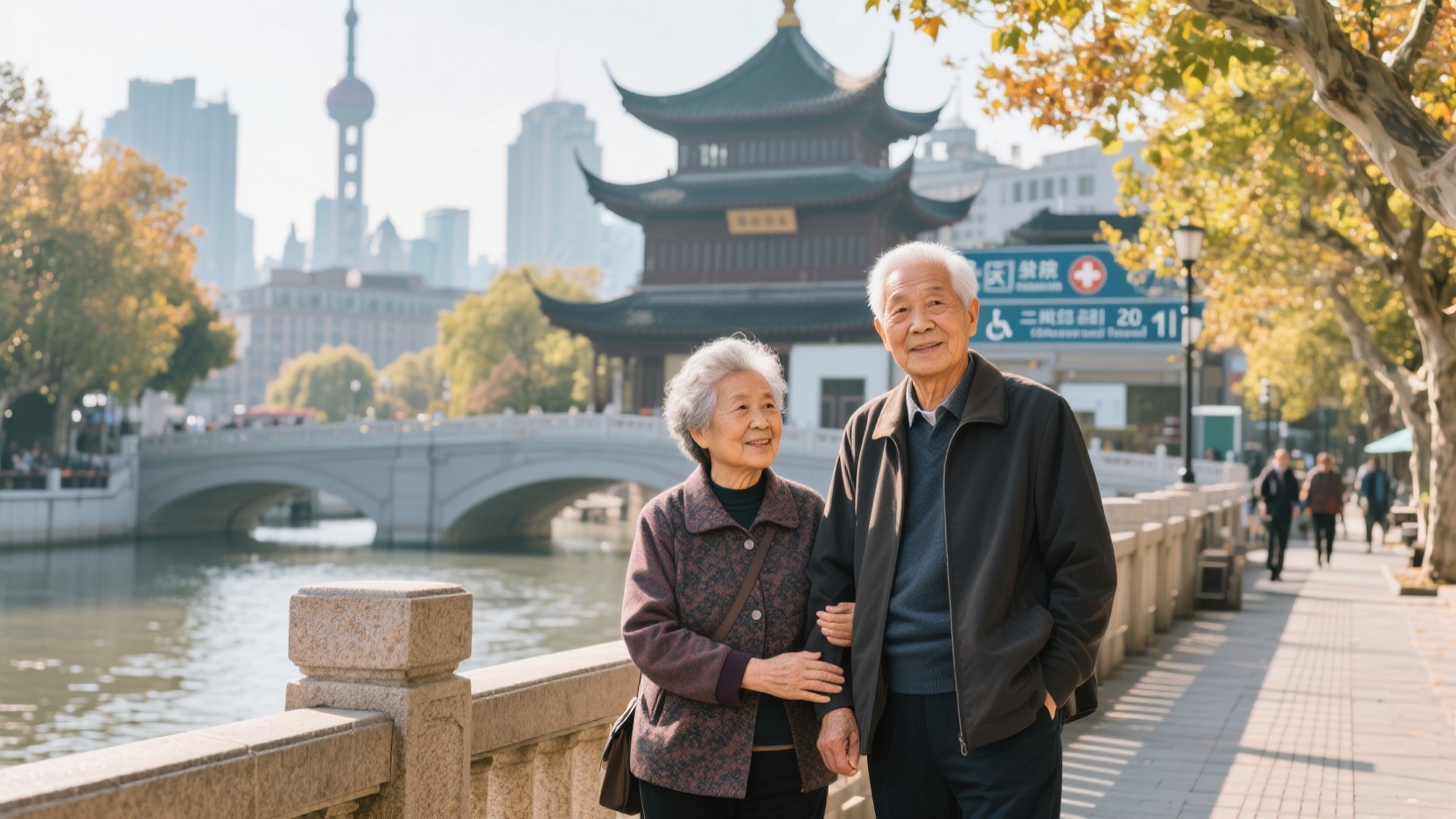
After three consecutive days of sightseeing with my parents in Shanghai, my dad's old knee injury flared up again. I realized then that for senior citizens, traveling isn't about seeing as many sights as possible, but about checking elevators, restrooms, and easy turnaround distances for every route in advance. This time, I redesigned a 5-day, 4-night trip, focusing on only 1-2 key locations each day, and making the "2-hour nap at the hotel" an essential part of the itinerary. The following route has been personally visited and marked with elevator coverage, accessible pathways, restroom density, walking distances, and approximate driving distances to nearby level-two or higher hospitals. It's suitable for parents with mobility issues who don't want to go through unnecessary travel.
Spring and autumn are the most stable seasons, and I chose mid-October when the temperature is around 20 degrees Celsius, there are fewer people, and there are no long lines for the toilets.
Accommodation options: The Jing'an Temple-Nanjing West Road area is a "safe zone" for senior citizens seeking leisurely travel.
When traveling with my parents in Shanghai, my bottom line is: "There should be an elevator at the subway exit, a hospital of level two or above nearby, and a restroom readily available on the way back to the hotel." The area from Jing'an Temple to Nanjing West Road is ideal, as it's an interchange of subway lines 2, 7, and 14. Most entrances have elevators or accessible lifts, and the pedestrian walkways are smooth. There are three general hospitals of level two or above nearby, the closest being about a ten-minute drive away, so there's no need to travel across districts for sudden blood pressure fluctuations or joint pain.
Avoid choosing guesthouses in alleyways, as many old houses lack elevators or have narrow, steep staircases. Opt for mid-range chain hotels, making sure they have elevators, benches in public areas, and handrails in the bathrooms, or that shower chairs are available for rent. The place I stayed this time was less than 300 meters from the subway station, so going out again after my lunch break wasn't tiring.
Days 1-2: Don't rush through the Bund and Yu Garden; a two-hour lunch break is the minimum.
On the first afternoon, we only went to the Bund. We took a taxi to Zhongshan East Road and walked along the riverside platform, which was flat with accessible ramps. Public restrooms were located near Chen Yi Square and the Jinling East Road ferry terminal, a few hundred meters apart. We didn't take our parents to the Bund sightseeing tunnel; it was stuffy and the queues were long. We arrived at 3:30 PM, took our time to enjoy the river view and the historic buildings, and returned to the hotel at 4:30 PM. We didn't go out again after dinner.
On the second morning, visit Yu Garden. The focus isn't on exploring the entire garden, but rather on walking across the Nine-Turn Bridge and the Lake Pavilion. There's an elevator at Yu Garden Station on Metro Line 10; it's about a ten-minute walk from the station. The garden has many artificial hills and steps, so I won't go into the inner garden and will keep my steps under 3,000. Have lunch of local Shanghai cuisine, then take a taxi back to the hotel for a rest. If you have energy in the afternoon, you can sit for a while in the small green space next to the City God Temple; no other activities are planned.
Day 3: Choose either Zhujiajiao Ancient Town or Gokurakuyu Hot Spring.
On the third day, choose one of two options based on your parents' condition. Option one is to visit Zhujiajiao Ancient Town. From the city center, take a taxi or Metro Line 17 to Zhujiajiao Station. There are elevators and shuttle buses at the station exit, but the ancient town has many stone-paved streets, making it difficult to push a wheelchair. Only walk along the main street of Beidajie. The Fangsheng Bridge has a gentle slope and handrails on both sides. If you can't walk, take a boat tour. Public toilets in the ancient town are spaced about 200 meters apart, some of which are portable toilets. It's best to use the accessible toilets at the visitor center first.
Option two is a large hot spring in the city, such as Gokurakuyu, a Japanese-style hot spring with a rest area. I chose the hot spring this time because it's entirely indoors, has non-slip floors, sitz baths next to the pools, and a rest area where you can lie down for a nap. It's especially suitable for autumn and winter or for elderly people with mobility issues. Both options require you to be in a nap state before 2 PM. The hot spring rest area can replace returning to the hotel, but a hotel nap is quieter.
Days 4-5: Shanghai Museum to Jing'an Park – Elevators and restrooms are more important than the scenery.
On the morning of the 4th day, we went to the Shanghai Museum (People's Square branch). An elevator from the subway station takes you directly to the ground. Each floor has accessible elevators and third-party restrooms. The air conditioning is strong, so bring a light jacket. We only visited the Bronze and Ceramics galleries, limiting our time to 90 minutes. We had lunch at a nearby shopping mall and then returned to the hotel for a nap. In the evening, we went to Wukang Road, but some sidewalks were narrow and the plane tree roots were protruding, making it easy for elderly people to trip. Therefore, we only walked halfway along Anfu Road to Wuyuan Road, avoiding the crowds taking photos under the Wukang Building.
On the morning of day 5, we'll visit either Jing'an Park or Fuxing Park. These parks have ramps, restrooms, and shade. Before checking out at noon, we'll pack our luggage. If our return trip is in the evening, we can rest in the hotel lobby for two hours before heading out. We haven't planned any activities that require prolonged standing or climbing stairs, such as Disneyland, Lujiazui Scenic Area, or Tianzifang.
Blogger's Summary: 6 Ironclad Rules and a 20-Item Packing Checklist for Traveling to Shanghai with Parents
When traveling to Shanghai with parents, the key isn't "where to see the sights," but rather "where they can sit down, use the restroom, and easily return." Six ironclad rules: 1. Plan only one main attraction per day; 2. Leave after 9:30 AM and return to the hotel for a midday rest before 2 PM; 3. Actively seek out a restroom every 40 minutes; 4. Carry a folding cushion and a walking stick; 5. Research and screenshot the route from the hotel to the nearest level-two or higher hospital in advance; 6. Choose hotels with elevators, not trendy guesthouses.
The packing list includes the following 20 items: ID card, medical insurance card, folding cane, non-slip shoes, commonly used medications, blood pressure monitor, thermos, light jacket, umbrella, folding seat cushion, reading glasses, hearing aid batteries, face mask, disinfectant wipes, tissues, adult diaper pads or portable toilet seat covers, power bank, emergency contact card, small bag of sugar-free biscuits, and portable pillbox. Keep your documents and pillbox with you at all times.
Five categories of commonly used medications to remember: cardiovascular medications, hypoglycemic drugs, joint pain relievers, cold and gastrointestinal medications, and emergency medications. Carry original packaging and instructions for medications for chronic diseases; keep hypoglycemic drugs separate from snacks; consult your doctor beforehand about painkillers; don't bring only one type of cold and gastrointestinal medication; keep emergency medications in an outer pocket that your parents know about.