
Slow Down in Shanghai | A 7-Day, 6-Night In-Depth Slow Travel Itinerary for Families and Retirees: A Daily Stroll of Two or Three Points
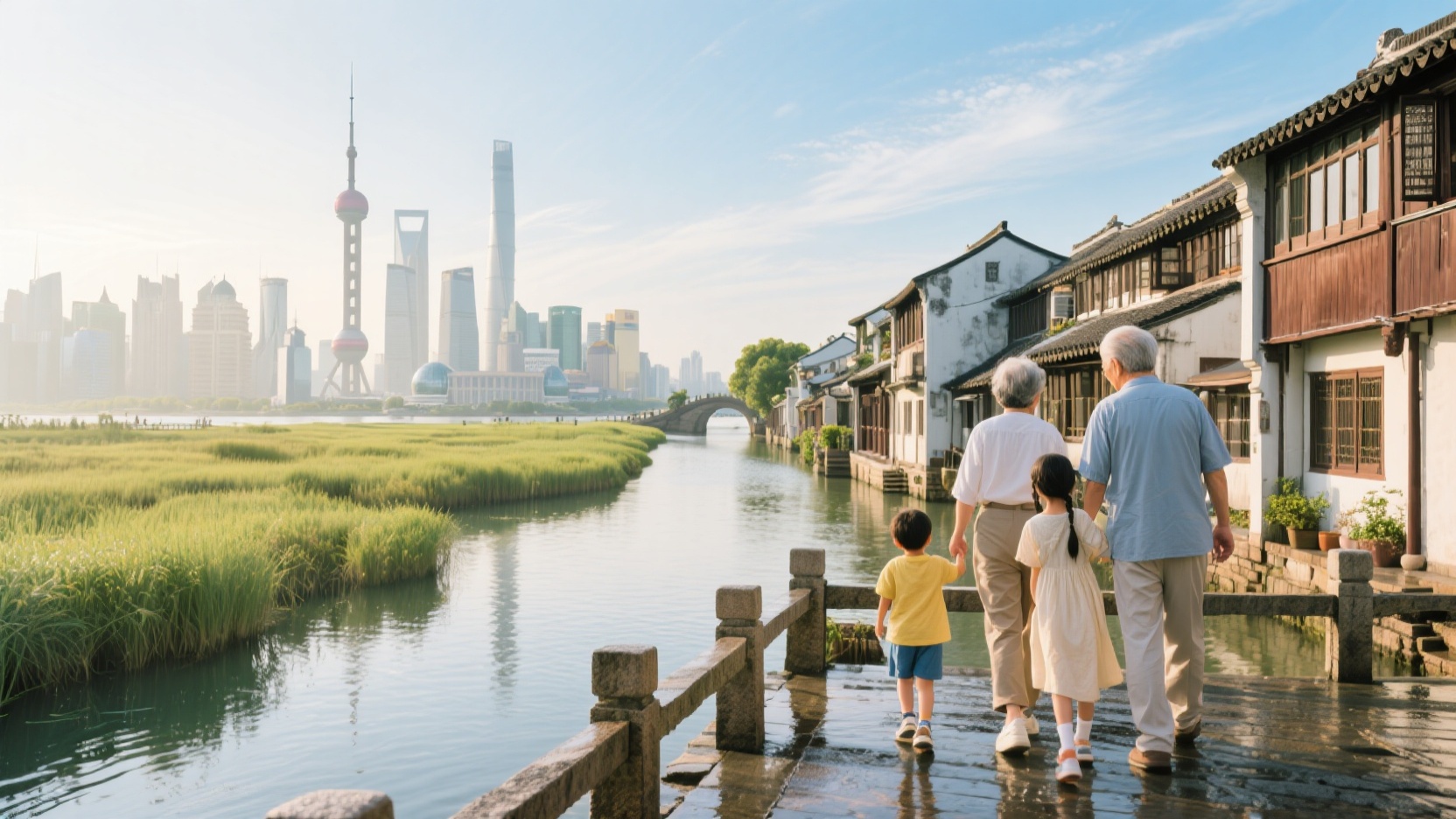
A seven-day trip to Shanghai doesn't require a packed itinerary. Focusing on just two or three key locations each day allows you to truly appreciate the city's layers. This itinerary unfolds according to the rhythm of "arrival and acclimatization—city culture—either suburbs or urban areas—street strolls—waterfront finale," making it suitable for those taking time off work, families with children, and retirees.
Day 1: After arriving, start getting used to the pace from the Bund.
It's recommended to arrive in Shanghai in the afternoon and choose accommodation along Metro Lines 2, 10, or 12 to minimize transfers. Start your day with the Bund area, walking along the Suzhou Creek to Waibaidu Bridge to admire the Bund's historic buildings, focusing on their facades and the Huangpu River skyline. In the evening, stroll leisurely along Nanjing Road Pedestrian Street towards People's Square, taking your time to explore. The key attractions for the day are the Bund, Waibaidu Bridge, and Nanjing Road Pedestrian Street.
The riverside area along the Bund is windy, so it's important to protect yourself from the sun in summer and from the wind in winter. When traveling with elderly people or children, it gets crowded in the evenings, so it's recommended to walk south from Waibaidu Bridge to avoid the most congested middle section.
Day 2: Museum and Urban Green Space Combination
In the morning, visit the Shanghai Museum East Branch. Advance reservations are recommended via "Suishenban" or official channels. The permanent exhibitions on bronzes, ceramics, and calligraphy/painting are best viewed in sections; for seniors and children, approximately two hours is recommended. In the afternoon, explore the outer ring or inner walking paths of Century Park. The lawns and wooded paths are gentle and suitable for strollers and wheelchairs. Only the Shanghai Museum East Branch and Century Park are planned for the day. Get some rest early in the evening to conserve energy for the nearby suburban excursions.
Day 3-Day 4 Branch: Qingpu Ancient Town Hot Spring Route
For the two-day trip to the suburbs, it's recommended to choose one of the two routes and avoid mixing them. If choosing the Qingpu route, on Day 3, visit Zhujiajiao Ancient Town in the morning, walking along the Fang Sheng Bridge, Beida Street, and Kezhi Garden to avoid the crowds on the main street and enjoy quieter waterfront alleys. In the afternoon, head to a hot spring resort area towards Dianshan Lake to relax and relieve the fatigue from walking the previous two days. On Day 4, visit Qingxi Country Park in the morning; the boardwalk in the water forest is flat and continuous, suitable for the elderly and children. Afterward, visit Jinze Ancient Town, which has many bridges and fewer tourists. Return to the city in the evening.
Day 3-Day 4 Branch: Chongming Ecological Nature Route
Another branch centers around the Chongming Dongtan Nature Reserve. Day 3: Travel to Chongming via the Yangtze River Tunnel and Bridge, first visiting the Dongtan Bird Nature Reserve. Autumn and winter are the ideal seasons for migratory birds. The birdwatching huts and boardwalks are friendly to the elderly and children, but advance reservations are necessary and quietness is required. In the afternoon, enjoy a leisurely walk on the forest trails of Dongping National Forest Park. Overnight in Chongming. Day 4: In the morning, choose either Xisha Wetland or Mingzhu Lake Park. Both are flat, and the pace of walking around the lake and along the boardwalks is manageable. After lunch, return to the city to avoid the evening rush hour.
Day 5: Strolling through the Hengfu Historical and Cultural Area and its small shops
This day, we'll walk along Wukang Road, Anfu Road, and Wuyuan Road, focusing on the exterior of the Wukang Building. We'll then visit one or two sites, such as the former residences of Soong Ching-ling and Zhang Leping. The rest of the time can be spent strolling along the streets. Lunch will be in the Fuxing West Road area. In the afternoon, we'll rest at Sinan Mansions or Fuxing Park; no shopping is planned. Some former residences and exhibition halls are closed on Mondays; you can check their opening status using the "Happy Shanghai" app before you go.
Day 6 Suzhou Creek and West Bank Riverside: One River, One Creek
In the morning, first visit the Sihang Warehouse Anti-Japanese War Memorial Hall (advance reservation required). Afterward, walk along the Jing'an section of the Suzhou Creek to the Zhejiang Road Bridge area to see the combination of the old warehouses and the waterfront promenade. In the afternoon, head to Xuhui Riverside. The permanent exhibitions and architectural exterior of the West Bund Art Museum are worth stopping for, followed by a leisurely stroll outside the Tank Shanghai Art Center. The Xuhui Riverside promenade has no steps, making it the most suitable section for the elderly and children to walk at a leisurely pace.
Day 7: After finishing up in the old town, return home.
The last day is dedicated to Yu Garden and its surrounding area. It's recommended to enter Yu Garden as soon as it opens to avoid group tours. Afterwards, stroll along the Nine-Turn Bridge and the City God Temple Old Street to see the old city layout; offering incense is not mandatory. If time permits, visit the Ancient City Park or Dajing Pavilion. End the trip before noon, allowing ample time to travel to the airport or train station.
Recommended gentle slope routes suitable for the elderly and children
The Xuhui Riverside Promenade, from the Long Museum to the Tank Shanghai Art Center, is entirely flat; the Suzhou Creek sections in Jing'an and Putuo have few steps; the outer ring of Century Park, the boardwalk in the Qingxi Country Park's water forest, and the Pearl Lake loop trail are also suitable for wheelchairs and strollers. Climbing attractions like Sheshan and Tianma Mountain are not recommended for leisurely itineraries. When transferring to the subway, choose major stations with elevators, such as People's Square and Century Avenue, and avoid peak hours.
List of frequently used local apps
"Suishenban" is used for venue reservations and public transport QR codes; "Metro Metropolis" or the official Shanghai Metro app is used for scanning QR codes to ride the metro; "Shencheng Travel" is used for hailing taxis; "Leyou Shanghai" is used to check the opening hours of scenic spots and temporary events; "Gaode Map" or "Baidu Map" is used for walking navigation and viewing accessible routes.
Clothing suggestions for rainy and dry seasons
Shanghai's plum rain season is concentrated from mid-June to early July, characterized by high humidity and rain. Pack a folding umbrella, non-slip shoes, and quick-drying clothing. Typhoons are frequent from July to September; check the "Shanghai Release" weather warnings before departure and avoid crowded areas along the riverfront, wetlands, and old city streets during typhoon season. Autumn and winter are dry with little rain. December to February is damp and cold; layering is recommended, with a light down jacket and a windproof coat to accommodate the temperature difference between indoors and outdoors, making it easy for the elderly and children to add or remove layers. April to May and October to November are the most comfortable months, but there are still significant temperature differences between day and night; a light jacket is sufficient.