
48-Hour Intensive Tour of Shanghai: An Efficient Way to Explore Shanghai on Weekends (like a Special Forces Soldier)
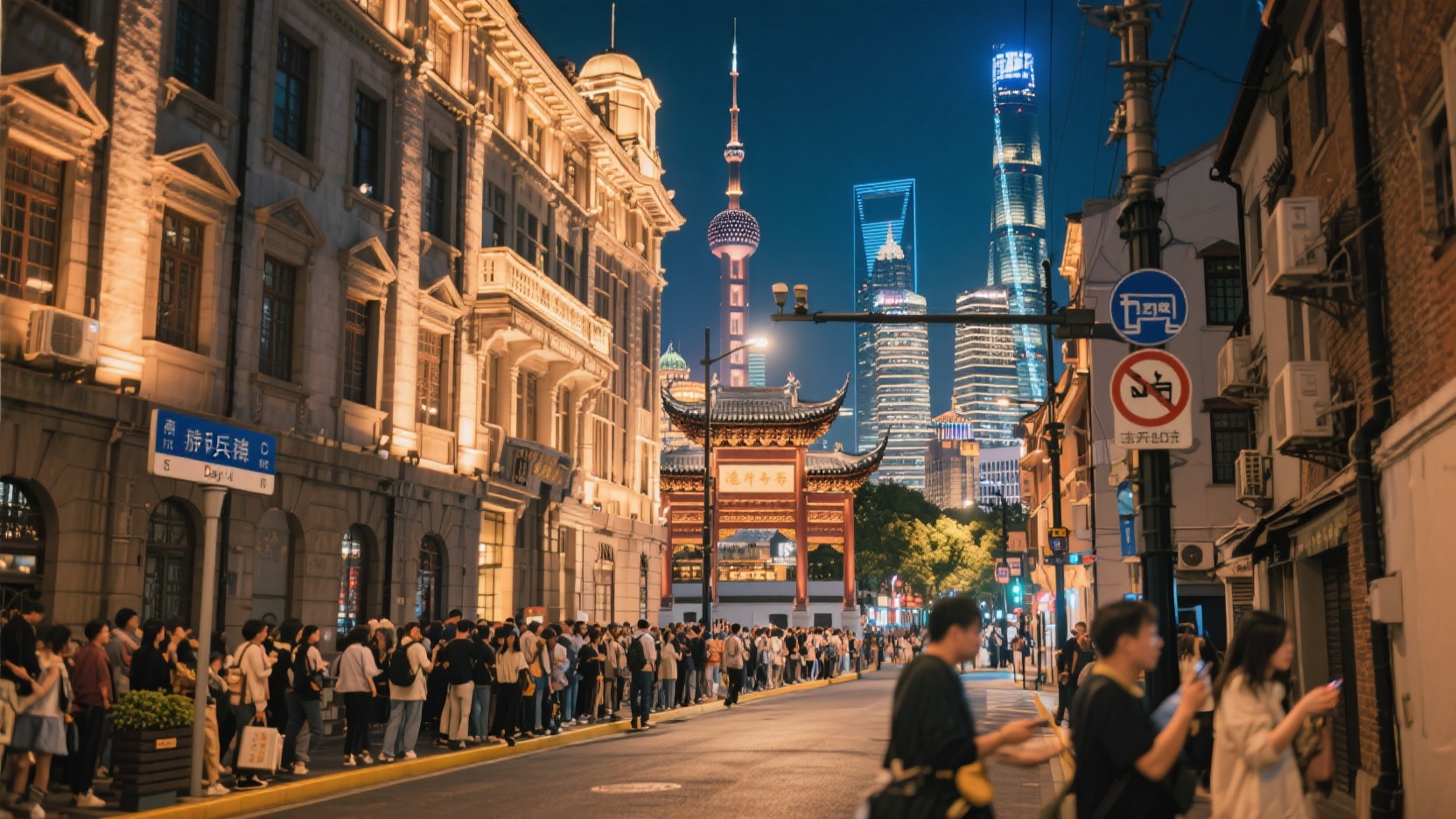
The core of a two-day, one-night weekend getaway in Shanghai isn't about visiting a large number of attractions, but rather about creating a seamless, non-returning route connecting classic spots via walking and the subway. The following itinerary is suitable for young travelers arriving Friday evening or Saturday morning and returning Sunday evening—a fast-paced but not rushed experience that allows you to spend your limited time on streets and scenes that truly represent the essence of Shanghai.
Day 1: High-density connection in the city center
Starting from People's Square subway station in the morning, head to Huanghe Road or Yunnan South Road for breakfast. Pan-fried dumplings, potstickers, and scallion pancakes with a bowl of soy milk are the most straightforward way to start a Shanghai morning. Afterward, walk east along Nanjing East Road Pedestrian Street, experiencing the century-old architectural facades of "China's No. 1 Commercial Street." You can turn into Ningbo Road and Niuzhuang Road to see the mix of old-style alleyways, hardware stores, and snack stalls, creating a vibrant and down-to-earth atmosphere. A 20-minute walk will take you to the Bund, where you can enjoy views of the Bund's historic buildings and the Lujiazui skyline. The morning sunlight is particularly suitable for photographing the old buildings on the Puxi side.
At noon, take the ferry from the Bund Jinling East Road ferry terminal to Pudong. This is not only a low-cost transportation option but also offers a different perspective from the river. Once in Lujiazui, you can have lunch at Zhengda Plaza or IFC Mall, prioritizing local noodle shops or xiaolongbao (soup dumplings) specialty stores. In the afternoon, there's no need to rush to a high vantage point. If the weather is clear, you can go to the observation deck for a panoramic view; if time is limited, taking photos of the "three-piece set" (referring to the three main scenic spots) from the ground is a more efficient way to capture the moment, utilizing the reflections in the water and a wide-angle lens for excellent results.
In the afternoon, return to Puxi and take the subway to the Yu Garden and City God Temple area. It's recommended to make reservations in advance for Yu Garden; if the queues are too long, you can directly explore the City God Temple Old Street. The crowds outside established shops like Green Wave Corridor and Nanxiang Steamed Bun Shop often concentrate during lunchtime; you can first visit the Nine-Turn Bridge and Lake Pavilion, and then have afternoon tea later. In the evening, walk from the old city to the Bund Source or North Bund; the crowds here are less than in the core area, and the night view is more expansive, making it a good way to wrap up your first day.
Day 2: In-depth exploration of the old town
The second day, slow down the pace and focus on a one- to two-square-kilometer area, choosing the Hengfu Historical and Cultural District as a case study. Starting from the Wukang Building, form a circular walking route along Wukang Road, Wuyuan Road, Anfu Road, and Changle Road. This route preserves Shanghai's garden villas, new-style lane houses, and street shops from the 1920s and 30s; the walking experience under the shade of plane trees is superior to driving. It is recommended to arrive at the Wukang Building before 9:00 AM to avoid tour groups and photographers, and to enjoy the richer layers of sunlight filtering through the building facades.
On Wukang Road, pay attention to the plaques and storefront details of outstanding historical buildings. Anfu Road and Wuyuan Road are better for observing the daily consumption of local young people, with cafes, bakeries, and boutiques appearing alternately. For lunch, choose the area around Urumqi Middle Road or Changle Road, focusing on noodles and light meals, avoiding popular restaurants with long wait times. If you still have energy in the afternoon, you can ride shared bicycles along Fuxing West Road and back, visiting cultural sites such as Ke Ling's Former Residence and Hengfu Historical and Cultural Museum along the way. If you prefer a more suburban location on the second day, Zhujiajiao Ancient Town can replace this route, but you will need to get up early and allow time for the subway and bus transfers.
Transportation Saving Card
The official Shanghai Metro app supports QR code scanning for gate access, and one-day and three-day passes are suitable for frequent inter-district travel; if you take the metro more than three times a day, you can basically break even. The Huangpu River ferry can be accessed using a transportation card or QR code; the fare is much lower than sightseeing cruises, yet offers similar river views. For short distances in the city center, use shared bicycles to save time on station security checks and avoid taxi congestion during peak hours. When arriving by high-speed rail, choose Shanghai Station or Hongqiao Station if possible, as both offer direct metro connections, saving time compared to traveling from the airport to the city center.
Packing list
A lightly packed two-day, one-night trip: a backpack of about 20 liters, a pair of well-broken-in sneakers, a power bank and fast charging cable, ID card, sunscreen, a folding umbrella, a portable water bottle, and a light jacket that can be packed away. Shanghai's subway and shopping malls are quite air-conditioned, so a jacket is more important than you might think, especially in the mornings, evenings, and indoors. If you plan to shoot night scenes, a small desktop tripod or a multi-arm tripod will provide more stability. Keep all your luggage under five kilograms to support an average of 20,000 steps per day.
Avoiding pitfalls while queuing
Don't stick to one popular snack spot in the city center; pan-fried buns, xiaolongbao, and scallion pancakes often have more consistent quality at street stalls in residential areas. For sightseeing on the Bund, avoid the Nanjing East Road intersection; head north to the Zhapu Road Bridge or the North Bund, where the crowd density is significantly lower. Make reservations in advance through official channels for attractions like Yu Garden and the Shanghai Museum to avoid wasting your time due to crowd control measures. Use the mini-program to get a number for popular restaurants beforehand, and take full advantage of the rule that missed reservations don't expire. If a restaurant's queue is too long, there are usually similar alternatives in nearby parallel streets. Also, the City God Temple food plaza is more touristy on weekends; heading south to Fangbang Middle Road and Sipailou Road, you're more likely to find potstickers, wontons, and pork rib rice cakes that locals still enjoy.