
When staying in Shanghai, should you choose a hotel or a guesthouse? I've thoroughly explored both options.
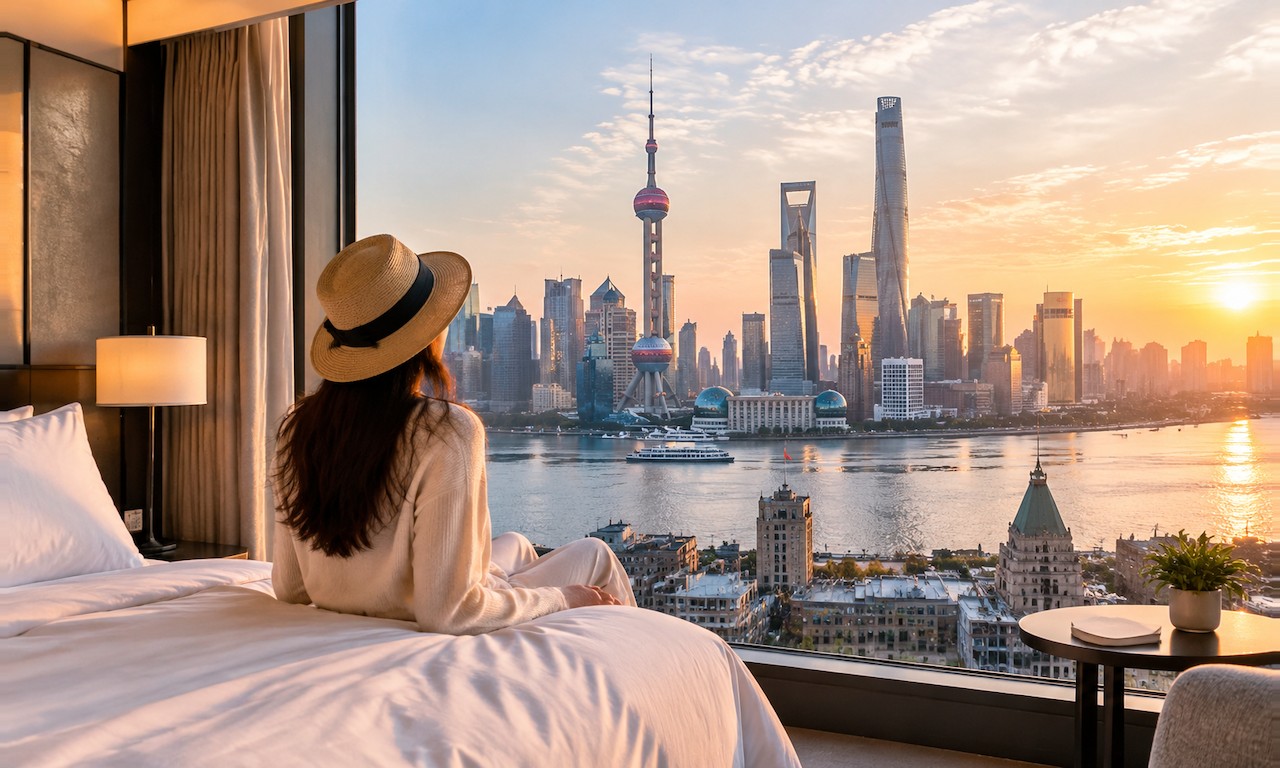
Before going to Shanghai, almost everyone asks the same question: Should I stay in a hotel or a guesthouse? Should I stay near the Bund or in an old alleyway? This question deserves a serious answer, because staying in the wrong area can double your commute time in Shanghai, or you might end up in a trendy guesthouse that looks nice for photos but is woken up in the middle of the night by the bar downstairs. This article won't give you recommendations, but will simply put the most common choices together for comparison, explaining what each type of accommodation means, so you can choose the one that suits you best.
Hotels vs. B&Bs: Do you want stability, or "a good photo"?
Most travel guides will tell you that guesthouses in Shanghai are more distinctive, allowing you to stay in old villas and shikumen houses and experience authentic local life. In reality, guesthouses converted from old houses in the city center vary greatly in terms of soundproofing, hot water, bedding, and hallway cleanliness, and many are also located on main streets. If you've walked 20,000 steps during the day, what you need most at night is a quiet night's sleep and a decent hot water line; hotels are far more consistent in these two aspects than guesthouses. Hotels are suitable for first-time visitors to Shanghai, those whose itinerary is mainly focused on sightseeing, and those who are sensitive to sleep disturbances. Guesthouses are suitable for those who have already visited Shanghai, have a relaxed schedule, and are interested in the architecture and the community itself—you need to know whether you're "staying" or "exploring."
Prime commercial district vs. scenic area: Staying on Nanjing West Road is more "Shanghai" than staying on the Bund.
Most travel guides will tell you to stay near the Bund, Nanjing Road, or Yu Garden in Shanghai, as the attractions are right outside your door. In reality, these areas are crowded during the day, and at night half the street is lined with vendors selling grilled sausages and silver jewelry. You spend a lot of money, but what you get is an accommodation experience that's essentially part of the tourist area. The commercial districts in Jing'an, Xuhui, and central Huangpu districts have dense subway networks, allowing you to get anywhere within three or four stops. They're surrounded by markets, small restaurants, neighborhood cafes, and other local amenities. Staying in a commercial district is like "living in the city," while staying near a tourist attraction is like "living in the attraction"—the experiences are completely different.
Old Town vs. New Town: Do you want "Shanghainese dialect" or "garbage sorting and elevators"?
Most travel guides will tell you that staying in the old city is more authentic, such as the areas around Laoximen, Nanshi, and Sichuan North Road, allowing you to experience old Shanghai. However, in reality, many old buildings in the old city lack elevators, have dimly lit hallways, and sparse streetlights at night, making it quite awkward to drag luggage in and out. Newer urban areas like Lianyang in Pudong, Gubei in Changning, and Hongqiao in Minhang offer complete amenities, spacious public spaces, and well-managed properties, making them comfortable to live in. However, you'll likely hear Mandarin and various foreign languages outside, rather than the familiar Shanghainese dialect of the alleyways. The old city is suitable for travelers who are prepared and genuinely want to immerse themselves in local daily life; the new city is better suited for families with elderly members or young children who prioritize convenience and comfort.
Direct subway access vs. quiet location: Choosing a subway station isn't always better the closer it is.
Most travel guides will tell you that being within a five-minute walk of your accommodation from the subway is a must. In reality, accommodations right next to subway stations are often also close to elevated roads, bus stops, or commercial complexes, making noise and light pollution major problems. Shanghai's subway network is dense, and staying in neighborhoods within a ten-minute walk of a subway station is often quieter. Plus, you'll pass local breakfast stalls, fruit shops, and shoe repair stands every day – that's the true feel of a neighborhood. Direct subway access is suitable for short business trips, those with a lot of luggage, or those with very limited time; quiet areas in the middle of a bustling area are perfect for leisure travelers – you're not rushing to catch the subway, but rather walking a route from the subway to home.
Bringing parents vs. coming to Shanghai alone: Same budget, completely different choices
Most travel guides will tell you that staying in hotels is more convenient when traveling with parents, which is generally true, but the reasons are not as simple as "older people have poor physical strength." Parents' generation often requires accommodations that are "clean, orderly, and where they can make their own tea," and hotel services and public areas better meet these expectations. For those traveling alone in Shanghai, especially young women or art enthusiasts, staying in guesthouses or small design hotels offers more solitude and an aesthetic experience. When traveling with parents, choose high-end or mid-range brand hotels in new towns or established commercial areas; when traveling alone, choose small, charming accommodations that are acceptable even with stairs, older buildings, and some imperfections.
Two-night stay vs. one-week stay: Some cheap deals are only worthwhile if you stay longer.
Most travel guides will tell you that there are discounts for consecutive stays, making apartment hotels a worthwhile investment. In reality, for a short two-night stay in a high-star hotel, you're enjoying the service and location; for a longer week-long stay, choosing an apartment-style guesthouse or serviced apartment with a washing machine and kitchenette will help you reduce living costs and allow you to cook and do laundry yourself. Short-stayers shouldn't choose an old-fashioned house with inconvenient transportation just to "act like a local," and long-stayers shouldn't stay in business hotels and order takeout every day. Short stays are about "experience," long stays are about "lifestyle."
Budget travel for young people vs. vacations for couples: Budget isn't the dividing line, needs are.
Most travel guides will tell you to choose hostels or budget hotels if you're on a tight budget. However, the quality of hostels in Shanghai varies greatly. Some are located in office buildings with cramped beds and poor ventilation, and are not even recommended by backpackers. Young people on a budget might be better off choosing well-reviewed budget chain hotels along subway lines, a little further from the city center, where they can get clean beds and private bathrooms. Couples should focus their budget on room quality and the surrounding environment, such as choosing a small design hotel in the Hengfu historical area with a courtyard and brunch options. Even if the room is smaller, the overall atmosphere is more valuable for creating a pleasant mood.