
What Shanghai souvenirs can you bring with minimal luggage? Find the perfect souvenir for your bag!
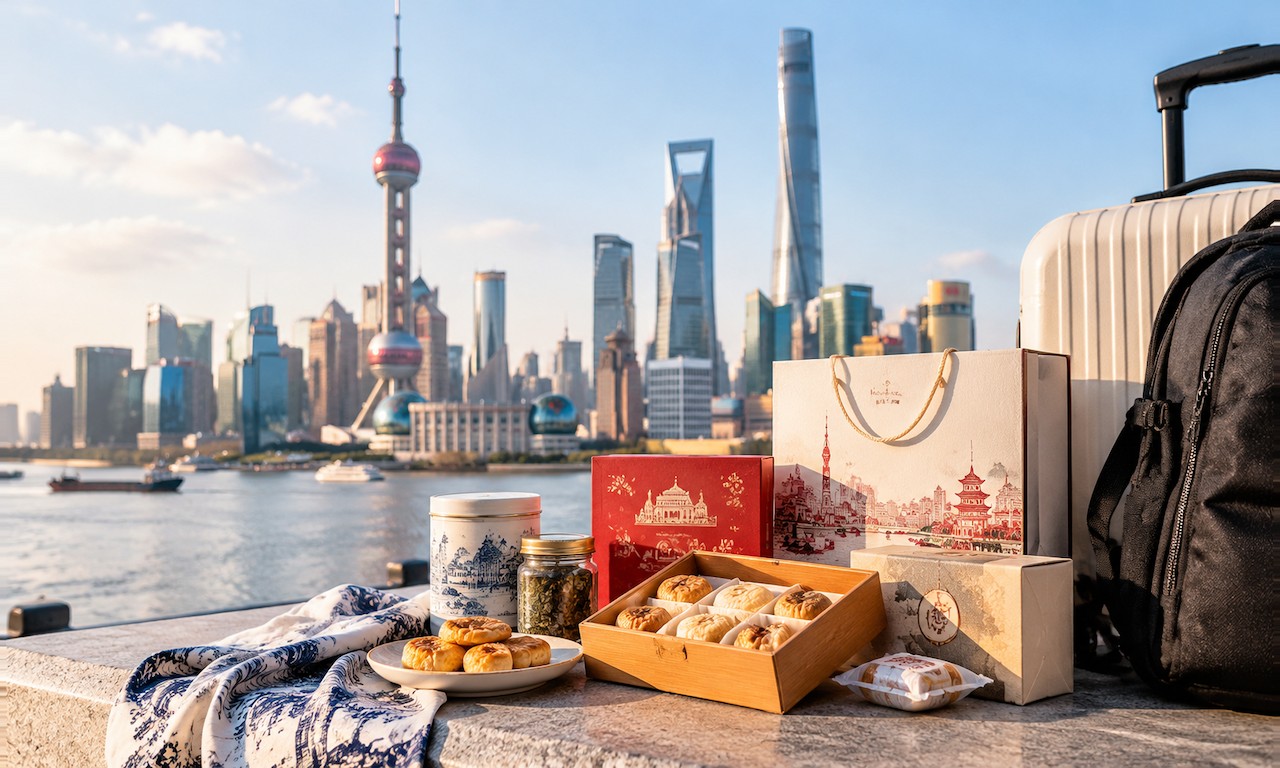
Let me first answer a frequently asked question: How should I choose souvenirs for Shanghai that are both presentable and hassle-free? The answer isn't "what's the best to buy," but rather "how much you can bring, who you're giving it to, and how to get it through security." This article doesn't provide a fixed list, but rather addresses three practical scenarios: having ample baggage allowance, carrying only one bag, and needing to carry it on the plane. Once you've figured these three things out, the subsequent selection process will be much faster.
Ample luggage capacity: Suitable for gifting to superiors, elders, or anyone who needs something "substantial".
If you have at least half a suitcase full of space in your checked luggage, prioritize two categories: sauces and dessert gift sets. For sauces, opt for canned or packaged varieties like Eight Treasure Spicy Sauce or Crab Roe Sauce; their flavors are highly recognizable, making the recipient feel like they're from Shanghai cuisine, rather than a generic local product you can buy anywhere. For dessert gift sets, stick to established brands; don't worry too much about which is the most authentic, as the taste differences aren't as significant as you might think. Intact packaging and recent production dates are more important. These items are generally heavier, but it's precisely this weight that makes them seem more special as a gift.
Packing suggestions: Wrap sauces individually in bubble wrap, then put them in a resealable bag, and place them upright at the bottom of your suitcase, weighing them down with clothing. Do not open the gift boxes containing desserts, but apply a strip of tape to the seams of the outer box to prevent them from falling apart during transport. There is usually no milliliter limit for liquid sauces as long as they are checked in, but don't bring too much in total; five or six jars per suitcase is enough.
Carry only one bag: suitable for friends, colleagues, and people who don't need to make a big show of it.
For those carrying only a carry-on bag, the worst things to avoid are glass jars, large metal boxes, and anything that might leak. Instead, focus your budget on small, lightweight items that are unmistakably Shanghai. Consider: individually packaged pastries, strips or small packets of seasoning powders/sauces, and thin slices of snacks. For example, items like tiao tou gao (条头糕) or ding sheng gao (定胜糕) can be individually packaged, or small packets of scallion oil noodle sauce or spicy meat sauce. These don't take up much space and you don't have to worry about them breaking.
The criteria are straightforward: each portion should be no larger than the palm of your hand, the packaging should have a resealable closure, and the price should allow you to buy more than ten portions at once. This way, when giving gifts to colleagues or classmates, it's much more natural for each person to take a few small bags than to cram in a large box. Leave a separate compartment in your bag to store these items, avoiding them getting squeezed with keys and water bottles.
Must be carried on board: Suitable for those who need to buy it on short notice, are short on time, or need to be safe at security checkpoints.
If you've already checked your luggage, or haven't bought any checked baggage at all, and can only buy things at the shops after security, then there's only one rule: don't buy any liquids, semi-liquids, or razor-shaped items. This means most sauces, rice wine, and cooked foods with broth are excluded. What you can buy are: sealed snacks, tea, dried goods, and candies. For example, pear syrup candy, spiced beans, individually wrapped rice cakes, and small cans of tea.
Here's an often overlooked point: souvenir shops in airports and train stations generally have higher prices than in the city, but the packaging is more organized and more secure through security. If you're buying at the last minute, accept the price difference and prioritize items that are "small-boxed, don't require a carrying bag, and can be stuffed into the outer layer of your carry-on bag" to avoid the hassle of repeatedly opening your bag for inspection at boarding.
When giving gifts, first consider whether you have a close relationship with the person or whether the occasion justifies the gift.
Before giving gifts, divide them into two categories. For close friends and family, choose things you've eaten in Shanghai and enjoyed; gift boxes aren't necessary. Even a simple steamed rice cake bought from the market, cut and packaged, is fine to take home. For more formal occasions, such as clients, teachers, or distant relatives, the integrity of the packaging and brand recognition are more important. In this case, gift boxes from established brands or limited-edition city packaging are safer choices; even if the taste is average, it won't go wrong.
A practical tip: When giving gifts to people you're dealing with, try to choose items that they won't ask how to eat after opening, such as ready-to-eat pastries or candies. While sauces show good intentions, not everyone is willing to cook them, so they can easily become a burden.
For personal consumption: Buy things you'll "miss" when you get back, not things "tourists all buy."
If you're just bringing something for yourself, the most worthwhile items to take are those flavors you can't find outside of Shanghai or that you can't replicate at home. Focus on items with short shelf lives, freshly made, and with a local flavor. For example, snacks like fried dough sticks and crab shell pastries; if there are ready-to-eat versions available, consider those. Also, consider handmade rice cakes and glutinous rice cakes from the market; cut them into pieces, wrapped in parchment paper, and they'll be perfectly fine to eat on the same day or the next day when you're on a short trip home.
However, be careful: if you're buying it for yourself, avoid heavy gift boxes; loose or simply packaged items tend to be fresher. Before buying, ask yourself, "Will I actually finish it when I get home?" If the answer is hesitant, don't buy it. What's truly worth bringing is something you'd specifically make room for in your bag.
For checked baggage: weight and flavor are prioritized, not appearance.
The biggest advantage of checked baggage is the wide range of capacity and weight restrictions, so you can focus on whether the flavor is "shanghai-style" rather than being restricted by packaging. Sauces, cooked foods, and pastries can all be included. The key is to control the risk of liquid leakage; all items with broth should be resealed. For cooked foods, it is recommended to choose individual vacuum-sealed bags, which are convenient for distribution and easier to store than large packages.
If you are bringing fragile items, such as crispy snacks, place them in the middle layer of your suitcase and wrap them around your body with clothing. Do not place them in the corners or above the wheels, as these areas are most prone to vibration.
Must be carried at all times: Abandon "heavy gifts" and embrace "light sharing".
When you can only carry your own luggage, the smartest thing to do is to change "bring a gift" to "bring a sharing pack." Buy a few individually wrapped boxes of snacks or candies, open them at your destination and share them with everyone, giving each person one or two pieces. This is more appropriate than giving someone a whole box individually. Carry-on luggage space is already tight, and small, individual packages can be stuffed into any crevice without worrying about them getting crushed.
Also avoid foods that require refrigeration or are prone to becoming oily. Some freshly made pastries have an oily surface, and if left in your bag for a while, they will seep oil and stain other items. Choose foods that are dry, individually sealed, and have a shelf life of at least three to five days to carry in your bag for a day.