
The Flavors of Shanghai in the Markets | Step into two old markets in Hongkou and Xuhui districts and take home 9 local favorites.
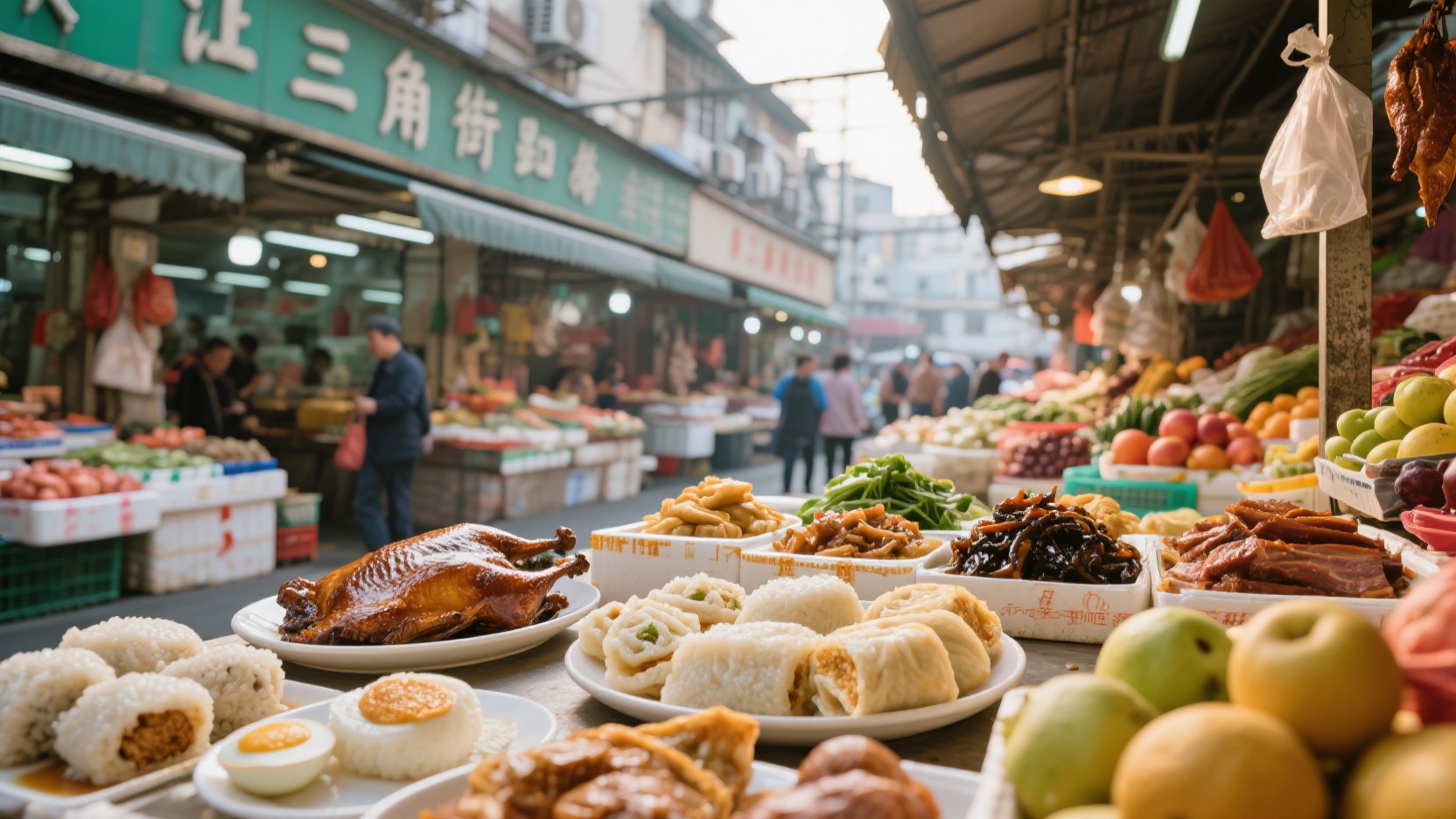
In Shanghai, people call browsing farmers' markets "drifting through small markets," the word "drifting" capturing the leisurely pace and enjoyment of selecting items. To truly understand the essence of Shanghainese cuisine, one doesn't need to delve into established brands, but rather visit two long-standing farmers' markets frequented daily by locals. This article uses the "Sanjiaodi Farmers' Market" in Hongkou District and the "Jiashan Road Farmers' Market" in Xuhui District as examples, highlighting nine local specialties worth taking home.
Two farmers' markets: a century-old local scene and a sample of life in Wutong District.
The Sanjiaodi Market is one of Shanghai's earliest indoor markets, having developed into a market by the late Qing Dynasty. After renovations in the 1920s, it became the core of the Hongkou district's vegetable supply. Although it no longer resembles its former self, residents of the surrounding alleyways still maintain the habit of coming here in the early morning to buy vegetables. The market boasts a high density of cooked food stalls and preserved meat stalls, offering a reliable selection. The Jiashan Road Market, tucked away on the edge of the Hengfu Historical and Cultural District, is smaller in scale, but due to the concentration of long-time residents in the area, it retains a number of handmade pastry stalls and stalls selling local semi-finished products, making it particularly suitable for browsing and buying in small quantities. Both markets share the characteristic of "unpretentious presentation and stalls that have withstood the test of repeat customers," providing the most reliable assurance when making a purchase.
Cooked food stall: pickled, sauced, and stir-fried three flavors
The first item is pickled goods. Shanghai's cooked food stalls emphasize a "fragrant but not overpowering, salty and savory with a sweet aftertaste" in their pickled brine. Common pickled pork belly, pickled edamame, and pickled chicken feet are examples. When choosing, check if the brine is clear and if the ingredients are soaked in the brine rather than left dry. Refrigerate them with the brine for half an hour after buying them for the best flavor. For pickled edamame, plump pods with a slightly greenish color indicate proper soaking time; for pickled pork belly, choose those with a fine cut surface and no excess fat.
The second dish is Shanghai-style fried fish, where pieces of bluefish are fried on the spot and topped with a sweet and savory sauce. The skin is slightly crispy and the flesh is firm. It is recommended to eat the fried fish on the same day. If it is left overnight, it can be microwaved or briefly baked in the oven to restore its crispness. When choosing, make sure the fish pieces are still warm, as the sauce can become greasy once it cools down.
The third item is braised duck or braised pork hock. Choose ducks with a bright reddish-brown skin, meat that is firm and elastic to the touch and not sticky. They are best served with white rice or plain noodles after being cut into pieces. For braised duck, choose those with thin skin and thick meat at the junction of the leg and breast. For braised pork hock, choose those with an intact gelatinous layer between the skin and meat that does not fall off.
Handmade snacks and semi-finished products: egg dumplings, stuffed fried gluten balls, glutinous rice cakes
The advantage of handmade egg dumplings from the market is that the egg skin is freshly made and the meat filling is firm. Choose those that are plump and sealed without cracking. They can be frozen after purchase and used in soups or steamed. The most authentic way to eat egg dumplings is to cook them in a hot pot with glass noodles and cabbage. The egg skin will absorb the soup well and still not fall apart.
Stuffed gluten puffs are a common semi-finished product in Shanghai households. The meat filling should be a good mix of lean and fatty meat, and the gluten skin should be thin but not breakable. When braising, use little sugar, relying on the fat from the meat filling itself. When buying them, you can gently pinch them with your fingers; if the outer skin springs back quickly, the gluten is fresh; if it feels hard, it may have been stored for too long.
Stalls selling glutinous rice cakes often offer strip-shaped cakes, double-filling glutinous rice balls, and eight-treasure rice. The handmade cakes have a soft and chewy outer layer and a delicate red bean paste filling. However, it's best not to buy too many and consume them within half a day at room temperature. Any leftovers should be refrigerated and re-steamed. To check if the strip-shaped cakes are covered with osmanthus sauce but not dripping, look for the double-filling glutinous rice balls, which should have distinct layers of sesame and red bean paste filling.
Pickled vegetables and seasonal fruits: a perfect match for rice porridge and local sweetness.
The soy-sauce pork and salted pork sold at the cured meat stalls are the base flavors of dishes like "Yan Du Xian" (a Sichuan dish) and vegetable rice. When choosing soy-sauce pork, select pieces with distinct layers of fat and lean meat, a dry surface, and a fragrant aroma of soy sauce and a hint of wine. Slice them thinly at home and stir-fry them with vegetables. For salted pork, the pork belly cut is best; when cut open, the lean meat should be rose-red and the fat translucent. Soak it in warm water before making soup to remove excess salt.
The assorted pickles, sugar-coated pickled cucumber, and rose-flavored fermented bean curd at the pickle stall are the "iron triangle" of Shanghai-style rice porridge. When choosing pickled radish and pickled cucumber, select those with a crisp and tender texture and clear braising liquid. For rose-flavored fermented bean curd, choose those with petal fragments on the surface and a dense, smooth interior. Half a piece with white porridge or rice porridge is more refreshing than any other condiment.
Regarding seasonal fruits, early summer offers Nanhui 8424 watermelons and Qingpu blueberries, while midsummer to early autumn brings Nanhui peaches and Malu grapes. When choosing a watermelon, listen for a "thump-thump" sound with a slight vibration when tapped. For peaches, check if the stem is white and if the aroma is natural. For Malu grapes, select those with intact bloom and firm, non-detached berries. After buying Nanhui peaches, let them ripen at room temperature first, then refrigerate for a more concentrated flavor.
Purchasing order and carrying suggestions
When shopping at these two types of traditional wet markets, it's recommended to buy pickled and preserved vegetables first, followed by cooked dishes and pastries. Pickled and preserved vegetables are less susceptible to damage from handling, and you can decide in advance whether they need vacuum packaging. Cooked dishes and handmade pastries should be purchased last to minimize their time at room temperature. In summer, when temperatures are high, it's best to bring your own insulated bags and ice packs for pickled foods, fried fish, and glutinous rice cakes. Pickled foods, in particular, are prone to spilling due to the braising liquid, so you can ask the vendor to put them in an extra bag and keep them upright. Most vendors at these traditional wet markets are willing to give portion suggestions based on the number of people, so don't worry about buying too much; buying small, varied portions is the right approach.
Visiting the local market is the best way to experience a city.
Tourist attractions can be replicated, but a traditional Shanghai market can only be cultivated by generations of residents and time. It doesn't rely on packaging or performances; the preserved foods, pickles, and seasonal fruits on the shelves correspond to the authentic four-season meals of Shanghainese people. Watching the aunties select salted pork at the Sanjiaodi Market in the morning, or buying an egg dumpling at the Jiashan Road Market in the afternoon, offers a deeper understanding of the city's patience with food than checking off ten trendy restaurants. Next time you visit Shanghai, consider adding one of these old markets to your itinerary, setting aside half an hour, and experiencing the city's most authentic charm through sight and taste.