
How to choose the right artsy route in Shanghai? Half a day to two days to find the right fit.
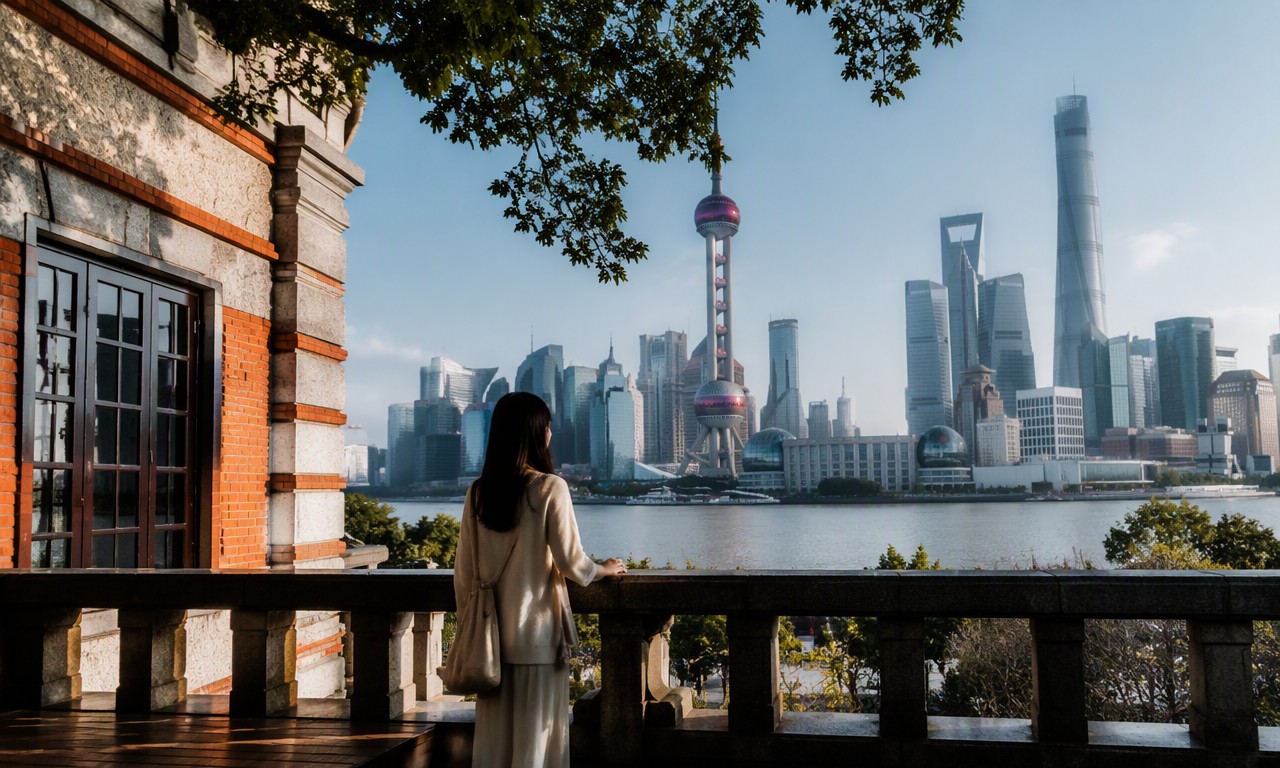
Many people ask how to plan a cultural and artistic trip to Shanghai. The real obstacle isn't a lack of places to go, but rather too many choices, limited energy, and differing interests among travel companions. This article addresses a core question: if you only have half a day, a day, or two, and are traveling with children, elders, a camera, or simply want a quiet exhibition experience, which itinerary is the least stressful and most suitable? Below, we've divided the itinerary into four categories based on target audience and duration of stay, each a readily followable itinerary.
Family-friendly option: Half a day spent on the West Coast, plus a day at the Natural History Museum.
When taking kids to Shanghai for their first art education, the biggest fears are twofold: venues that are too serious and make children restless, and long distances between venues that leave adults exhausted. Therefore, for family-friendly itineraries, it's not recommended to cram three or four places into the Puxi city center; instead, focus on the West Bund. A half-day option: The West Bund Art Museum has a dedicated children's interactive area on its basement level, plus the riverside open green space where kids can run and sit. The pace is "half an hour of observation, twenty minutes of outdoor play," keeping children entertained and parents less burdened by constant discipline. Lunch can be enjoyed at the museum's café or a nearby shopping mall, all within short walking distances.
If you have a full day, visit the Shanghai Natural History Museum in the morning and then the West Bund in the afternoon. The advantage of this combination is that it's a smooth route and less tiring for children. The large specimens and immersive scenes in the Natural History Museum are naturally attractive to children, while the art venues in the afternoon are more like "playing in a different way." Be careful not to connect the China Art Museum and the West Bund directly. Although they are not far on the map, the China Art Museum is large and has a winding exit, so it will be tiring to take children to the West Bund after walking through it.
The "literary youth" subcategory: Half a day spent walking a linear route, a whole day spent demolishing Puxi and Pudong.
Art lovers typically prioritize quality exhibitions and a sense of connection to the surrounding neighborhood over quantity. A safe half-day itinerary is to enter the Shanghai Museum of Contemporary Art at 10 AM, leave in the afternoon, walk along Miaojiang Road to the Huangpu River waterfront, and then stroll to a riverside café on Waima Road to finish. This route is quiet and less crowded, and the museum itself, converted from an old factory, has a strong sense of space, perfect for a leisurely stroll. Don't try to cram two large museums into half a day, such as the Shanghai Museum of Contemporary Art and the Long Museum. While they may seem conveniently located, both are quite large, and half a day will only allow you to see half of each, resulting in a rushed experience.
A suggested one-day itinerary is "Morning in Puxi, Afternoon in Pudong." In the morning, choose one of the art museums on the West Bund, then cross the river to the Pudong Art Museum in the afternoon, staying until evening to watch the Bund light up. This arrangement separates the "exhibition viewing" and "river view" into two distinct experiences, with the ferry ride itself offering a unique Shanghai-style sightseeing experience. The budget is moderate for both museums' tickets; with a cup of coffee, a day trip should cost around 100 RMB per person.
The older generation's branch: Half a day centered around the Shanghai Museum, and a full day visiting Yu Garden and the old city.
For seniors exploring culture and arts, the core requirements are: "not tiring, guided tours, seating areas, and nearby restaurants." A half-day trip can be dedicated to one thing: the Shanghai Museum (People's Square Branch). Here, the exhibition halls are concentrated, there are plenty of rest areas, and the guided tours are clear. The permanent bronze and ceramics exhibitions are both familiar and interesting for seniors. It's not recommended to take seniors to the West Bund or Pudong Art Museum; those museums are more contemporary, have longer routes, and can easily lead to leg aches.
If you have a full day, spend the morning at the Shanghai Museum, lunch on Fuzhou Road or Yunnan Road, and the afternoon at Yu Garden. The beauty of this combination is that you can see artifacts indoors and enjoy the garden outdoors, offering a balanced pace. You don't need to see everything in Yu Garden; focus on the Jade Exquisite Workshop, the Dragon Wall, and a few winding corridors, and sit for a while before leaving. The old city area has undergone significant renovations, so don't expect too much from a "historical" experience; a quick visit is sufficient. Transportation is convenient; it's close to Yu Garden by taxi or subway from People's Square, making it especially helpful for seniors with mobility issues.
Photography branch: Half a day chasing light, a day split into two golden hours.
Photographers don't prioritize "the more photo spots the better," but rather focus on lighting, composition, and crowd density. A recommended half-day route is along the Suzhou Creek: start from the Sihang Warehouse and walk east along the river, passing the Zhejiang Road Bridge and the Postal Museum, all the way to the Waibaidu Bridge. Between 9:00 and 10:30 AM, the river surface is bathed in soft light, the building facades are evenly lit, and there aren't many people. Don't try to cross too much of the river; a section of the Suzhou Creek is enough to create a series of photos with a sense of depth.
The one-day itinerary is divided into "The Bund Source in the early morning" and "The West Bund Industrial Belt in the afternoon." Arrive at the Bund Source at 6:30 AM; the area around Yuanmingyuan Road is almost deserted, with clean views of old buildings and trees. In the afternoon, visit the Tank Art Center and the riverside crane area on the West Bund. Around 2 or 3 PM, the light begins to develop directionality, making for better-defined images of the industrial structures. In the evening, avoid the crowded Bund viewing platforms; the area near the Gongping Road pier on the North Bund is less crowded and offers wider angles. The biggest mistake in photography is following popular routes; you'll end up photographing crowds. Therefore, choosing the "right time" for each location is more important than simply choosing the "right spot."
Overall assessment: How to best combine the two days?
If you're staying two days, I don't recommend splitting the day into "all exhibitions on the first day and all shopping on the second day," as you'll be noticeably tired by the afternoon of the second day. A more comfortable approach is to spend half a day on the artsy or photography-focused route on the first day, leaving the afternoon free for a stroll along the Suzhou Creek or the North Bund in the evening; then spend half a day on the more family-oriented or senior-focused route on the second day, leaving the remaining half day free. This way, you have a main itinerary without being overwhelmed by the schedule.
For accommodation, if both routes are more towards Puxi, choosing a place between People's Square and Jing'an Temple is the most convenient; if they are more towards the west bank and Pudong, staying near Xuhui Riverside or Qiantan will reduce morning and evening commutes. In terms of budget, the main expenses for the cultural and artistic route are exhibition tickets and coffee and meals. Two days of mid-range spending per person is more than enough, so there is no need to add extra items just to "appear rich".